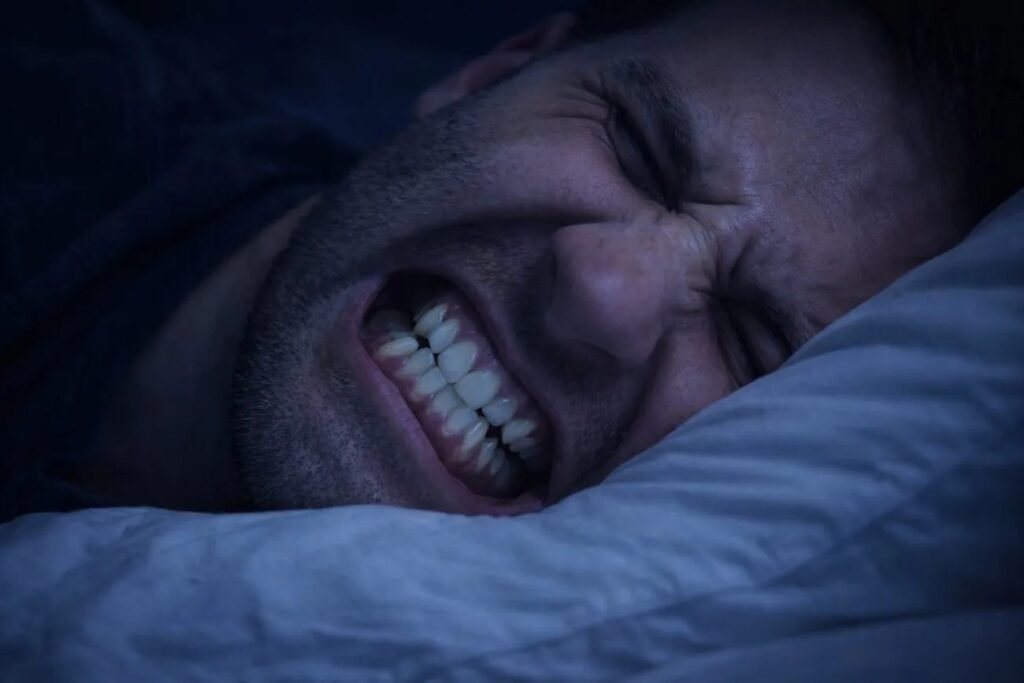
How do I stop grinding my teeth at night
You wake up with a sore jaw. Your teeth feel… off. Your partner says you’ve been making grinding noises at night. Maybe your dentist mentioned “wear patterns” at your last visit. Teeth grinding at night (sleep bruxism) affects roughly 1 in 12 adults — and most grinders don’t know they’re doing it until the damage shows up.
Why Do You Grind Your Teeth at Night? The Causes
- Stress and anxiety: the #1 driver. Daytime tension gets processed at night through jaw clenching. (If you’re grinding, ask what you’re carrying.)
- Sleep disorders: strongly linked to sleep apnea — the brain arouses slightly during breathing interruptions, and the jaw activates. If you grind and snore, get evaluated for apnea — treating the apnea often stops the grinding.
- Abnormal bite or missing teeth: less common as a primary cause than once thought, but can contribute.
- Medications: certain antidepressants (SSRIs) and stimulants can cause or worsen bruxism.
- Lifestyle factors: alcohol, caffeine, and smoking all increase grinding frequency.
- Genetics: bruxism runs in families.
Signs You’re Grinding (Besides Someone Telling You)
- Morning jaw soreness, tightness, or fatigue.
- Dull morning headaches starting at the temples.
- Flattened, chipped, or worn teeth (your dentist sees this).
- Tooth sensitivity without cavities.
- Jaw clicking or limited opening.
- Earache-like pain (referred from the jaw joint).
- Cheek biting or scalloped tongue edges.
How to Stop Grinding Your Teeth: What Works
1. Get a Night Guard (The Essential First Step)
A custom-fitted night guard from your dentist ($300–$800) protects your teeth from damage while you address the cause. It doesn’t stop the grinding — it stops the damage. That’s still enormously valuable: crowns and implants cost far more than a guard. OTC boil-and-bite guards ($20–$50) are a reasonable interim option but fit worse and wear faster. (Note: for some people, OTC guards worsen jaw issues — see your dentist.)
2. Address the Stress Component
- Wind-down routine: grinding is tension expression. A real evening wind-down (not scrolling) reduces it.
- Jaw relaxation exercises: consciously unclench during the day (“lips together, teeth apart”), gentle jaw stretches, warm compress before bed.
- Stress management: whatever works for you — exercise, meditation, therapy. The jaw is often where unprocessed stress lives. (See our sleep guide for wind-down techniques.)
- Biofeedback: daytime awareness training reduces nighttime grinding for some people.
3. Rule Out Sleep Apnea
This is the step people skip. Sleep apnea and bruxism are tightly linked — and apnea is the more dangerous condition (cardiovascular risk, daytime fatigue). If you snore, gasp, or feel unrefreshed despite adequate sleep, ask about a sleep study. (See why you’re tired after 8 hours.)
4. Adjust Contributing Factors
- Cut evening alcohol and late caffeine — both worsen grinding.
- Review medications with your doctor if grinding started after a new prescription.
- Don’t chew gum excessively or chew on pens — it trains the jaw to stay active.
5. Professional Treatments for Persistent Cases
- Dentist: custom guard, bite assessment, monitoring wear.
- Physical therapy: for TMJ dysfunction — jaw PT is a real specialty and very effective.
- Botox for bruxism: injected into the masseter muscles, reduces grinding force for 3–4 months. Increasingly common for severe cases; discuss with a qualified provider.
- Sleep specialist: if apnea is suspected.
What Happens If You Ignore It
Chronic grinding causes: worn enamel → cracked teeth → crowns/root canals/extractions; TMJ disorders (chronic jaw pain, limited opening); tension headaches; and disrupted sleep (yours and your partner’s). The damage is cumulative and irreversible — enamel doesn’t grow back. A $500 night guard now prevents $5,000 of dental work later.
Daytime Clenching: The Hidden Companion
Night grinding gets the attention, but daytime clenching is its overlooked sibling — and you might be doing it right now:
- The awareness test: right now, are your teeth touching? They shouldn’t be. Healthy resting position: lips together, teeth slightly apart, tongue on the roof of your mouth. If your teeth are clenched as you read this, you’re a daytime clencher.
- Common triggers: concentrating at a computer, driving in traffic, exercising (especially lifting), and stress. Anywhere you “brace,” your jaw joins in.
- The fix is awareness: set phone reminders (“teeth apart”) every hour for two weeks. Put sticky notes on your monitor. The habit breaks surprisingly fast once you notice it.
- Why it matters: daytime clenching adds to the total load on your teeth and jaw joint. Fixing it reduces the damage even if nighttime grinding continues.
- Chewing: avoid gum, ice, and hard candies — they keep jaw muscles in overdrive all day.
How Dentists Diagnose Bruxism
- Wear patterns: flattened chewing surfaces, chipped enamel, and wear facets that match your bite — the telltale signature.
- Muscle hypertrophy: enlarged masseter muscles (the jaw muscles) from overuse — sometimes visible as a widened jawline.
- Gum recession and cracked teeth: excessive forces damage more than enamel.
- TMJ assessment: clicking, limited opening, or pain when the dentist palpates the joint.
- Sleep studies: for suspected sleep-bruxism linked to apnea, a sleep study confirms both.
- What to ask your dentist: “How severe is the wear?” “Do I need a custom guard or will OTC work for now?” “Should I be evaluated for sleep apnea?” “How often should we monitor this?”
- Cost reality: custom guards ($300–$800) aren’t usually covered by dental insurance — but they’re cheaper than a single crown ($1,000–$1,500). Ask about payment plans.
Quick Note: Getting Professional Help
If grinding persists despite a night guard and stress management, ask your dentist about a sleep study referral — treating underlying sleep apnea often resolves bruxism at its source. The Mayo Clinic’s bruxism resources offer a solid overview of diagnosis and treatment options to discuss with your provider. Don’t wait for cracked teeth to take it seriously; early intervention is simpler and cheaper.
The Bottom Line on Teeth Grinding
Why do you grind your teeth at night and how do you stop? Usually stress, sleep apnea, or both — and the fix is a night guard to prevent damage now, plus addressing the root cause (stress management, jaw relaxation, apnea evaluation). See your dentist for a custom guard, ask about sleep apnea if you snore, cut evening alcohol and caffeine, and take the morning jaw soreness seriously — it’s your body asking for help. Your teeth have to last a lifetime; protect them like it.