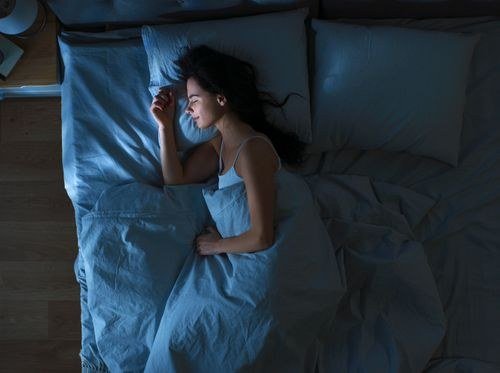
How can I fall asleep faster without taking sleeping pills
You’ve been in bed for 45 minutes. Your brain is replaying an awkward conversation from 2019. You’ve counted sheep, tried the breathing thing, and now you’re just… awake and annoyed about being awake. If you want to know how to fall asleep faster at night naturally, the good news is that sleep science has real answers — not old wives’ tales, but techniques with actual evidence behind them.
How to Fall Asleep Faster at Night Naturally: What Actually Works
1. The Military Sleep Method (Fall Asleep in 2 Minutes)
Developed for Navy pilots who needed to sleep anywhere, anytime. The technique:
- Relax your entire face — forehead, eyes, cheeks, jaw, tongue.
- Drop your shoulders, then relax each arm, one side at a time.
- Exhale and relax your chest, then your legs from thighs down.
- Clear your mind for 10 seconds: picture yourself lying in a canoe on a calm lake, or repeat “don’t think” for 10 seconds.
It reportedly takes ~6 weeks of practice to master, with a high success rate. The mechanism is real: progressive muscle relaxation + cognitive clearing directly counteracts the arousal that keeps you awake.
2. The 4-7-8 Breathing Technique
Inhale through your nose for 4 counts, hold for 7, exhale through your mouth for 8. Repeat 3–4 cycles. The extended exhale activates your parasympathetic nervous system — your body’s “stand down” signal. It’s not magic; it’s physiology.
3. Cognitive Shuffling (The Boring-Object Trick)
Pick a random letter, then slowly visualize unrelated objects starting with it: apple… airplane… antelope… This occupies your brain with meaningless imagery, blocking the anxious thought loops that keep you awake. Sleep researchers consider it one of the most effective mental techniques.
4. Paradoxical Intention (Try to Stay Awake)
Sounds insane, works surprisingly well: lie in bed and try to stay awake with your eyes open. Performance anxiety about sleeping is a major insomnia driver — removing the “trying” removes the anxiety. Studies show it reduces sleep onset time.
The Foundation: Sleep Hygiene That Makes Techniques Work
Techniques help, but they can’t overcome a hostile sleep environment:
- Consistent schedule: same wake time daily, weekends included. This is the single most impactful habit.
- Cool, dark, quiet: 65–68°F, blackout conditions, white noise if needed.
- No screens 30–60 min before bed — or at minimum, night mode + no scrolling in bed.
- Caffeine cutoff: noon for sensitive sleepers, 2 PM at the latest.
- No alcohol as a sleep aid: it sedates but fragments — you’ll fall asleep fast and sleep badly.
- Morning sunlight: 10–30 minutes within an hour of waking anchors your clock.
- Exercise — but timing matters: see our exercise-timing guide.
What About Supplements?
- Melatonin: useful for timing issues (jet lag, shift work), not a general sleep potion. Low doses (0.5–1mg) work better than high. Talk to your doctor first.
- Magnesium: modest evidence for sleep quality; generally safe but check with your doctor.
- Valerian, chamomile: weak evidence, but chamomile tea’s ritual itself helps.
- Avoid: high-dose melatonin long-term, “sleep” gummies with undisclosed ingredients, anything promising instant results.
For the supplement question more broadly, see our multivitamin guide.
When “Can’t Fall Asleep” Is Insomnia
If you struggle to fall asleep 3+ nights per week for 3+ months despite good habits, that’s chronic insomnia — and the gold-standard treatment is CBT-I (cognitive behavioral therapy for insomnia), which outperforms sleeping pills long-term. Digital CBT-I programs exist and work. Sleeping pills (prescription or OTC) are for short-term use; dependence and tolerance are real. Talk to your doctor — chronic insomnia is a medical condition, not a willpower failure.
The Wind-Down Routine Blueprint (60 Minutes to Sleep)
Falling asleep faster starts an hour before bed. Here’s a routine that actually works:
- T-60: Dim the lights. Bright light suppresses melatonin. Switch to lamps, enable night mode on all screens — or better, put the phone down.
- T-45: Light stretching or gentle yoga. Ten minutes of slow stretching releases the day’s physical tension. Nothing intense — you’re cooling down, not working out.
- T-30: Warm shower or bath. The post-shower drop in body temperature mimics the natural cooling that precedes sleep. This is one of the most evidence-backed sleep hacks.
- T-20: Brain dump. Write tomorrow’s to-dos and any looping worries on paper. Externalizing thoughts stops the bedtime rumination cycle — studies confirm this works.
- T-10: Reading (physical book). Fiction is ideal — engaging enough to hold attention, not so stimulating you can’t stop.
- T-0: The technique. Military method, 4-7-8 breathing, or cognitive shuffling from above.
Do this consistently for two weeks and your brain starts associating the routine with sleep — classical conditioning working for you.
What to Do When You Wake at 3 AM
- Don’t check the time. Clock-watching creates anxiety about lost sleep, which prevents sleep. Turn the clock away.
- Don’t grab your phone. Light + stimulation + “just one video” = awake until dawn.
- Try cognitive shuffling for 15–20 minutes. If still awake, get up.
- Get up, low light, boring activity. Read something dull in dim light until drowsy, then return to bed. Staying in bed awake trains your brain to associate bed with wakefulness — the core principle of CBT-I.
- Don’t nap long the next day. Push through with an early bedtime instead. Protect tonight’s sleep to fix last night’s.
- Frequent 3 AM waking (with racing thoughts or dread) can signal anxiety or depression — worth discussing with a professional if persistent. (See affordable therapy options.)
Quick Note: When to Seek Help
If insomnia persists despite 2–3 weeks of genuine sleep hygiene, talk to your doctor — chronic insomnia is a treatable medical condition, and CBT-I (cognitive behavioral therapy for insomnia) outperforms sleeping pills long-term. The Sleep Foundation offers evidence-based guidance on sleep disorders and treatments. Don’t white-knuckle sleeplessness for months; help exists and it works.
The Bottom Line on Falling Asleep Faster
How can you fall asleep faster naturally? Master one technique (military method or cognitive shuffling), fix your sleep hygiene foundation, get morning sunlight, and cut late caffeine and alcohol. Most people see improvement within 1–2 weeks. If persistent insomnia resists all of this, CBT-I — not more willpower — is the answer. Sleep is a skill; like any skill, it responds to the right practice. For the bigger picture of sleep and energy, see why you’re tired after 8 hours.