How Much Protein Do You Actually Need Each Day?
How Much Protein Do You Actually Need Each Day?
Walk down any grocery aisle and you’d think protein is the answer to everything. Protein cereal, protein coffee, protein water — the marketing is relentless. But strip away the hype and the real question is simpler: how much protein do you actually need each day?
I’ve tracked my own intake on and off for years, and what surprised me most is how ordinary the answer is. Most people need far less than fitness influencers claim, but a little more than the bare minimum the government lists. Here’s how to figure out your number without overthinking it.
The Official Number (and Why It's Just a Floor)
The standard recommendation you’ll see everywhere is 0.8 grams of protein per kilogram of body weight per day. For a 150-pound person, that works out to about 55 grams. For a 200-pound person, roughly 73 grams. That’s the RDA — the amount set by nutrition scientists to cover basic needs for most healthy adults.
But here’s the thing most articles skip: the RDA is a minimum, not a target. It was designed to prevent deficiency, not to help you build muscle, recover from workouts, or stay full between meals. Researchers who study protein for active people generally land somewhere between 1.2 and 2.0 grams per kilogram, depending on what you’re doing. That’s a big range, which is why the honest answer is always ‘it depends.’
According to the NIH's protein fact sheet, most adults in the US already eat enough to hit the RDA without trying. The people who fall short tend to be older adults, strict vegetarians who don’t plan well, and anyone on a very low-calorie diet.
So How Much Protein Do You Really Need Each Day?
Let’s make this concrete with real numbers. If you’re mostly sedentary — desk job, light walking — aim for around 1.0 to 1.2 grams per kilogram. That’s about 68–82 grams for a 150-pound person. Noticeable bump over the RDA, but nothing extreme.
If you exercise regularly — lifting weights three times a week, running, playing a sport — 1.4 to 1.8 grams per kilogram is the sweet spot most sports dietitians recommend. For our 150-pound person, that’s roughly 95–123 grams a day. And if you’re actively trying to build muscle or you’re in a calorie deficit trying to lose fat while keeping muscle, the higher end of that range serves you well.
Older adults deserve a special note. After about age 50, your body gets less efficient at using protein to maintain muscle — a process researchers call anabolic resistance. Many geriatric nutritionists now suggest 1.0 to 1.2 grams per kilogram minimum for adults over 60, spread across the day. My dad started adding Greek yogurt at breakfast and cottage cheese at lunch after his doctor mentioned this, and he swears his energy is steadier.
What 100 Grams of Protein Actually Looks Like
Numbers mean nothing until you can picture them on a plate. Here’s what a day hitting roughly 100 grams looks like without any powder or bars:
- Breakfast: 2 eggs plus Greek yogurt (about 30g) — a veggie omelet with a side of yogurt gets you there fast
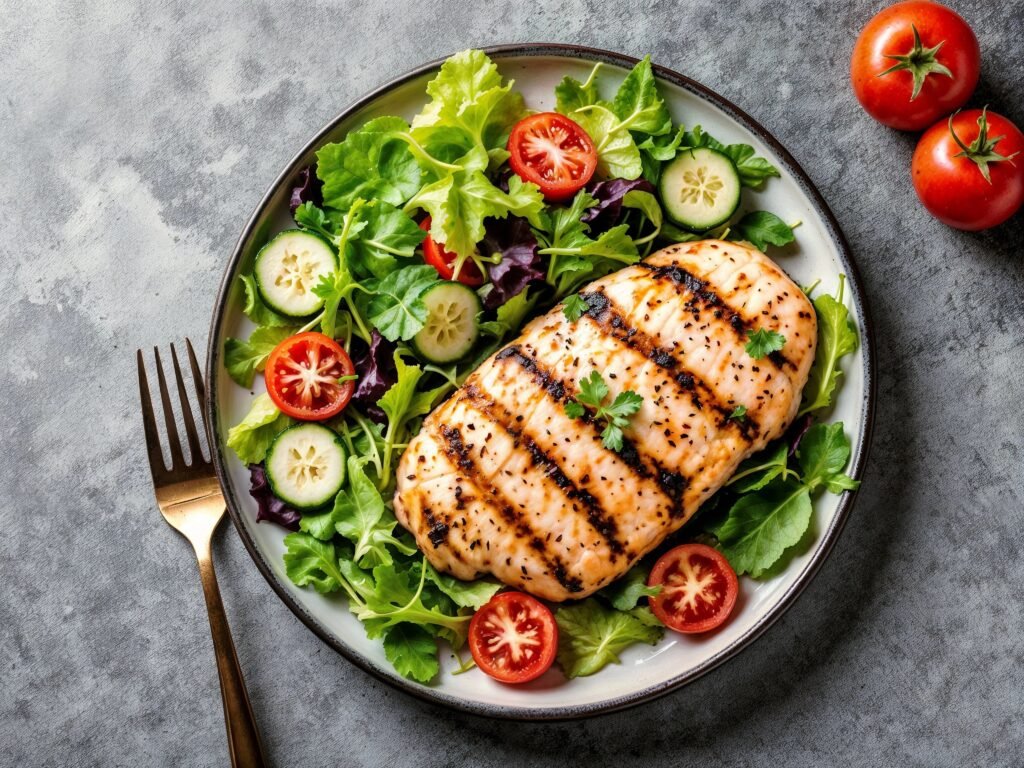
- Lunch: a palm-sized chicken breast or a can of tuna on salad (about 30g)
- Snack: a handful of almonds and a cheese stick (about 12g)
- Dinner: salmon fillet or lean beef with beans (about 30g)
Signs You Might Not Be Getting Enough
True protein deficiency is rare in the US, but running a little low is common — and the signs are easy to misread. Constant hunger even after meals, slow recovery after workouts, hair shedding more than usual, and getting every cold that goes around can all point to skimping on protein. I once spent a month wondering why I was starving by 10 a.m.; turns out my ‘healthy’ breakfast of fruit and toast had about 6 grams of protein in it.
That said, don’t swing to the opposite extreme. Eating 250 grams a day won’t build muscle faster — your body just burns the excess or stores it. Very high intakes over long periods can also crowd out fiber-rich foods, leaving you constipated and missing out on other nutrients. More isn’t better past a point; enough is enough.
One more myth to retire: protein doesn’t damage healthy kidneys. That concern comes from studies on people who already had kidney disease. If your kidneys are healthy, the intakes we’re talking about here are well within the safe range studied in the research.
The Breakfast Problem (Where Most People Lose the Day)
Here’s the pattern I see constantly: breakfast has 10 grams of protein, lunch has 20, and then dinner carries 60+. Your body doesn’t work that way — muscle protein synthesis responds best to moderate doses (roughly 25–40 grams) spread across the day, not one giant evening load. Research on protein distribution suggests that hitting a solid dose at each meal beats backloading, even when the daily total is identical.
The fix is easier than it sounds. Upgrade breakfast first, since it’s the meal most people shortchange: Greek yogurt (15–20g per cup) instead of regular, two eggs plus a slice of cheese on toast, or last night’s chicken tossed into a breakfast burrito. Cottage cheese, protein oats (stir a scoop into oatmeal — it disappears), or even savory leftovers all work. You don’t need a ‘high-protein breakfast product.’ You need the protein foods you already like, moved earlier in the day. Within a week, most people notice steadier energy and fewer 10 a.m. cravings — the distribution effect in action.
The Takeaway
The bottom line? Most active adults do great on roughly 1.2 to 1.6 grams per kilogram of body weight — somewhere around 80 to 110 grams for a 150-pound person. Spread it across three or four meals instead of loading it all at dinner, since your body uses protein more efficiently in moderate doses through the day.
If you want a starting point this week, just track for three days with any free app. You might find you’re already fine, or you might discover — like I did — that breakfast is the meal quietly dragging your whole day down. For food ideas, browse Healthline's list of high-protein foods to build meals you’ll actually enjoy eating.
Pingback: Best Way to Track Daily Calorie Intake (2026)