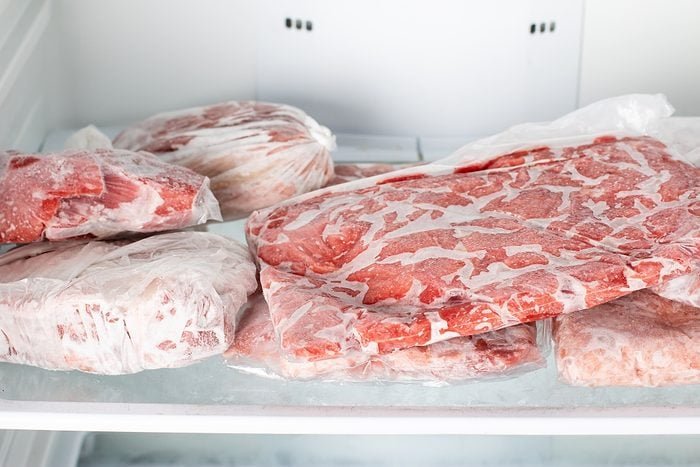
Is It Safe to Refreeze Meat After It Has Thawed?
Is It Safe to Refreeze Meat After It Has Thawed?
Is it safe to refreeze meat after it has thawed? Yes — if the meat was thawed safely in the refrigerator and never sat at room temperature for more than two hours. That’s the USDA’s official position, and it surprises a lot of people who grew up hearing that refreezing is dangerous. The real story is more nuanced: refreezing is safe under the right conditions, but it does affect quality. Here’s exactly when you can refreeze, when you absolutely shouldn’t, and how to do it right.
The Official Rule
According to the USDA’s freezing and food safety guidelines, meat thawed in the refrigerator can be refrozen without cooking — though you may lose some quality from moisture loss. The key condition is how it was thawed. Refrigerator thawing keeps meat at a safe temperature (below 40°F) the entire time, so bacteria never got a chance to multiply. In that case, refreezing simply pauses the clock again.
When Refreezing Is Safe
- Thawed in the fridge: Safe to refreeze within 3-4 days of thawing (1-2 days for ground meat).
- Thawed in cold water: Safe to refreeze only if you cook it first. Cold-water thawing brings the surface into the temperature danger zone, so cook the meat, then freeze the cooked dish.
- Still has ice crystals: If the meat is partially frozen with visible ice crystals, it’s definitely safe to refreeze — it never fully thawed.
- Power outage: If your freezer failed but the meat still contains ice crystals or is below 40°F, refreeze it.
When You Should NOT Refreeze
- Thawed on the counter: Meat left at room temperature for more than two hours (one hour if it’s above 90°F) should be discarded, not refrozen. Bacteria double every 20 minutes in the danger zone between 40°F and 140°F, and freezing doesn’t kill them — it just pauses them.
- Thawed in the microwave: Cook immediately; refreeze only after cooking.
- Smells off or looks slimy: When in doubt, throw it out. No exceptions.
- Previously cooked, then thawed, then left out: Same two-hour rule applies.
The Quality Trade-Off (The Real Cost of Refreezing)
Here’s what the “it’s safe” headlines skip: every freeze-thaw cycle damages meat’s texture. Ice crystals puncture cell walls, and each cycle squeezes out more moisture. Refrozen meat tends to be drier, tougher, and less flavorful — especially lean cuts like chicken breast and pork loin. Fatty cuts (thighs, chuck roast, ground beef) handle it better. So while refreezing won’t make you sick, a twice-frozen steak will never be as good as a once-frozen one. Plan accordingly: use refrozen meat in stews, braises, curries, and slow cooker pulled pork — moist cooking methods that hide the texture loss.
How to Refreeze Properly
- Portion first. Divide into meal-sized portions so you only thaw what you’ll use — avoiding a third cycle.
- Remove air. Use vacuum-seal bags or press all air from zip-top bags. Air causes freezer burn, the main quality killer.
- Label everything. Write the contents and date. Refrozen meat should be used within 2-3 months for best quality.
- Freeze fast. Spread packages in a single layer so they freeze quickly; slow freezing makes larger ice crystals and worse texture.
The Takeaway
Refreezing thawed meat is safe if it was thawed in the fridge and handled properly — the danger isn’t the refreezing, it’s how long the meat spent in the temperature danger zone. You’ll lose some quality with each cycle, so save refrozen meat for forgiving recipes like quick weeknight meals with sauces and slow cooking. When in doubt about time or temperature, throw it out — a $12 package of chicken isn’t worth a foodborne illness.
Frequently Asked Questions
How many times can you safely refreeze meat?
From a pure safety standpoint, there’s no hard limit — if the meat stayed at safe temperatures throughout, each freeze-thaw cycle is safe. But quality degrades with every cycle as ice crystals damage cell structure and moisture escapes. Practically speaking, twice-frozen meat (one refreeze) is fine for stews, braises, and slow-cooked dishes where texture matters less. Three or more cycles produce noticeably dry, tough meat even in forgiving recipes. The smart move: portion before the first freeze so you never need a second one.
Can you refreeze meat that’s been cooked after thawing?
Yes — and this is actually the best strategy. If you thawed meat and your plans changed, cook it (turning it into a finished dish or just cooking it plain), then freeze the cooked result. Cooked meat freezes beautifully for 2-3 months and the quality loss is minimal compared to refreezing raw. This is also the required path for meat thawed in cold water or the microwave: cook first, then freeze. When in doubt, cook it.
Does refreezing affect the taste of meat?
It affects texture more than taste. Each cycle squeezes out moisture (that red liquid in the thawed package), leaving the meat drier and slightly tougher. Flavor compounds are mostly preserved, which is why refrozen meat shines in heavily seasoned, moist preparations — chili, curry, pulled pork, bolognese — where the sauce compensates for texture loss. A refrozen steak cooked medium-rare will disappoint; refrozen chuck in a stew will not.
What about refreezing fish and seafood?
Same safety rules apply, but quality suffers more. Fish has delicate cell structure that ice crystals shred easily — refrozen fish tends toward mushy. Fatty fish (salmon, tuna) handle it better than lean fish (cod, tilapia). Shrimp refreeze reasonably well. As with meat, use refrozen seafood in cooked dishes (pastas, chowders, stir-fries) rather than preparations where texture is the star, like seared scallops or sushi.
How long can meat stay in the freezer?
Safety-wise: indefinitely — frozen meat doesn’t become unsafe, it just declines in quality. Quality-wise, the USDA guidelines are: steaks and roasts 4-12 months, chops 4-6 months, ground meat 3-4 months, chicken pieces 9 months, whole chicken 12 months. Freezer burn (dry, discolored patches) is the main quality killer, and it’s purely about packaging — vacuum-sealed or tightly wrapped meat lasts far longer than loosely bagged. Date everything with a marker; the “mystery package from 2023” problem is real. And remember that refrozen meat should be used on the shorter end of these ranges, since each freeze-thaw cycle costs some quality.