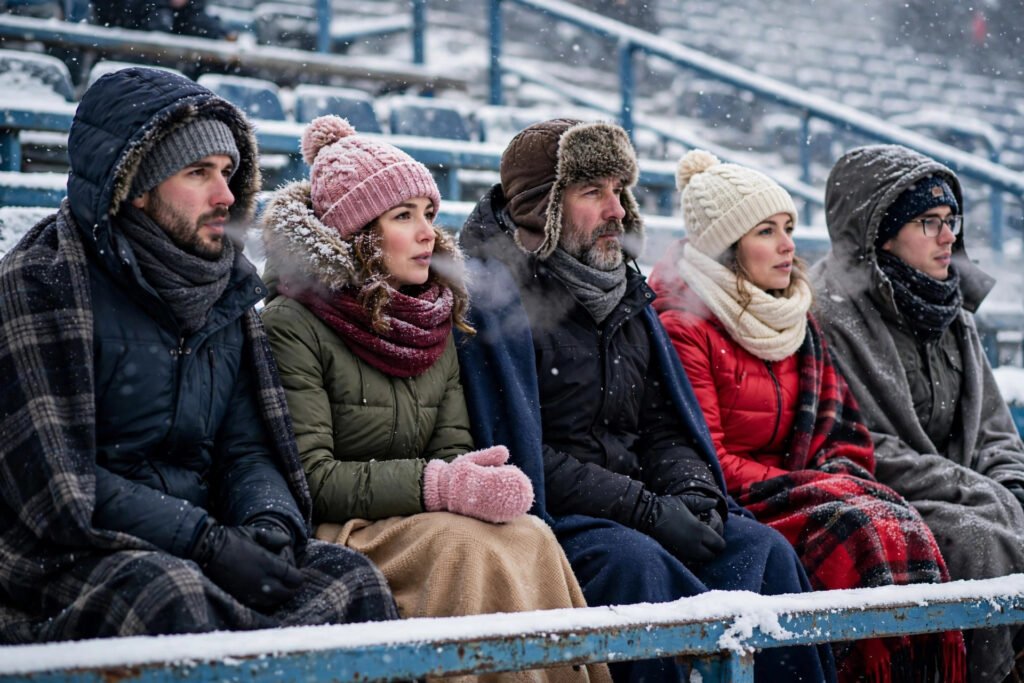
How to Stay Warm Watching Outdoor Football in December
There is a special kind of cold that only exists in an NFL stadium in December. It is not the crisp cold of a winter hike, where movement keeps you warm. It is the motionless, wind-funneled, concrete-bleacher cold of sitting still for three and a half hours while the temperature drops and the sun disappears. Veterans of Lambeau Field, Soldier Field, and Arrowhead know it intimately — and they also know it is entirely manageable with the right system.
This guide covers how to stay warm watching outdoor football in December, from the layering science that actually works to the gear, food, and in-game tactics that separate comfortable fans from the ones leaving at halftime.
Understand What You Are Fighting
Sitting still in cold is physiologically brutal. Your body generates far less heat at rest than during activity, and stadium seating — metal or concrete bleachers — conducts heat straight out of your body. Add wind (open stadiums are wind tunnels; the “frozen tundra” nickname exists for a reason), and the wind chill can push a 25°F day into single digits. The National Weather Service wind chill chart is worth checking the morning of the game: at 20°F with a 15 mph wind, exposed skin can develop frostbite in under 30 minutes.
The good news: this is a solved problem. Cold-weather workers, hunters, and seasoned fans have refined the system over decades. You do not need to be tough; you need to be prepared.
The Layering System That Actually Works
Forget one giant coat. The system is base + mid + shell, and each layer has a job. Base layer: moisture-wicking long underwear (merino wool or synthetic — never cotton, which holds sweat against your skin and makes you colder). Top and bottom, full length. Mid layer: insulation — a fleece or down/synthetic puffy jacket and fleece pants. This layer traps warm air. Shell: a windproof, water-resistant outer layer. Wind is the enemy; a windproof shell over good insulation outperforms a thicker coat that lets wind through.
Do not overdress to the point of sweating on the walk in — damp base layers defeat the system. Vent or remove a layer during the walk, then bundle up once seated. For the outer coat itself, our breakdown of how much to spend on a good winter coat helps you pick one that earns its price across many winters, not just one game.
Extremities: Where Games Are Won and Lost
Your core can be toasty while your fingers and toes stage a mutiny. Feet: insulated, waterproof boots (rated to at least -20°F), wool socks (one pair — doubling up restricts circulation and makes feet colder), and toe warmers stuck to the top of the sock. Avoid tight boots; you need air space for insulation. Hands: mittens beat gloves — fingers share warmth. Use thin liner gloves under mittens so you can handle tickets and phones, plus hand warmers in each mitten. Head and neck: a balaclava or a hat plus neck gaiter pulled up over the nose. You lose disproportionate heat from an uncovered head and neck in wind.
Sit on insulation, not bare bleacher. A closed-cell foam stadium seat pad (or even a folded blanket) breaks the conductive heat loss into the metal bench — this single item makes a bigger difference than most people expect. Packing for winter travel follows the same principles if you are flying in for the game.
Heat Packs, Blankets, and the Good Stuff
Disposable warmers are the stadium fan’s secret weapon. Body warmers (adhesive, stuck to your base layer over the kidneys/lower back) keep your core warm for 8+ hours. Toe warmers and hand warmers are obvious; fewer fans know about them, but they are cheap in bulk. A heated vest or heated socks (battery-powered) is the luxury upgrade that converts skeptics — one charge lasts a full game.
Bring a proper stadium blanket — wool or heavy fleece, large enough to tuck around your legs. Two blankets are better than one thick coat for seated warmth because they trap air around your lower body, which the coat does not cover. Check your stadium’s bag policy before the game; most NFL stadiums enforce clear-bag rules with size limits, so pack accordingly.
Eat, Drink, and Move Strategically
Your body is a furnace — feed it. Eat a substantial warm meal before the game; calories are heat. In the stadium, hot chocolate, coffee, and soup do double duty (internal warmth plus a warm cup in your hands). Eat and drink steadily rather than all at once. Alcohol deserves a warning: it makes you feel warm while actually accelerating heat loss by dilating blood vessels — the classic cold-weather trap. Enjoy a beer, but do not rely on it for warmth.
Move during breaks. Stand, stomp your feet, and walk the concourse at halftime — even five minutes of movement recharges your warmth for the next quarter. Isometric exercises in your seat (pressing your palms together hard, tensing leg muscles) generate heat without looking odd. Cheer loudly; it is both warming and your job as a fan. One final tip: keep a spare pair of dry socks in an inside pocket — if your feet get wet from snow or slush, changing into dry socks at halftime can salvage the entire second half.
Know the Warning Signs
Comfort is the goal, but safety is the requirement. The CDC notes that frostbite can begin with numbness and pale, waxy skin — if your toes go numb and do not recover with wiggling, get to a heated concourse area. Hypothermia starts with uncontrollable shivering, confusion, and clumsiness; it is rare at a football game but not impossible in extreme conditions with inadequate gear. There is no shame in a concourse warm-up break — the game is on the concourse TVs too.
The Bottom Line
Staying warm at a December football game is not about toughness; it is about systems. Wick sweat with a proper base layer, insulate with fleece or down, block wind with a shell, protect your extremities with mittens and insulated boots, sit on a pad, deploy heat packs liberally, and keep the calories coming. Do that, and you will be the comfortable fan watching everyone else shiver — all the way to the final whistle.
Frequently Asked Questions
What should I wear to a December NFL game?
A moisture-wicking base layer, insulating mid-layer (fleece/down), windproof outer shell, insulated waterproof boots with wool socks, mittens with liners and hand warmers, and a hat plus neck gaiter. Sit on an insulated stadium pad.
Are heated vests allowed in NFL stadiums?
Battery-powered heated clothing is generally allowed as it is worn clothing, not a prohibited item. Check your specific stadium’s policy, and remember all bags must comply with the clear-bag rule.
How cold does it get at Lambeau Field in December?
December game-time temperatures at Lambeau Field are often in the teens or 20s°F, with wind chills in the single digits. The stadium’s open bowl design amplifies wind — it earned the “frozen tundra” name honestly.
Can you bring blankets into NFL stadiums?
Yes, blankets are generally allowed, though they must typically be carried in (not in a prohibited bag) and some stadiums restrict sizes. Check your stadium’s specific guest policy before the game.