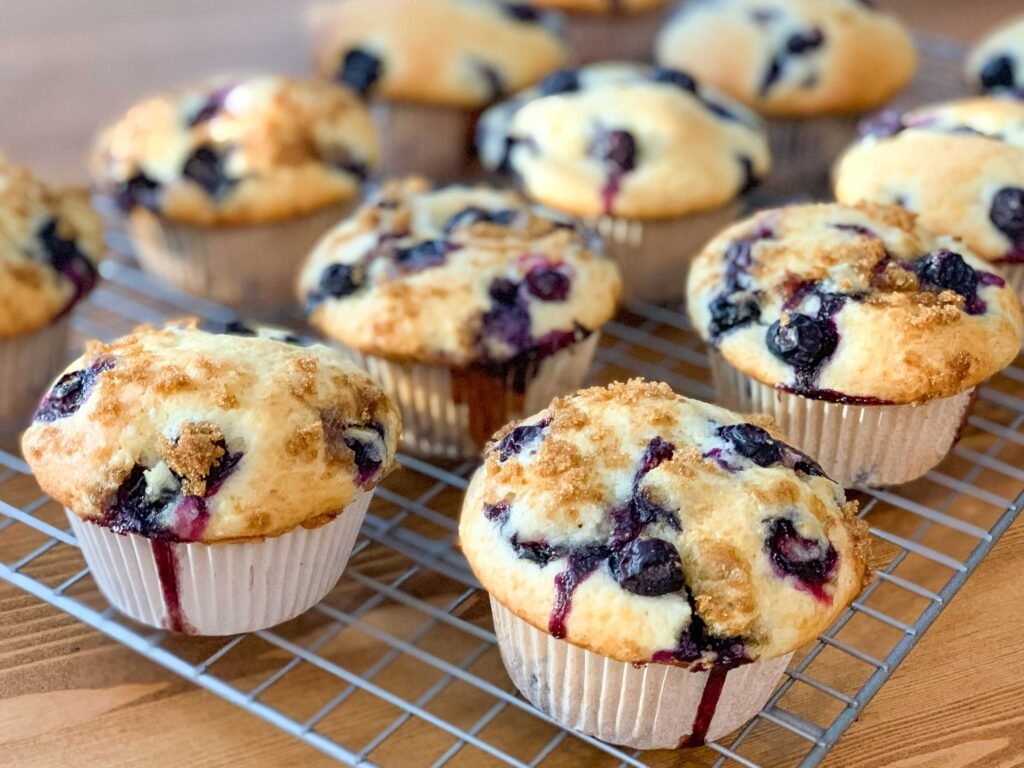
How Much Sugar Is Actually in a Store-Bought Muffin?
How Much Sugar Is Actually in a Store-Bought Muffin?
How much sugar is actually in a store-bought muffin? More than you’d guess: a typical bakery or coffee-shop muffin contains 30-50 grams of sugar — that’s 7 to 12 teaspoons, roughly the same as a can of soda. The “healthy” bran or blueberry muffin from the coffee shop isn’t a wholesome breakfast; it’s cake wearing a health costume. I started checking nutrition labels on muffins a few years ago and it genuinely changed what I order. Here are the real numbers.
Sugar in Popular Store-Bought Muffins
Approximate sugar content per muffin (values vary by brand and size):
- Starbucks blueberry muffin: ~34g sugar
- Starbucks chocolate chip muffin: ~40g sugar
- Dunkin’ blueberry muffin: ~44g sugar
- Costco mega-muffin (chocolate): ~50g+ sugar — these are enormous
- Grocery store bran muffin: ~25-35g sugar (the “healthy” trap)
- Hostess/Little Debbie packaged muffin: ~20-28g sugar
- Homemade basic muffin: ~12-18g sugar (you control it)
For context, the American Heart Association recommends no more than 25g of added sugar per day for women and 36g for men. One coffee-shop muffin can blow through your entire day’s budget before 9 AM.
Why Muffins Have So Much Sugar
Three reasons. First, size creep: the “muffin” of 1980 was about 2 ounces; today’s coffee-shop muffins run 4-6 ounces — they’re cupcakes without frosting. Second, sugar sells: sweeter muffins taste better in a side-by-side taste test, so manufacturers keep pushing it up. Third, the health halo: people feel virtuous eating a “bran muffin” or “fruit muffin,” so they don’t scrutinize the label the way they would a donut. A glazed donut, for comparison, has about 12g of sugar — most muffins have triple that. Let that sink in.
Reading the Label (What to Look For)
- Check “added sugars,” not just total sugars — the FDA label now breaks this out. Fruit contributes natural sugar; the added line tells you what the manufacturer put in.
- Watch the serving size. Some packaged muffins list nutrition for half a muffin. Nobody eats half a muffin.
- Scan the ingredients. Sugar hides under names like dextrose, corn syrup, cane juice, maltodextrin, and fruit juice concentrate. Multiple sweeteners in one ingredient list is a red flag.
- Compare calories too. A 500+ calorie muffin is a meal, not a snack — plan accordingly.
The FDA’s guide to added sugars on nutrition labels explains exactly how to read the current label format.
Better Options (Including Homemade)
If you love muffins, make them at home — it’s the only way to control the sugar. A basic homemade muffin recipe uses about 1/2 cup of sugar for 12 muffins (~8g each), and you can cut that in half without ruining the texture, especially with naturally sweet add-ins like overripe bananas or applesauce. The same beginner baking skills apply. Buying instead? Look for muffins under 15g of sugar, or just own it and treat the muffin as dessert — there’s nothing wrong with cake, as long as you’re honest that it’s cake.
The Takeaway
A store-bought muffin typically packs 30-50 grams of sugar — soda-level sweetness hiding behind a wholesome image. Check the label, watch the serving size, and consider homemade when you want a genuinely reasonable breakfast. Your quick healthy breakfast will thank you.
Frequently Asked Questions
Are bran muffins actually healthy?
Usually not — they’re the biggest health-halo offenders in the bakery case. A typical coffee-shop bran muffin has 25-35g of sugar and 400+ calories, with only marginally more fiber than a blueberry muffin. The “bran” in the name does psychological heavy lifting that the nutrition label doesn’t support. If you want fiber, a bowl of actual bran cereal with fruit gives you triple the fiber at a third of the sugar. Muffins are treats; bran muffins are treats wearing a costume.
How much sugar should breakfast have?
There’s no official “breakfast sugar limit,” but a useful rule: keep added sugars under 10-12g for breakfast — roughly what you’d get from a piece of fruit’s worth of sweetness plus a little extra. That leaves room in the daily budget (25g women/36g men per AHA guidelines) for the rest of the day. Most coffee-shop muffins blow the entire day’s budget in one item, which is why they function as dessert nutritionally. A good breakfast target overall: 15-25g protein, some fiber, and sugar in the single digits from added sources.
What’s the lowest-sugar muffin I can buy?
Look for “mini” muffins (portion control does the work), savory muffins (cheese, herb, or corn — often under 5g sugar), or specifically marketed low-sugar/high-protein muffins from brands like Kodiak Cakes. At coffee shops, ask for the nutrition info — sometimes the “reduced fat” muffin is the sugary one (fat removed, sugar added for flavor). Your best bet remains homemade, where a basic recipe with half the sugar still tastes great, especially with fruit or spices carrying the flavor.
Can I reduce sugar in muffin recipes without ruining them?
Yes — most muffin recipes tolerate a 25-50% sugar reduction with no structural problems. Sugar does contribute to moisture and browning, so compensate: add an extra tablespoon of oil or yogurt for moisture, and expect slightly paler tops. Boost flavor to cover the difference with vanilla, cinnamon, citrus zest, or naturally sweet mix-ins like ripe bananas, applesauce, or berries. Start by cutting sugar by a third; you likely won’t miss it.
Why are homemade muffins so much smaller than bakery muffins?
Standard home muffin tins make ~2-3oz muffins; commercial bakeries use jumbo tins producing 5-6oz muffins — then price and market them as single servings. That size difference explains most of the calorie and sugar gap. If you want bakery-style presence at home, buy a jumbo muffin tin ($10-15) — but know that one jumbo homemade muffin roughly equals two standard ones nutritionally. The tin doesn’t change the math; it just changes the shape.
Are “sugar-free” muffins a healthy choice?
Not necessarily — “sugar-free” usually means sweetened with sugar alcohols (erythritol, xylitol) or artificial sweeteners instead. The calorie savings are real but modest, and sugar alcohols cause digestive distress in many people (gas, bloating) at muffin-sized doses. Worse, some “sugar-free” products compensate with extra fat, keeping calories nearly identical. The label to actually trust is the full nutrition panel, not the front-of-package claim. A small regular muffin eaten mindfully beats a large “sugar-free” muffin eaten guilt-free — the health halo causes people to eat more. As with everything in the bakery case, the dose makes the poison.