Quick Healthy Breakfast Before Work: 15 Ideas
Quick Healthy Breakfast Before Work: 15 Ideas (All Under 10 Minutes)
Figuring out how to make a quick healthy breakfast before work is really about solving two problems: time and the 10 AM crash. Most “quick” breakfasts (pastries, sugary cereal, bagels) spike your blood sugar and leave you starving by mid-morning. The fix isn’t more time — it’s protein and fiber, which actually keep you full. I’ve done the bleary-eyed 6 AM routine for years, and these 15 ideas all take under 10 minutes (most under 5) and keep you satisfied until lunch.
The Formula (Why These Work)
A breakfast that holds you until lunch has 15-25g of protein plus some fiber. That’s it. Protein slows digestion, fiber adds bulk, and together they flatten the blood sugar curve. A 300-calorie donut gives you 45 minutes; a 300-calorie Greek yogurt bowl gives you 4 hours. Same calories, completely different mornings. Keep this formula in mind and you can improvise forever.
No-Cook (Under 3 Minutes)
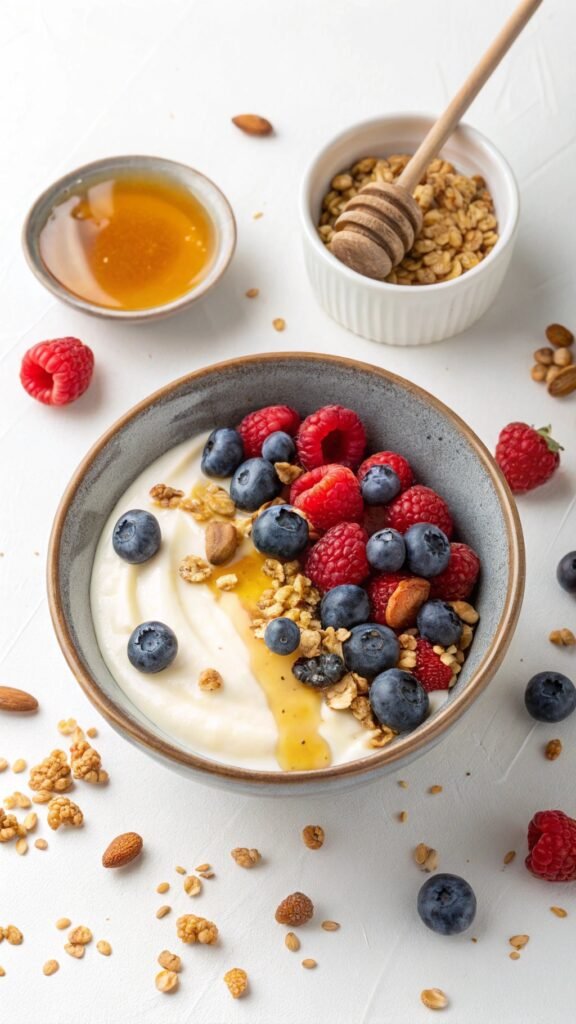
- Greek yogurt + berries + granola: 20g protein. The king of quick breakfasts. Prep the berries Sunday.
- Overnight oats: Oats + milk + yogurt + chia seeds in a jar, refrigerated overnight. Grab and go. Endless variations.
- Cottage cheese + fruit: 15-20g protein. Pineapple or peaches are classic; everything bagel seasoning is the savory sleeper hit.
- Protein smoothie: Blend and go. Frozen fruit means no prep; add Greek yogurt or protein powder for staying power.
- Apple + peanut butter: 10g protein, 5g fiber. Simple, portable, genuinely filling.
- Hard-boiled eggs + fruit: Batch-boil a dozen Sunday; grab two plus a banana. 12g protein, zero morning effort.
Minimal Cooking (5-10 Minutes)
- Scrambled eggs + whole grain toast: 4 minutes, 18g protein. The classic for a reason.
- Oatmeal + peanut butter + banana: 5 minutes, 12g protein, tons of fiber. Use overripe bananas — they melt right in.
- Whole grain toast + avocado + egg: 7 minutes, 15g protein. The millennial cliché that’s actually nutritionally excellent.
- Breakfast burrito: Scrambled eggs + black beans + salsa in a tortilla. Make 5 Sunday, microwave 90 seconds each morning.
- PB banana toast: Whole grain bread, peanut butter, sliced banana, drizzle of honey. 3 minutes, 12g protein.
- Egg muffins: Eggs + veggies baked in a muffin tin (Sunday batch). Microwave 30 seconds. 10g protein each; eat two.
Make-Ahead (Zero Morning Effort)
- Egg muffin batch: 12 eggs + diced peppers, spinach, cheese → muffin tin, 350°F, 20 min. Lasts 5 days refrigerated.
- Overnight oats x5: Five jars Sunday night. Different fruit in each so you don’t get bored.
- Chia pudding: Chia + milk + vanilla, overnight. Top with fruit. 10g protein with Greek yogurt mixed in.
What to Avoid
- Pastries and donuts: 400 calories, 3g protein, hungry by 9:30. Dessert, not breakfast.
- Sugary cereal: Most “healthy” cereals have 12g+ sugar per serving. Check the label — see how sugar hides in breakfast foods.
- Just coffee: Caffeine masks hunger; it doesn’t replace food. You’ll crash harder later.
- Skipping entirely: If you’re genuinely not hungry, fine. But “no time” isn’t the same as “not hungry” — that’s what the 3-minute options are for.
The Harvard take on breakfast backs the protein-and-fiber approach with actual research.
The Takeaway
A quick healthy breakfast before work needs 15-25g of protein plus fiber — Greek yogurt bowls, overnight oats, egg muffins, and smoothies all deliver in under 10 minutes. Batch-prep on Sunday and weekday mornings become grab-and-go. You’ll eat better, spend less than the drive-through, and stop watching the clock until lunch. Pair with fresh-ground coffee and your mornings are transformed.
Frequently Asked Questions
Is it actually bad to skip breakfast?
Not inherently — the “most important meal” slogan was a cereal marketing campaign, not science. What matters is total daily nutrition and how you feel. Some people genuinely aren’t hungry until 10 AM and do fine; intermittent fasters skip deliberately. The problem is skipping because of “no time” and then overeating junk at 10 AM — that’s the pattern that causes problems. If you skip breakfast and eat well the rest of the day, you’re fine. If skipping leads to vending-machine raids, the 3-minute options above fix it.
What’s the highest-protein quick breakfast?
Greek yogurt bowls win for speed: a cup of Greek yogurt (20g) + granola and berries takes 2 minutes and hits 25g total. Egg-based options (3-egg scramble, egg muffins) hit 18-20g in under 10 minutes. Protein smoothies with powder reach 25-30g. The practical ceiling for a quick breakfast is about 25-30g — beyond that you’re adding significant calories or prep time. For most people, 20g is the sweet spot that holds until lunch without a heavy feeling.
How do I meal-prep breakfast for the whole week?
Pick two make-ahead recipes (variety prevents rebellion) and batch them Sunday: egg muffins + overnight oats is the classic combo (30 minutes total). Store in individual portions — jars for oats, containers for egg muffins. They keep 4-5 days refrigerated. Add fresh fruit the morning of (not before — it gets soggy). Rotate the recipes every 2-3 weeks to avoid burnout. Total Sunday investment: 30-40 minutes for five grab-and-go breakfasts. That’s the highest-ROI meal prep there is.
Are breakfast bars a healthy option?
Mostly no — the average granola/protein bar is candy with marketing. Check the label: many have 12-20g of sugar and 3g of protein, which is nutritionally a cookie. The exceptions: bars with 10g+ protein, 3g+ fiber, and under 8g sugar (RXBAR, KIND Protein, and similar) are legitimate in a pinch. But they’re $1.50-2.50 each — a week’s worth costs more than a tub of Greek yogurt and a bag of oats. Use bars as emergency backup, not daily breakfast.
What should I drink with breakfast for energy?
Water first — you’re mildly dehydrated every morning, and a big glass of water does more for alertness than people expect. Coffee is fine (the fresh-ground upgrade is worth it), but drink it with or after food, not instead of it — caffeine on an empty stomach spikes cortisol and anxiety in sensitive people. Green tea is the gentler alternative: less caffeine plus L-theanine, which smooths the energy curve. Skip the morning juice — it’s 25g of sugar with none of fruit’s fiber. And the “bulletproof coffee as breakfast” trend? It’s 400 calories of butter with no protein — it keeps you full but it’s not nutrition. Eat food, drink water, then enjoy your coffee.
Pingback: Grinding Your Own Coffee Beans: Worth It?