Make Your Home Smell Amazing Without a Single Candle
Make Your Home Smell Amazing Without a Single Candle
How do I make my home smell good without candles? Short answer: yes, with the right approach. Here’s the full breakdown.
I love a nice-smelling home, but between a curious cat, a landlord's no-open-flame rule, and my general distrust of my own memory, candles just aren't happening in my place. For a while I assumed that meant living with eau de whatever-dinner-was.
Wrong. There are better, safer, and honestly longer-lasting ways to scent a home. Here are the methods I actually use, ranked by how well they work.
Here’s what you need to know
Simmer pots are the heavyweight champion
A pot of water on low with orange slices, cinnamon sticks, cloves, and a splash of vanilla makes the whole place smell like the holidays had a baby with a bakery. It costs almost nothing, uses kitchen scraps, and fills a home in 20 minutes. Just don't let it boil dry — set a timer. This is my go-to before guests arrive.
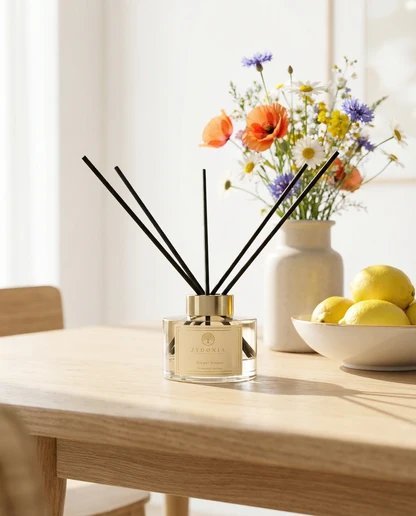
Reed diffusers for set-it-and-forget-it scent
A $12 reed diffuser lasts 2-3 months and needs zero attention. Flip the reeds weekly for a refresh. They're perfect for bathrooms, entryways, and bedrooms where you want constant background scent. Pro tip: buy unscented reeds and your favorite essential oil to refill the bottle instead of replacing it.
Related reading: How Much Should You Really Tip for Food Delivery? (2026)
Baking soda: the unsung odor assassin
Before adding nice smells, kill the bad ones. Sprinkle baking soda on carpets and upholstery, wait 20 minutes, vacuum. Put an open box in the fridge and near the trash. Half of 'my home doesn't smell good' is really 'my home smells faintly bad' — fix that first and everything else works better.
Essential oil diffuser with actual good oils
Skip the $5 mystery blends. A decent ultrasonic diffuser with quality oils (lemon, eucalyptus, lavender) scents a room in minutes and doubles as a humidifier in dry months. Clean it weekly or it gets funky. I run citrus in the morning and lavender at night — it genuinely changes how the apartment feels.
DIY linen and room sprays
Mix distilled water, a tablespoon of vodka or witch hazel, and 15-20 drops of essential oil in a spray bottle. Mist couches, curtains, and bedding. It won't last all day, but it's perfect for a quick refresh before company. Way cheaper than store sprays and no mystery chemicals.
My honest take
My signature move is the simmer pot before dinner parties. Guests always ask what candle I'm burning, and I love telling them it's literally orange peels and cinnamon. It costs pennies and makes me look like I have my life together, which is half the battle.
FAQs: How do I make my home smell good without candles?
Here are the questions I hear most often about this topic:
Are essential oils safe around pets?
Some aren't — tea tree, eucalyptus, and citrus oils can bother cats and dogs. Keep diffusers in rooms pets can leave, and check with your vet about specific oils.
How do I get rid of cooking smells fast?
Simmer vinegar and water for 10 minutes, then follow with a citrus simmer pot. The vinegar neutralizes; the citrus replaces.
Do air purifiers help with smell?
Yes for particles and some odors, especially with a carbon filter — but they remove smells rather than add pleasant ones. Pair one with a diffuser for best results.
The bottom line
You don't need an open flame to have a home that smells incredible. Start with baking soda to reset, add a simmer pot for wow factor, and keep a reed diffuser running for the everyday. Your nose — and your landlord — will thank you.
For deeper background, check out Good Housekeeping's home fragrance tips — both are solid, reputable resources worth bookmarking.
More from Daily Magazine 24
- How Much Should You Really Tip for Food Delivery? (2026)
- How to Actually Spend Less Time on Your Phone (Without Deleting Everything)
One more thing worth knowing
A quick word on perfectionism, because it derails more good intentions than laziness ever does. You don't need the perfect version of this — you need the done version. The slightly messy attempt beats the flawless plan that never leaves your head. I've seen people research the ideal approach for months while doing nothing; meanwhile the person who just started imperfectly is already reaping benefits. Start ugly, refine later.
One more thing worth knowing
If you live with other people, get them on board early — not with a lecture, but by making the new way easier than the old way. Systems that depend on everyone caring equally will fail; systems where the right choice is the lazy choice succeed. Put the thing where it belongs, remove friction from the good habit, add friction to the bad one. Design beats discipline, especially in shared spaces.
One more thing worth knowing
Budget-wise, remember that most of these improvements cost little or nothing — the expensive part is usually indecision, not implementation. I've spent more money 'thinking about' solutions than on the solutions themselves. Set a small budget, pick the highest-impact move, and do it this weekend. Future-you, enjoying the results, will wonder why you waited.
One more thing worth knowing
Finally, give any change a fair trial before judging it. Three weeks is my minimum — the first week you're fighting old habits, the second you're adjusting, and only in the third do you see the real payoff. I've almost abandoned routines on day five that became favorites by day twenty. Commit to the trial period upfront, evaluate honestly at the end, and keep what earns its place.
One more thing worth knowing
One more practical note: take a 'before' snapshot — a photo, a quick note about how things feel now. We adapt to improvements fast and forget how far we've come, which makes it tempting to abandon systems that are quietly working. Six months from now, that before-photo will remind you why you started. Progress you can see is progress you'll protect.
Pingback: Easiest Way to Learn Basic Car Maintenance (2026)