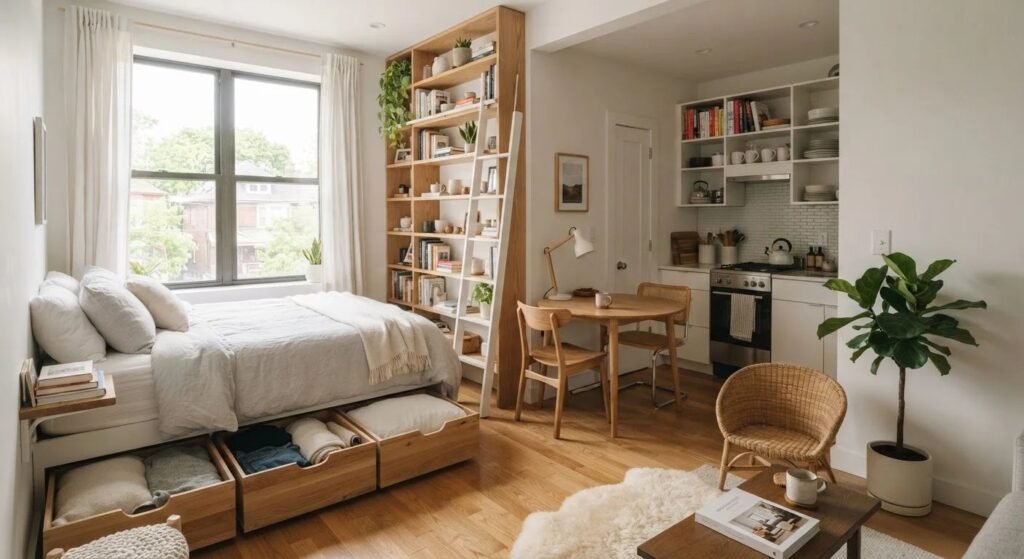
Small Apartment, Big Calm: The Organization System That Actually Works
Small Apartment, Big Calm: The Organization System That Actually Works
What is the best way to organize a small apartment? I dug into this properly, and what I found surprised me — here’s the no-fluff version.
When I moved into my 480-square-foot studio, I had two choices: get ruthless about organization or drown in stuff. There's no junk drawer in a small apartment — every junk drawer is your whole apartment.
The secret isn't buying a hundred organizers. It's a system: zones, vertical thinking, and one rule that keeps everything in check. Here's the exact approach that turned my shoebox into a place I actually love coming home to.
The complete breakdown
Zone every room, even if it's one room
Divide your space by function: sleep zone, work zone, eat zone, relax zone. In a studio, a bookshelf or rug can draw the boundary. Everything you own should belong to a zone, which makes putting things away automatic — you're not tidying 'the apartment,' you're resetting the work zone. It turns a vague chore into a 5-minute task.
Go vertical before you go horizontal
Small apartments run out of floor space fast, but walls are free real estate. Floating shelves, over-door hooks, tall bookcases, and wall-mounted organizers can double your storage without shrinking your floor plan. I added three floating shelves above my desk and gained what felt like a whole extra closet.
Related reading: Make Your Home Smell Amazing Without a Single Candle
One in, one out — no exceptions
This is the rule that keeps a small apartment from slowly filling up again. New shirt? An old one goes to donation. New book? One leaves the shelf. It sounds strict, but it's the only thing standing between you and clutter creep. After six months, it becomes second nature.
Use the backs of doors and the insides of cabinets
The back of every door is a free closet: over-door racks hold shoes, cleaning supplies, pantry goods. Inside cabinet doors, mount small racks for spices, lids, or wraps. These are the square feet most people forget they own, and in a small place they're pure gold.
Contain, don't just stack
Loose piles are the enemy. Bins, baskets, and drawer dividers turn 'a heap of cables' into 'the tech bin.' Label them if you're feeling fancy, but even unlabeled containers beat open piles. The goal is that everything has a container home — if it doesn't fit in one, you probably own too many of it.
My honest take
The zoning trick changed everything for me. Before, cleaning felt endless because 'clean the apartment' is an overwhelming task. Now I reset one zone at a time — the kitchen zone takes 8 minutes, the sleep zone takes 3. I actually do it instead of dreading it.
FAQs: What is the best way to organize a small apartment?
Here are the questions I hear most often about this topic:
Where do I even start with a messy small apartment?
Start with the zone you see first when you walk in — usually the entry or living area. Visible progress builds momentum for the rest.
Should I buy organizers first?
No. Declutter first, then buy only what you need for what's left. Buying containers before purging just gives clutter nicer packaging.
How do I handle seasonal stuff with no storage?
Vacuum-seal bags under the bed, one labeled bin per season on a high shelf, and be honest about whether you really wear that winter coat.
The bottom line
A small apartment doesn't need to feel small — it needs a system. Zone it, go vertical, enforce one-in-one-out, and contain everything. Do that, and your 500 square feet will feel like a choice, not a compromise.
For deeper background, check out Good Housekeeping's organization experts — both are solid, reputable resources worth bookmarking.
More from Daily Magazine 24
- Make Your Home Smell Amazing Without a Single Candle
- Robot Vacuum in a Small Apartment: Worth It or Waste of Money?
One more thing worth knowing
It's also worth saying: don't try to implement everything at once. Pick the one tip that resonated most and do just that for two weeks. I call it the 'one-thing rule,' and it's how I've built every lasting habit I have. Our brains rebel against overhauls but accept single tweaks gracefully. Two weeks from now, add tip number two. In three months you'll have transformed the whole area without ever feeling overwhelmed — slow change is the only change that sticks.
One more thing worth knowing
A quick word on perfectionism, because it derails more good intentions than laziness ever does. You don't need the perfect version of this — you need the done version. The slightly messy attempt beats the flawless plan that never leaves your head. I've seen people research the ideal approach for months while doing nothing; meanwhile the person who just started imperfectly is already reaping benefits. Start ugly, refine later.
One more thing worth knowing
If you live with other people, get them on board early — not with a lecture, but by making the new way easier than the old way. Systems that depend on everyone caring equally will fail; systems where the right choice is the lazy choice succeed. Put the thing where it belongs, remove friction from the good habit, add friction to the bad one. Design beats discipline, especially in shared spaces.
One more thing worth knowing
Budget-wise, remember that most of these improvements cost little or nothing — the expensive part is usually indecision, not implementation. I've spent more money 'thinking about' solutions than on the solutions themselves. Set a small budget, pick the highest-impact move, and do it this weekend. Future-you, enjoying the results, will wonder why you waited.
One more thing worth knowing
Finally, give any change a fair trial before judging it. Three weeks is my minimum — the first week you're fighting old habits, the second you're adjusting, and only in the third do you see the real payoff. I've almost abandoned routines on day five that became favorites by day twenty. Commit to the trial period upfront, evaluate honestly at the end, and keep what earns its place.