How to Fix a Running Toilet That Won’t Stop
How to Fix a Running Toilet That Won’t Stop
A running toilet is the most wasteful plumbing problem in your house — it can send 200 gallons of water a day straight down the drain, adding $50 to $100 a month to your water bill. And it’s almost always a $10 fix you can do yourself in twenty minutes.
There are really only three culprits: the flapper, the fill valve, or the chain. Here’s how to figure out which one and fix it.
Diagnose It in 60 Seconds
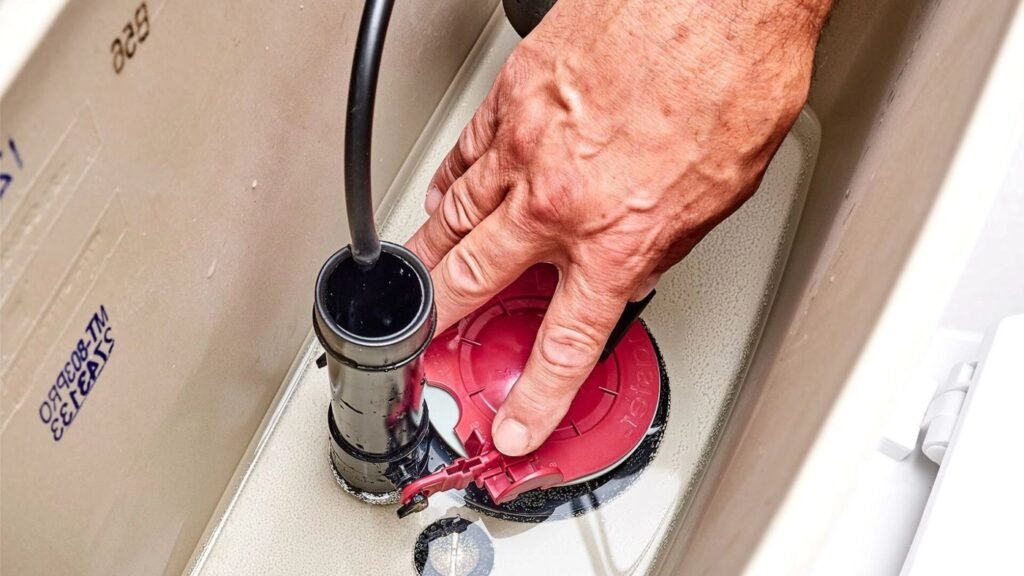
Take the tank lid off and look inside. First, check the water level — it should sit about an inch below the overflow tube. If water is flowing into the overflow tube, the fill valve is the problem. If the water level is fine but you hear running, the flapper is leaking. Give the flapper a gentle push — if the running stops, you’ve found your culprit.
The food coloring test settles any doubt: drop a few drops of food coloring into the tank, wait 15 minutes without flushing, then check the bowl. Color in the bowl means the flapper is leaking water through. No color but still running? The fill valve isn’t shutting off. This two-minute test tells you exactly which $10 part to buy.
Fixing the Flapper (the Most Common Cause)
Flappers are rubber seals that wear out every 3 to 5 years — chlorine and minerals eat them. Turn off the water supply valve behind the toilet, flush to drain the tank, and unhook the old flapper from the pegs on the overflow tube. Take it to the store to match the size (2-inch vs 3-inch matters) or buy a universal one for $5 to $10.
Hook the new flapper on, connect the chain with about half an inch of slack — too tight and it can’t seal, too loose and it tangles. Turn the water back on and test. If the chain is the actual problem (kinked, rusted, or too long), a new chain costs $3 and takes two minutes. Pro tip: while you’re in there, wipe the flapper seat (the rim it seals against) with a cloth — mineral buildup there prevents sealing even with a new flapper.
Fixing the Fill Valve
If the water level is too high or the valve hisses constantly, the fill valve needs attention. First try the easy fix: adjust the float. On newer valves, squeeze the clip on the float and slide it down; on older ball-float arms, bend the arm down slightly or turn the adjustment screw. Lower the water level to an inch below the overflow tube and see if the running stops.
If adjustment doesn’t work, replace the valve — it’s a $12 to $20 part and genuinely a 15-minute job. Shut off water, flush, sponge out remaining tank water, unscrew the water supply line and the locknut under the tank, lift out the old valve, drop in the new one at the right height, reconnect, and turn the water on. The universal fill valves at any hardware store fit 99% of toilets and come with clear instructions. When you’re done, do the food coloring test once more to confirm the fix.
Running Toilet Fix Checklist
Work through these steps:
- Remove the tank lid and check the water level against the overflow tube.
- Do the food coloring test to identify flapper vs. fill valve.
- For flapper leaks: replace the flapper ($5-$10) and check chain slack.
- For fill issues: adjust the float height first — it’s free.
- If adjustment fails, replace the fill valve ($12-$20, 15 minutes).
- Clean mineral buildup off the flapper seat while you’re in there.
- Retest with food coloring to confirm the fix worked.
The Bottom Line
A running toilet is almost always a worn flapper or a misadjusted fill valve — both cheap parts, both fixable in under half an hour with no special skills. There’s no reason to pay a plumber $150 for this or to keep donating water to the sewer.
Do the food coloring test today. If there’s color in the bowl, you’ve got a $10 fix waiting. Your water bill drops the moment you swap the part.
Upgrading While You’re In There
Since you’re already inside the tank with the water off, consider a few cheap upgrades that pay off. A dual-flush converter kit ($25) replaces the standard flapper with a two-button system — half flush for liquid, full for solid — saving a family of four roughly 4,000 gallons a year. It installs exactly like a flapper replacement, so the marginal effort is zero. Your water bill drops noticeably within the first billing cycle.
Check the supply line while you’re at it. If it’s an old rigid chrome line or showing corrosion, replace it with a braided stainless steel line ($12) — burst supply lines are a top cause of household flooding, and the 10 minutes it takes during a toilet repair is the cheapest flood insurance available. Also inspect the tank bolts: if they’re rusting, a tank-to-bowl bolt kit ($8) prevents the slow leak that rots floors silently. These are the unsexy parts that cause the expensive disasters.
Finally, consider the fill valve upgrade even if yours technically works. Modern quiet-fill valves ($15) are dramatically less noisy than 15-year-old ones — if your toilet’s refill sounds like a jet engine, this is the fix. And if your toilet is a pre-1994 water hog (3.5+ gallons per flush versus modern 1.28), do the math on full replacement: a $200 modern toilet can save $100+ a year in water, paying for itself in two years while fixing every internal part at once.
Quick Answers
How much water does a running toilet waste?
Up to 200 gallons a day — that’s 6,000 gallons a month, potentially adding $50-$100+ to your water bill.
Can I use a universal flapper?
Usually yes — universal flappers fit most toilets. But matching your exact model is more reliable; take the old one to the store.
Why does my toilet run randomly for a few seconds?
That’s ‘phantom flushing’ — the flapper is leaking slowly, the tank drains over hours, then the fill valve tops it up. Replace the flapper.
The water-bill detective work is worth doing beyond the toilet fix. A running toilet is often the visible symptom of high water pressure stressing your whole plumbing system. Buy a $10 water pressure gauge, attach it to an outdoor spigot, and check: ideal residential pressure is 40-60 PSI. Above 80 PSI, everything wears faster — toilet fill valves, faucet washers, washing machine hoses, water heater seals. A pressure regulator ($200-$400 installed) protects the entire system. If your toilet parts keep failing prematurely, pressure is the prime suspect. Fix the pressure and the parts stop failing — it’s the systemic answer to the recurring-drip mystery.
Further reading: the EPA WaterSense guide to fixing toilet leaks, Family Handyman toilet repair guides.