How to Make an Old Front Door Look New Again
How to Make an Old Front Door Look New Again
Your front door takes more abuse than any other part of your house — sun, rain, hands, keys, weather — and it shows. But replacement ($500 to $2,000+) is rarely necessary. Most tired doors can look new again for $30 to $150 and a weekend.
Here’s how to assess your door and bring it back to life.
Assess: Paint, Refinish, or Restore?
First, determine what you’re working with. A painted door with chipping or fading paint just needs repainting — the easiest win. A stained wood door that’s dull and gray but structurally sound needs refinishing (sanding and re-staining). A door with deep cracks, rot at the bottom, or warping that prevents closing may need professional restoration or replacement — know when to stop.
The thumbnail test for wood doors: press your thumbnail into an inconspicuous spot. If it dents easily and the wood feels soft or punky, there’s rot — probe with a screwdriver to find its extent. Surface-level weathering is refinishing territory; rot through the stile or rail is replacement territory. Steel and fiberglass doors with dents or rust spots are paint candidates; deep rust through the metal means replacement. Most 10-to-30-year-old doors are refreshable.
The Refinish: Step by Step
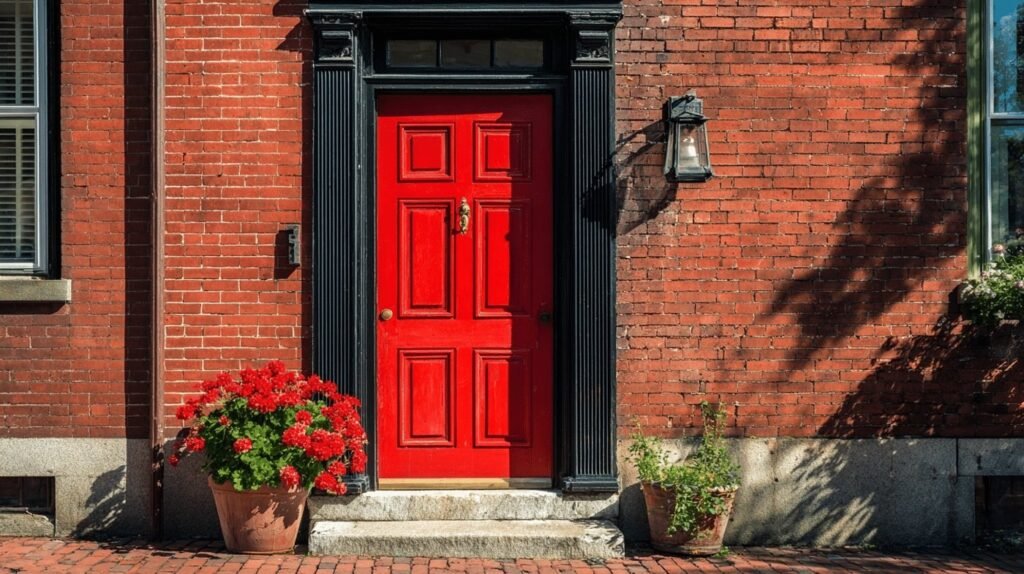
For painted doors: remove the door from its hinges (or paint it in place with the hardware masked — removing is better), remove all hardware, sand with 120-grit then 220-grit, fill dents with exterior wood filler, prime with exterior bonding primer, and apply two coats of quality exterior paint with a foam roller and angled brush. Black, deep navy, and classic red are the timeless choices; they hide dirt and make the entry pop.
For stained wood doors: strip or sand off the failing finish (a heat gun plus scraper for thick failures, or 80-grit sanding for mild ones), sand progressively to 220-grit, apply exterior wood stain in thin coats, and seal with 3 coats of marine-grade spar urethane — the UV protection in spar urethane is what prevents the gray weathering from returning. Work in the shade; direct sun dries finish too fast and causes lap marks. Budget a full weekend including dry time. The result genuinely looks like a new door.
The Details That Sell ‘New’
Hardware makes or breaks the illusion. A new handle set ($60 to $150) in a modern finish transforms the door more than you’d expect — oil-rubbed bronze and matte black are current, forgiving choices. Replace the hinges too if they’re worn ($15 for a set); mismatched old hinges against new handles look off. Add a new kick plate ($15) if the bottom shows wear.
Then the entry around it: fresh caulk where trim meets siding, touch up the trim paint, a new doorbell button ($15), polished house numbers, and a clean doormat. Weatherstripping replacement ($10) makes the door close with that satisfying solid thunk and cuts drafts. Total for the full treatment: $100 to $250 including hardware. Stand back and compare to the $1,500 replacement quote — that’s the best ROI in exterior home improvement.
Front Door Refresh Checklist
Weekend project, $30-$250:
- Assess: surface wear = refinish; deep rot or warping = replace.
- Remove door and hardware; sand 120-grit then 220-grit.
- Fill dents; prime (painted) or stain + spar urethane (wood).
- Two coats of quality exterior paint or 3 coats of urethane.
- Upgrade the handle set and hinges ($75-$165).
- Replace weatherstripping, caulk trim, new doorbell button.
- Finish the entry: numbers, mat, clean light fixture.
The Bottom Line
Making an old front door look new again costs $30 to $250 and a weekend — sand, fill, paint or refinish with quality exterior products, upgrade the hardware, and detail the entry. The transformation rivals replacement at a tenth of the cost.
It’s the highest-visibility project on your house. Everyone who visits touches your front door — make it feel like new.
Restoring vs. Replacing: The Full Cost Math
Let’s put real numbers on restore versus replace. Professional door refinishing: $200-$500. DIY refinish: $30-$150 in materials plus a weekend. New steel door installed: $500-$1,200. New fiberglass: $800-$2,000. New solid wood: $1,500-$4,000+. The restore path saves 70-90% — but only if the door is structurally sound. That’s the entire decision: structure good = restore; structure compromised = replace.
Signs it’s time to replace, honestly assessed: rot through the stiles or rails (not just surface weathering), warping that prevents weatherstripping from sealing (you’ll feel the draft and see daylight), delamination of veneer across large areas, or a door so thin/light it offers no security or insulation (hollow-core exterior doors — yes, they exist on old houses — should be replaced on principle). Also replace if the door is the wrong size for the frame from a previous bad install; no amount of refinishing fixes fundamental fit.
When replacing, the smart money is fiberglass: it mimics wood convincingly, never rots, needs only occasional painting, insulates well, and costs half of real wood. Steel is the budget-security pick (strong, affordable, but dents and rusts if scratched). Real wood is the beauty premium — gorgeous and high-maintenance. Whatever you choose, the surrounding entry work (trim, lighting, hardware, paint) from the restore playbook applies equally — a new door in a shabby entry still looks shabby.
Quick Answers
Can I refinish a steel door?
Yes — sand, prime with metal primer, and paint with exterior acrylic. It won’t have wood grain, but the color transformation is dramatic.
How long does a refinished door last?
5-10 years for paint, 3-5 for stain/urethane (UV breaks down clear finishes faster). South-facing doors need more frequent attention.
What’s the best front door color for resale?
Black, deep navy, and classic red consistently top buyer preference surveys. They photograph well and suit most architectures.
Weatherstripping and the door’s energy performance deserve attention during any refinish — you’re already working on the door, so it’s the perfect time. Old, compressed weatherstripping is often the real reason a door feels drafty, not the door itself. Replace it ($10-$20 for a full set) while the door is off its hinges — it’s ten times easier with the door removed. Check the threshold too: adjustable thresholds ($15-$30) can be raised slightly to seal gaps that developed as the house settled. These invisible fixes cut drafts dramatically.
Security upgrades pair naturally with the refinish project. While hardware is off, consider: a reinforced strike plate with 3-inch screws into the stud ($15 — the single biggest door-security upgrade, defeating most kick-ins), a doorbell camera or peephole upgrade, and checking that the deadbolt extends a full inch into the frame. A beautiful refinished door with a flimsy strike plate is style over substance. The refinish project is the rare moment when the door is fully accessible — use it to address function alongside form.
Further reading: This Old House door restoration guides, the EPA on low-VOC exterior paints.