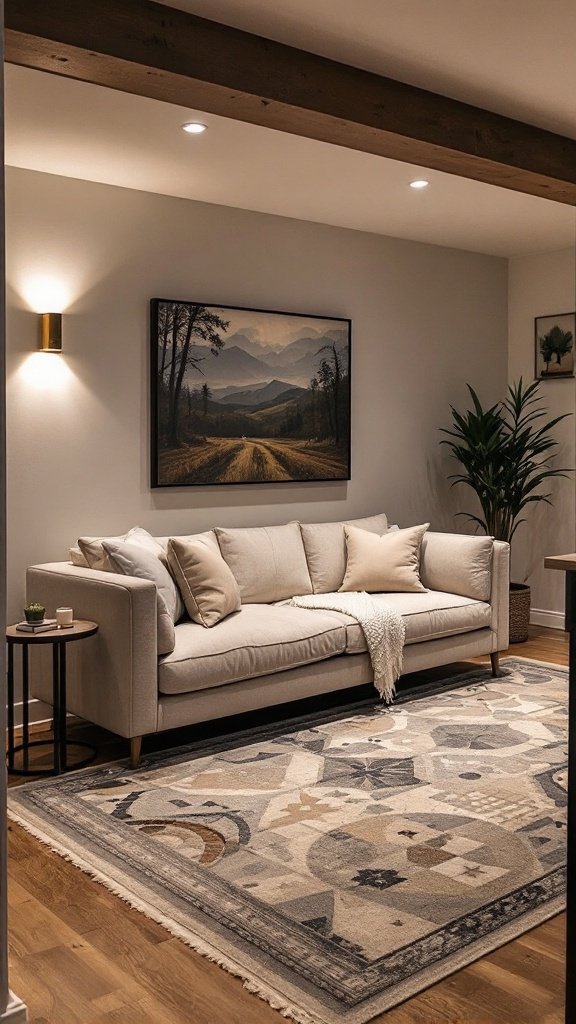
How to Choose the Right Size Rug for Your Living Room
How to Choose the Right Size Rug for Your Living Room
Rug size is the #1 mistake in living room design — and it’s almost always the same mistake: too small. A too-small rug makes the whole room feel cramped and disconnected, like a postage stamp floating on the floor. The right size rug anchors everything and makes the room feel twice as finished.
Here’s the simple sizing system designers actually use.
The Golden Rule: Front Legs On
The standard designer rule: at least the front legs of all major furniture pieces should sit on the rug. For most living rooms, that means an 8×10 rug — it fits under the front of a standard sofa and extends past the coffee table to include accent chairs. Smaller rugs (5×7, 6×9) work only in small living rooms or apartments where the seating area is compact.
The common sizes and what they fit: 5×7 for small seating areas or under a coffee table in tight spaces; 8×10 for standard living rooms with a sofa and two chairs; 9×12 for large living rooms or open-plan spaces; 6×9 as a compromise for in-between rooms. When in doubt, size up — designers consistently say the most common regret is going too small, almost never too large. Leave 12 to 18 inches of bare floor between the rug edge and the walls; the rug should define the seating zone, not wall-to-wall it.
Layout Patterns That Work
Three proven layouts: all legs on (luxury look, needs the biggest rug — everything sits fully on it), front legs on (the standard, works in most rooms), and coffee-table-only (just the table on the rug — acceptable in small spaces but the least grounding). Pick based on your room size and rug budget.
In open-plan spaces, the rug is doing crucial work: defining the living zone within the larger room. Go bigger here — a 9×12 that clearly separates living from dining reads as intentional design. For odd-shaped rooms, don’t be afraid of round rugs under round coffee tables, or runners flanking long sectionals. And layer: a large natural-fiber rug (jute, sisal — $100 to $200 for 8×10) under a smaller patterned rug gives you the right scale plus texture for less than one big designer rug.
Material, Pile, and Practical Choices
Material affects look, feel, and maintenance. Wool ($300 to $1,000+ for 8×10) is the gold standard — durable, naturally stain-resistant, lasts decades. Synthetic (polypropylene, $100 to $300) handles kids, pets, and spills brilliantly and is nearly indestructible. Natural fibers (jute, sisal — $100 to $250) look great but stain permanently and hate moisture. Cotton flatweaves ($80 to $200) are washable and casual but thin.
Pile height matters practically: low pile (under 1/2 inch) for high-traffic living rooms — doors clear it, chairs roll on it, vacuums love it. High pile feels luxurious but traps everything and shows traffic paths. With pets, choose patterned rugs in forgiving colors (patterns hide everything) and low pile for easy cleaning. Always use a rug pad ($30 to $60 for 8×10) — it prevents slipping, adds cushion, protects floors, and extends rug life. It’s the most-skipped $40 in home decor.
Living Room Rug Sizing Cheat Sheet
Quick reference:
- Standard living room: 8×10 with front legs of sofa and chairs on it.
- Small living room/apartment: 5×7 or 6×9.
- Large or open-plan: 9×12 to define the zone.
- Leave 12-18 inches of bare floor between rug and walls.
- When in doubt, size up — too small is the #1 regret.
- Low pile for traffic, pets, and rolling chairs.
- Always use a rug pad ($30-$60) — safety, comfort, and floor protection.
The Bottom Line
Choose a living room rug big enough for front furniture legs to sit on it — 8×10 for most rooms — and size up when uncertain. Pair the right material with your lifestyle (synthetic for pets/kids, wool for longevity) and never skip the rug pad.
It’s the fastest way to make a living room feel designed rather than assembled. One right-sized rug changes everything.
Rug Mistakes That Shrink Your Room
The floating postage stamp — a 5×7 rug in a room that needs 8×10 — is the most common rug mistake, and it visually shrinks the room by breaking the seating area into disconnected islands. The furniture floats around the rug instead of anchoring to it, and the eye reads the bare floor expanse as ’empty’ rather than ‘spacious.’ If your rug looks like it’s floating, it’s too small. Size up until the front legs of the sofa and chairs rest on it, and watch the room pull together.
Mistake two: pushing the rug against the wall or under only the coffee table. Rugs need breathing room — 12-18 inches of floor visible on all sides (in larger rooms, up to 24 inches). Wall-to-wall-ish rugs that nearly touch the baseboards read as failed carpet, not intentional design. And the coffee-table-only placement leaves seating disconnected; it works in tiny apartments but looks unfinished in standard living rooms. When in doubt, center the rug on the room’s focal point (fireplace, TV wall, main sofa) rather than the room’s geometric center.
Mistake three: ignoring the rug pad and the door swing. No pad means the rug creeps, bunches, and wears faster — plus it’s a slip hazard on hard floors. And always check that doors clear the rug; a rug that catches the door gets shoved daily into wrinkles. Low pile plus pad usually clears standard doors; measure the clearance before committing to plush. These unglamorous details are what separate rugs that look great for years from rugs that annoy you daily.
Quick Answers
Can a rug be too big?
Rarely — but leave 12-18 inches of bare floor at the walls. A rug that nearly touches baseboards reads as wall-to-wall carpet.
What shape rug for a sectional?
Rectangular, sized so the sectional’s front edge and facing chairs sit on it. Round rugs rarely work with sectionals.
How do I keep a rug from sliding?
A quality rug pad ($30-$60) — it prevents slipping, adds cushion, and protects both rug and floor. Non-negotiable on hard floors.
The vintage and secondhand rug market is the insider’s secret for quality at budget prices. A hand-knotted wool rug that costs $2,000 new sells for $200-$400 used — wool lasts decades, so a 20-year-old quality rug has 30+ years left. Check estate sales, Facebook Marketplace, and rug dealers’ clearance corners. What to verify: lay it flat and check for even wear (avoid threadbare traffic paths), smell for pet odor or mustiness (surface cleanable; pad-penetrating usually not), and confirm the size in person — listed dimensions are often approximate. A $300 vintage wool 8×10 outperforms a $300 new synthetic in every way except stain-proofing. For living rooms without pets or young kids, vintage is the value play of the decade.
Further reading: the American Society of Interior Designers, the EPA on rug and indoor air quality.