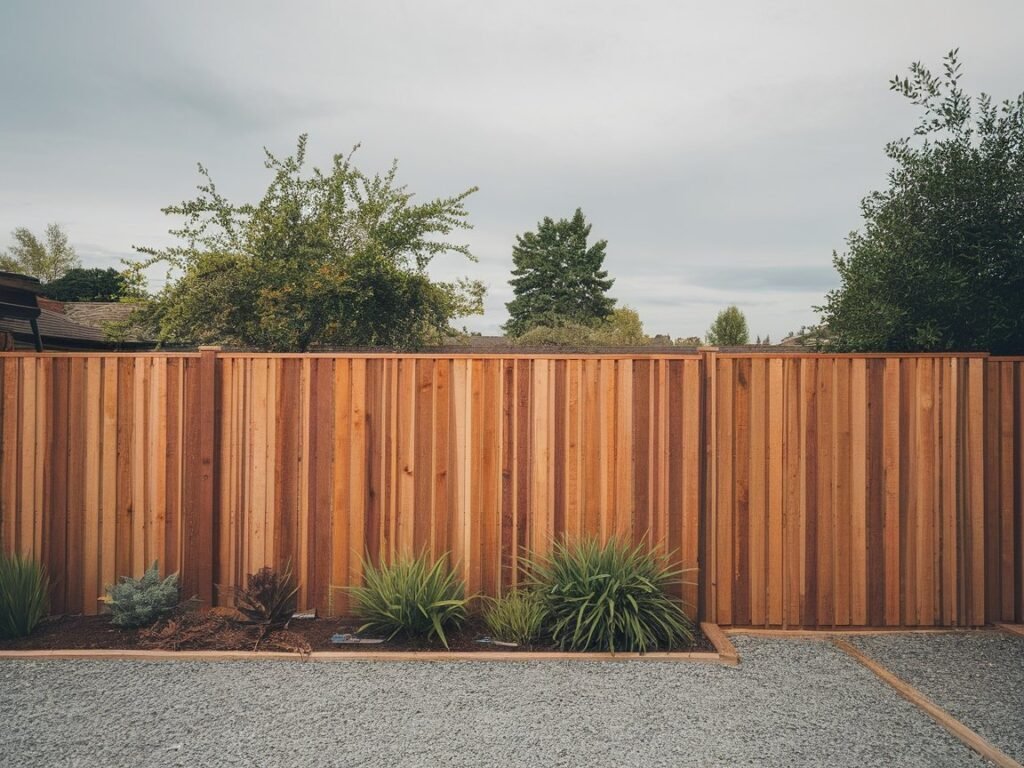
How Much Does a Fence Cost for a Small Backyard?
How Much Does a Fence Cost for a Small Backyard?
A fence is privacy, security for kids and pets, and a defined backyard — but quotes vary wildly. Fencing a small backyard (say 100 to 150 linear feet) typically costs $2,000 to $8,000 installed, and the material choice drives most of that range.
Here’s the per-foot breakdown and how to get the best value.
Cost Per Linear Foot by Material
Wood (cedar or pressure-treated pine): $25 to $55 per linear foot installed — the classic choice, natural look, 10-15 year life with maintenance. Cedar costs more but resists rot naturally; pressure-treated pine is cheaper but needs staining. Vinyl/PVC: $40 to $80 per linear foot installed — nearly zero maintenance, 20+ year life, but higher upfront cost and fewer style options. Chain-link: $15 to $35 per linear foot installed — cheapest, durable, but zero privacy (privacy slats add $5 to $10 per foot).
Metal options: aluminum ornamental ($50 to $100/ft — elegant, low maintenance, see-through) and wrought iron ($80 to $150/ft — beautiful, heavy, needs rust prevention). For a 120-linear-foot small backyard: wood runs $3,000 to $6,600, vinyl $4,800 to $9,600, chain-link $1,800 to $4,200. Gates add $200 to $600 each installed — budget for at least one, ideally two (front and back access).
What Affects the Final Price
Terrain is the big variable: flat, clear ground is the baseline; slopes require stepped or racked panels (adds 20-40%), rocky soil makes post-hole digging miserable and expensive, and existing fence removal adds $3 to $5 per linear foot. Permits run $50 to $200 in most areas, and HOAs often dictate material, height, and style — check before falling in love with a design.
Height matters: 4-foot (decorative/boundary) vs. 6-foot (privacy) can differ 30% in material cost. Corner lots need more footage. And utility lines: call 811 before any digging — it’s free, it’s the law, and hitting a gas line turns a fence project into a disaster. Most pros include the 811 call; DIYers must do it themselves at least 48 hours before digging.
DIY Savings and Smart Compromises
DIY fence building cuts costs 40% to 60% — a 120-foot wood privacy fence runs $1,500 to $3,500 in materials versus $3,000 to $6,600 installed. It’s straightforward but physical work: setting posts in concrete (the critical step — posts must go below the frost line, typically 30-36 inches, and be perfectly plumb), then rails and pickets. Rent a power auger ($75 a day) for the post holes; hand-digging 15 holes in clay will break your spirit.
Smart compromises: fence only what needs privacy (the back and sides facing neighbors) and use cheaper options elsewhere; split costs with neighbors on shared property lines (get it in writing); choose pressure-treated pine over cedar and stain it yourself ($200 in stain vs. $1,500+ in material premium); and consider doing posts professionally ($100 to $150 per post) while DIYing the pickets — the posts are the structural part that matters most.
Small Backyard Fence Budget (120 linear feet)
Installed price ranges:
- Chain-link: $1,800-$4,200 — cheapest, no privacy.
- Wood: $3,000-$6,600 — the classic privacy choice.
- Vinyl: $4,800-$9,600 — pricey upfront, zero maintenance.
- Add $200-$600 per gate; $50-$200 permits.
- DIY saves 40-60% but post-setting is real labor.
- Call 811 before digging — free and legally required.
- Split shared-line costs with neighbors (in writing).
The Bottom Line
Adding a fence to a small backyard costs $2,000 to $8,000 installed, with wood as the best balance of cost, privacy, and looks for most homeowners. DIY cuts the bill nearly in half if you’re up for the physical work.
Check HOA rules first, call 811 before digging, and invest the effort in the posts — they’re what keeps the fence standing straight in ten years.
Fence Styles and What They Say
Fence style is a design decision as much as a practical one — it shapes your whole backyard’s feel. Privacy fences (6-foot board-on-board or stockade): the suburban default, maximum seclusion, can feel fortress-like — soften with landscaping in front. Picket fences: the classic American look, defines boundaries without blocking views or light, ideal for front yards where community connection matters. Ranch rail (2-4 horizontal rails): perfect for large properties and rural settings, keeps kids/pets loosely contained while preserving views.
Horizontal slat fences are the modern favorite: clean lines, contemporary feel, works in cedar or composite. They cost 15-25% more than vertical picket (more precise carpentry) but photograph beautifully and suit modern homes. Lattice-top privacy fences add an airy elegance — solid below, open lattice above — letting light through while keeping privacy. And mixed-material designs (wood with metal frames, stone pillars with wood infill) are the high-end look, though they push costs toward $80-$120/ft.
Match the fence to the house, not just the yard: a modern horizontal fence on a colonial looks wrong; a white picket on a mid-century modern looks costume-y. Drive your neighborhood and note what works on similar homes — cohesion with the streetscape protects your resale. And check the ‘good neighbor’ convention: the finished side faces out (many HOAs and municipalities require this). Alternating board-on-board designs look finished from both sides and end the neighbor dispute before it starts.
Quick Answers
How tall can my backyard fence be?
Usually 6 feet for backyards, 4 feet for front — but it varies by municipality and HOA. Always verify before building.
Wood or vinyl fence — which is better?
Wood: cheaper upfront, natural look, needs maintenance. Vinyl: 2x upfront, zero maintenance, 20+ year life. Choose by budget and tolerance for upkeep.
Do I need a permit for a fence?
In most areas, yes — plus HOA approval if applicable. And call 811 before digging, always.
Neighbor relations can make or break a fence project — literally, since shared fences often involve shared costs and shared property lines. The smart sequence: talk to neighbors before getting quotes, not after. Bring a rough plan (material, height, style) and propose splitting the cost of shared sides — most neighbors agree because they’d benefit too, and a fence they helped choose generates zero complaints. Get any cost-sharing in writing: who pays what, who maintains which side, what happens if it needs repair. A one-page agreement prevents decade-long resentments.
Verify the property line before anyone digs. Fences built even a foot over the line create legal nightmares — encroachment disputes, forced removal, poisoned neighbor relations. If the survey is old or uncertain, a new boundary survey ($300-$700) is cheap insurance on a $5,000 fence. It’s also worth checking for easements: utility companies can tear out fences built over their easements without compensation. The plat map from your closing documents shows easements; read it before finalizing the fence line. An hour of paperwork prevents the most expensive fence mistake there is.
Further reading: the American Fence Association, Call 811 before you dig.
Pingback: Brighten a Dark Hallway: No Wiring Needed (2026)