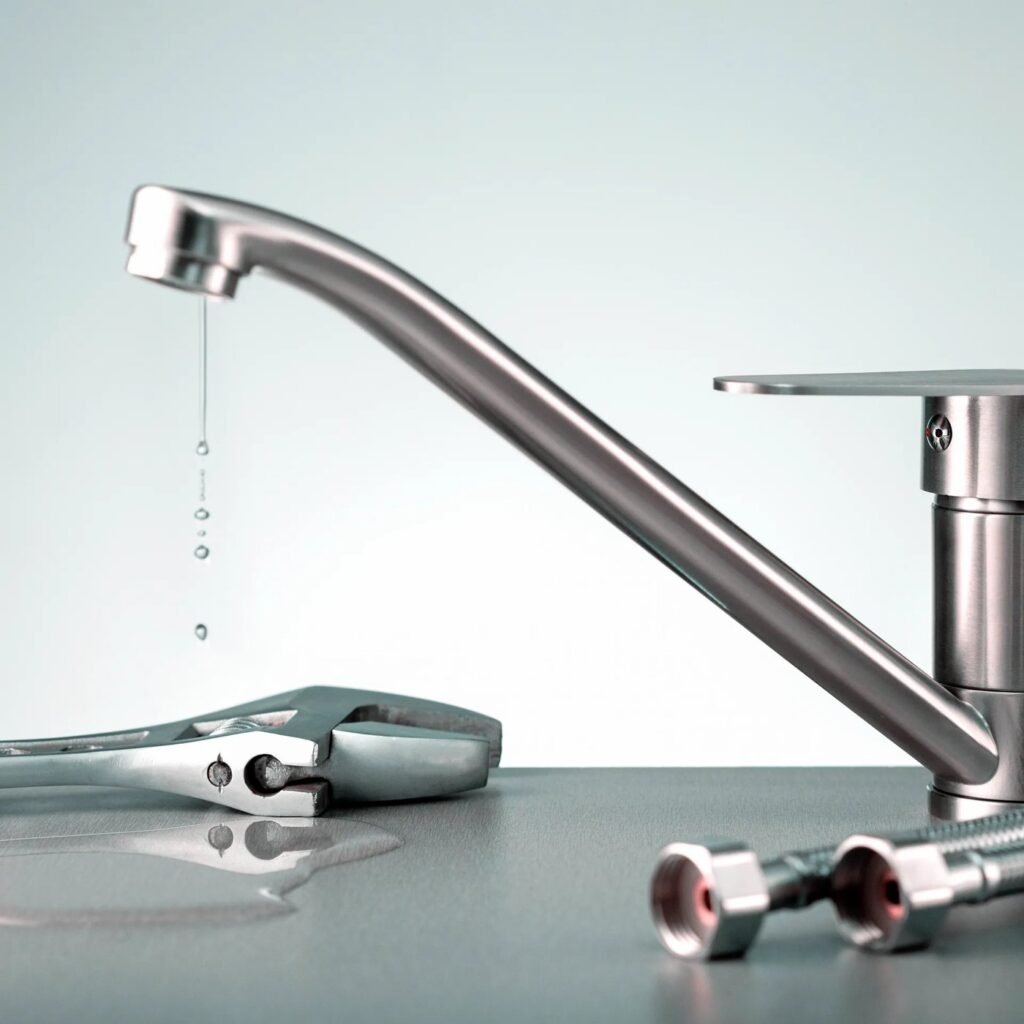
How to Fix a Leaky Faucet Without Calling a Plumber
How to Fix a Leaky Faucet Without Calling a Plumber
Drip. Drip. Drip. A leaky faucet isn’t just annoying — it can waste over 3,000 gallons of water a year and quietly inflate your water bill. The good news? Most faucet leaks are a 30-minute fix with basic tools, and plumbers charge $150 to $350 for a visit you’d barely need.
I’ve fixed half a dozen of these. Here’s exactly how to diagnose your faucet type and stop the drip yourself.
Figure Out What Kind of Faucet You Have
There are four types, and the fix depends on which one you’ve got. Compression faucets (two separate hot/cold handles you twist multiple turns) are the oldest and most leak-prone — the rubber washer wears out. Ball faucets (single handle, common in kitchens) use a ball assembly with springs and seats. Cartridge faucets (single or double handle, smooth quarter-turn) have a cartridge that lifts out. Ceramic-disk faucets (single lever, very smooth) use two ceramic disks and rarely leak — when they do, it’s usually sediment.
Peek under the sink or check the brand stamped on the faucet, then look up the model online. Knowing the type before you start means buying the right $10 repair kit instead of making three trips to the hardware store. Take a photo of the faucet and show it to the store associate — they’ve seen them all.
The Actual Fix, Step by Step
First, shut off the water — there are valves under the sink; turn them clockwise. No valves? Shut off the main. Turn the faucet on to drain remaining pressure, then plug the drain so tiny parts don’t vanish. Remove the handle (there’s usually a screw under a decorative cap), then unscrew the packing nut or bonnet to access the guts.
For compression faucets, unscrew the stem and replace the rubber washer at the bottom plus the O-ring — this fixes 90% of drips. For cartridge faucets, pull the cartridge straight out and swap in an identical replacement. For ball faucets, replace the springs, seats, and cam washer with the kit. Reassemble in reverse order, turn the water back on slowly, and check for leaks. Take photos as you disassemble — your future self will thank you when it’s time to put it back together.
When to Stop and Call a Plumber
DIY has limits. Call a pro if: the shut-off valves under the sink are frozen or broken (forcing them can burst a pipe), you see corrosion or green/white crusty buildup on the valve body (the faucet may need full replacement), water is leaking from the base into the cabinet (could be a supply line issue), or you’ve replaced the parts and it still drips (the valve seat itself may be damaged).
Also know when replacement beats repair: if the faucet is 15+ years old, heavily corroded, or a bargain-bin model, a new $80 to $150 faucet is smarter than nursing the old one. A full faucet replacement is still very DIY-able — it’s about an hour’s work with an adjustable wrench and some plumber’s tape. The drip stops either way; the question is just how much of your Saturday it takes.
Faucet Fix Toolkit
Gather these before you start:
- Adjustable wrench and a set of Allen keys.
- Phillips and flathead screwdrivers.
- Replacement washers/O-rings or a faucet repair kit ($5-$15).
- Plumber’s grease for the new parts.
- White vinegar and an old toothbrush for cleaning mineral buildup.
- A phone camera — photograph each disassembly step.
- Bucket and towels for the inevitable water.
The Bottom Line
Most leaky faucets are fixed with a $10 parts kit and 30 minutes of work. Identify your faucet type, shut off the water, swap the worn washer or cartridge, and the drip is history. That’s $150+ saved versus a plumber visit.
The only real skill involved is patience and keeping track of small parts. Plug the drain, take photos as you go, and don’t force anything. Your water bill — and your sanity — will thank you.
Preventing the Next Leak
Fixing the drip is half the job; preventing the next one is the other half. The main culprit in faucet wear is water quality — hard water’s minerals grind away washers and cartridges faster. If your area has hard water, a whole-house softener ($500-$2,000 installed) extends the life of every faucet, appliance, and water heater in the home. At minimum, clean aerators every 6 months: unscrew, soak in vinegar overnight, scrub, reinstall. Clogged aerators increase pressure that stresses internal parts.
Don’t overtighten handles — the instinct to crank a dripping faucet shut harder actually destroys washers faster. Turn until the water stops, then stop. Teach everyone in the house this; kids are the worst offenders. For cartridge and ceramic-disk faucets, operate handles gently — they’re designed for light touch, and forcing them cracks the ceramic disks ($30+ replacement versus free gentle handling).
Know your faucet’s lifespan: budget faucets last 5-10 years, mid-range 15-20, quality brands decades with occasional washer changes. When a faucet needs its third repair in two years, replacement is cheaper than continued nursing. And keep a small plumbing kit on hand — washers, O-rings, plumber’s grease, Teflon tape ($20 total) — so the next drip is a 15-minute fix instead of a hardware store expedition.
Quick Answers
Why does my faucet drip only at night?
Often it’s thermal expansion or pressure changes in municipal lines overnight. If it’s a hot-water faucet, the water heater’s expansion may be the cause — an expansion tank helps.
Can a dripping faucet increase my water bill a lot?
Yes — a fast drip wastes 3,000+ gallons a year, adding $50-$100+ annually. Slow drips still waste hundreds of gallons.
How often should faucet washers be replaced?
Every 3-5 years for compression faucets in normal water; more often with hard water or heavy use.
The water-quality conversation extends beyond the faucet. If your washers keep failing every year or two, test your water — municipal water reports are free online, or a $20 home test kit covers hardness, pH, and chlorine. Highly chlorinated water degrades rubber parts fastest; a whole-house carbon filter ($300-$600 installed) removes chlorine and extends the life of every rubber component in your plumbing — faucet washers, toilet flappers, washing machine hoses, water heater seals. It’s the systemic fix for the homeowner replacing rubber parts constantly. Sometimes the drip isn’t a faucet problem; it’s a water problem wearing a faucet costume.
Further reading: the EPA on fixing household leaks, Family Handyman faucet repair guides.