How to Stop Doomscrolling Before Bed: The Nighttime Protocol
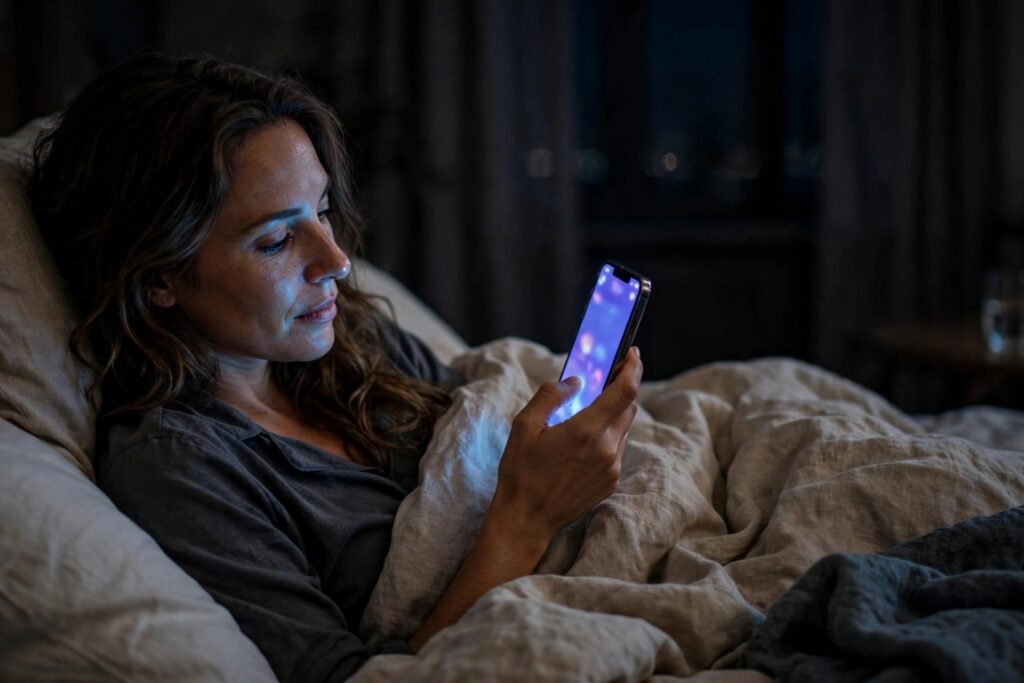
It is 11:47 PM. You meant to put the phone down at 10:30. Instead you have absorbed forty minutes of outrage, disaster, and strangers arguing — and now you are wide awake, wired, and vaguely miserable. Doomscrolling before bed is the defining bad habit of the smartphone era: the compulsive consumption of negative news and content late at night, long past the point of informativeness or enjoyment. It wrecks sleep, spikes anxiety, and steals the most restorative hours of your day. Breaking it requires understanding why your brain does it — then redesigning the night so the phone loses. Here is the complete protocol.
Why Your Brain Doomscrolls: Negativity Bias Meets Variable Rewards
Two psychological mechanisms conspire. First, negativity bias: the brain prioritizes threatening information — an evolutionary survival trait. Bad news feels urgent and important in a way good news never does, so the feed’s endless crisis content hijacks attention effortlessly. You are not morbid; you are running ancestral software in a digital newsroom.
Second, variable-ratio rewards: the infinite scroll delivers unpredictable hits — an interesting post, a like, a shocking headline — on the same reinforcement schedule as slot machines, the most addictive pattern known to behavioral psychology. Each swipe might deliver the hit; that “might” is what keeps the thumb moving past midnight. Combined with bedtime’s low willpower (decision fatigue peaks at night) and the phone’s physical presence on the nightstand, resistance is nearly impossible. The habit is not a character flaw — it is a trillion-dollar attention industry working exactly as designed. General phone-time reduction strategies help, but bedtime needs its own dedicated protocol.
The Nuclear Option: Remove the Phone From the Bedroom
The single most effective intervention, validated by everyone who tries it: charge the phone outside the bedroom. Not face-down, not on Do Not Disturb — in another room. This works because it converts “resist the urge” (willpower, which fails nightly) into “walk to the other room” (friction, which succeeds). The alarm-clock objection is solved by a $10 alarm clock — the best $10 a doomscroller ever spends.
The first three nights feel strange — phantom urges, a sense of missing something. By night five, most people report the unfamiliar sensation of simply… falling asleep. And mornings transform: without the phone, the first hour belongs to you instead of the world’s emergencies. If full removal feels impossible, start with the phone across the room (not the nightstand) — the walk is still friction, and friction is the mechanism. This one change outperforms every app limit, grayscale filter, and good intention combined.
The 60-Minute Wind-Down
Replace the scroll with a genuine wind-down: dim lights, no screens for the last 60 minutes, and a pleasurable alternative ready — the book on the pillow, the podcast queued, the journal open. The replacement must be as easy as the phone was, or the phone wins by default. Design the path of least resistance to lead somewhere better.
Rewire the Feed: Daytime Defenses
Nighttime willpower is the weakest; do the work during the day. Audit ruthlessly: mute or unfollow every account that reliably delivers outrage, anxiety, or envy — be honest about which ones those are. Turn off all non-human notifications (no app needs to ping you about “trending”; humans texting you is enough). Move social and news apps off the home screen into a folder on the last page — each additional tap is friction that saves minutes.
Set app timers with teeth: 30 minutes daily for the worst offenders, with a hard stop (not a dismissible nudge). Use grayscale mode after 9 PM — color is a major engagement driver, and the gray screen is genuinely less compelling. And curate a “last hour” alternative feed if you must scroll: save long reads to a reading app during the day, so the bedtime urge meets substantive articles instead of the outrage slot machine. The goal is not digital asceticism — it is moving consumption to hours when your brain can handle it. Better sleep is the prize; falling asleep faster naturally covers the full sleep-optimization system this supports.
Address the Root: What the Scrolling Is Medicating
Doomscrolling is often self-medication for something else: anxiety about the world, loneliness, an unstructured evening, or the discomfort of being alone with your thoughts. The scroll numbs; the underlying feeling waits. If you remove the phone and find yourself staring at the ceiling with racing thoughts, that is information — the scrolling was treating a symptom.
Address the root directly: a 10-minute evening journaling dump externalizes the worries the scroll was suppressing; a consistent bedtime routine gives the evening structure that the phone was filling; and if the thoughts are genuinely distressing rather than merely restless, that is worth discussing with a therapist — no app redesign fixes clinical anxiety. Many ex-doomscrollers discover the habit was 20 percent interest and 80 percent avoidance. Naming the 80 percent is what makes the change permanent rather than a week-long streak.
The Sleep Science Behind the Protocol
The phone-out-of-bedroom advice is not folk wisdom — it is supported by sleep research. The Sleep Foundation’s technology-and-sleep research center documents how pre-bed screen engagement delays sleep onset through both light exposure and cognitive arousal, with interactive content (scrolling, arguing) disrupting sleep far more than passive viewing. Their data shows the arousal effect dwarfs the blue-light effect — which is why night-mode alone never fixes doomscrolling.
On the anxiety side, the American Psychological Association’s stress-in-America surveys consistently find that heavy news consumers report significantly higher stress, and that news-avoidance breaks measurably reduce it. The protocol in this article — environmental redesign plus root-cause work — mirrors what the clinical literature recommends: change the context first, because willpower is weakest exactly when the habit is strongest.
Conclusion
Stopping doomscrolling before bed is an environment problem, not a willpower problem: charge the phone outside the bedroom, build a 60-minute screen-free wind-down with a ready replacement, rewire the feed’s daytime defenses, and address whatever the scrolling was medicating. The first week feels strange; the second feels like reclaiming your nights. Sleep comes faster, mornings come easier, and the world’s emergencies — remarkably — wait until morning without consequence. The scroll will survive without you. Go to sleep.
Frequently Asked Questions
Why can’t I stop scrolling before bed even when I’m tired?
Variable-ratio rewards (slot-machine psychology) plus negativity bias plus depleted nighttime willpower — the habit is engineered to be irresistible at exactly the hour you are weakest. Willpower cannot win; environmental redesign (phone out of the bedroom) can.
Does blue light really affect sleep?
Yes, but less than the content and engagement do. Blue light suppresses melatonin modestly; the outrage, arousal, and “one more scroll” compulsion disrupt sleep far more. Night mode helps slightly; putting the phone away helps enormously.
What should I do instead of scrolling in bed?
Reading (physical book or e-ink), audiobooks/podcasts with a sleep timer, journaling, or simply the unfamiliar pleasure of falling asleep. The replacement must be pre-loaded and frictionless — the book on the pillow beats the book on the shelf.
How long does it take to break the habit?
The phone-out-of-bedroom change works immediately (night one). The phantom urges fade within a week. The deeper pattern — reaching for stimulation when uncomfortable — takes 3–6 weeks of consistent replacement to rewire. Be patient with the process and ruthless with the environment.