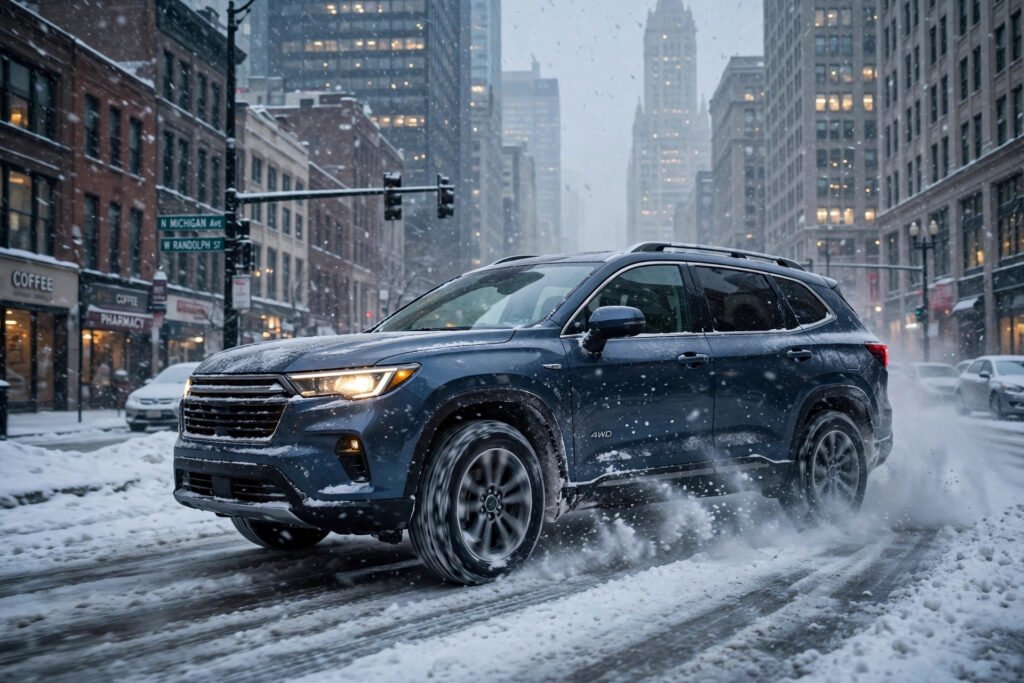
Best AWD SUV for Snowy Chicago Winters (2026)
What is the best AWD SUV for snowy Chicago winters? With lake-effect snow, sub-zero wind chills, and unplowed side streets, Chicago winters punish vehicles that aren’t prepared. All-wheel drive isn’t just nice to have here — for many drivers it’s the difference between getting to work and getting stuck. But not all AWD systems are equal, and the “best” choice depends on your budget, commute, and how much winter you actually drive through. Here’s the 2026 guide.
What Chicago Winters Demand from an SUV
Chicago’s winter challenges are specific: heavy wet snow (not fluffy powder — the dense, heavy stuff that high-centers vehicles and snaps wiper blades), freeze-thaw ice cycles that turn streets into rinks overnight, salt-belt corrosion that eats unprotected underbodies, and temperatures that kill weak batteries dead. Your ideal SUV needs: a capable AWD system (not just a badge — real torque vectoring or locking capability, not a reactive system that waits for slip), decent ground clearance (7.5+ inches for unplowed side streets), excellent cold-weather reliability (it must start at -20°F every time), and affordable winter tire fitment (check tire prices before buying — some SUVs need $1,500+ tire sets).
The critical insight most buyers miss: winter tires matter more than AWD. An AWD SUV on all-seasons will lose to a FWD car on proper winter tires in braking and cornering — every time. Budget $800–$1,200 for a dedicated winter wheel/tire set regardless of which SUV you choose. The National Highway Traffic Safety Administration’s winter driving guidance emphasizes tires as the foundation of winter safety.
AWD vs. 4WD vs. FWD with Winter Tires: The Honest Hierarchy
Let’s settle the drivetrain debate for Chicago. FWD + winter tires: handles 90% of Chicago winter driving competently — braking and cornering (where accidents happen) are excellent. Struggles only in deep unplowed snow and steep icy driveways. AWD + winter tires: the gold standard — adds go-anywhere traction to the tire advantage. This combination embarrasses 4WD trucks on all-seasons. AWD + all-seasons: better than FWD + all-seasons for getting moving, but braking/cornering still compromised — the most common Chicago setup and the source of most winter overconfidence. 4WD (truck-based): superior in truly deep snow, but heavier, thirstier, and worse on icy roads than AWD crossovers with winter tires.
The hierarchy that matters: tires first, then drivetrain. A $30,000 FWD SUV with $1,000 in winter tires out-brakes a $60,000 AWD SUV on all-seasons in every test ever conducted. Buy the drivetrain for your worst 10 days; buy the tires for the other 90.
Best Overall: The Sweet Spot Picks
Subaru Forester / Outback: Chicago’s unofficial winter vehicles for good reason — standard symmetrical AWD (full-time, not reactive), 8.7 inches of clearance, stellar reliability records, and reasonable prices ($30,000–$40,000). The AWD system is genuinely excellent, not marketing fluff — it sends power to all wheels continuously. Downsides: modest engines, noticeable road noise, and interiors that prioritize function over luxury.
Toyota RAV4 AWD / Honda CR-V AWD: The rational choices — bulletproof reliability records, strong resale values, efficient hybrid variants that save real money on Chicago commutes, and capable-enough AWD for city and suburban winters ($32,000–$42,000). They won’t thrill you, but they’ll start every -20°F morning for a decade without drama.
Mazda CX-5 / CX-50: The driver’s picks — genuinely engaging handling, upscale interiors, predictive AWD that’s excellent in snow ($30,000–$42,000). Slightly less cargo space, slightly thirstier, but the most enjoyable winter daily drivers in the class.
Best for Serious Snow: Step-Up Capability
Jeep Grand Cherokee: When winters get truly severe, the Grand Cherokee’s available Quadra-Trac/Quadra-Drive systems with low range are a different league ($45,000–$65,000). Trade-offs: reliability is average, fuel economy poor, but capability is unmatched this side of a Wrangler.
Toyota 4Runner: The reliability king of serious SUVs — body-on-frame toughness, real 4WD, legendary longevity ($42,000–$55,000). Ancient platform (that’s the point — proven), poor fuel economy, but it’ll outlast everything else here.
Ford Bronco: Genuinely capable with G.O.A.T. modes for snow/sand, removable roof fun in summer ($40,000–$60,000). Reliability improving but unproven long-term; wind noise is real.
Best Value and Best Electric Options
Best budget pick: Used 2019–2022 Subaru Forester or Toyota RAV4 AWD ($18,000–$26,000) — depreciation has done its work, reliability remains, and you avoid new-car salt-belt depreciation. Have any used winter vehicle inspected for rust underneath — Chicago salt destroys unprotected underbodies.
Electric AWD: Tesla Model Y AWD, Hyundai Ioniq 5 AWD, Kia EV9 — dual motors give excellent traction, instant torque control is superb in snow, and preheating from your phone on cold mornings is life-changing. Caveats: winter range drops 20–40% (plan accordingly), and charging infrastructure matters for apartment dwellers. Check efficiency ratings at fueleconomy.gov before deciding.
What to Avoid and Winter Ownership Tips
Avoid: RWD-based SUVs without proper winter tires, low-clearance “AWD” crossovers with reactive systems that only engage after slipping (by then you’re already stuck), and any vehicle you can’t afford winter tires for — the tires are part of the purchase price, not an accessory. Also avoid buying in fall at peak demand — shop in late winter and spring for the best deals.
Ownership essentials: dedicated winter tires (non-negotiable — buy them before the first snow, not after), a winter emergency kit in your car (blanket, shovel, kitty litter for traction, jumper cables, phone charger), battery testing each fall (cold kills weak batteries — replace proactively at 4–5 years, not after the first failure strands you), and regular underbody washes to fight salt corrosion (monthly in winter, including the undercarriage spray). Learn the basics too — basic car maintenance skills save Chicago drivers hundreds yearly.
Conclusion
The best AWD SUV for snowy Chicago winters: Subaru Forester/Outback for the best blend of capability, reliability, and value; Toyota RAV4/Honda CR-V for maximum long-term reliability; Mazda CX-50 for driving enjoyment; Jeep Grand Cherokee or Toyota 4Runner for severe conditions and deeper snow; quality used options for budget buyers; and electric dual-motor SUVs for tech-forward drivers with home charging. Whatever you choose, winter tires matter more than the badge — budget for them, maintain your battery, wash off the salt, and Chicago winters become manageable instead of miserable.
Frequently Asked Questions
Do I really need AWD for Chicago winters, or will FWD suffice?
Not strictly — FWD with winter tires handles most Chicago winters. But AWD adds meaningful capability for unplowed streets, steep driveways, and lake-effect events. It’s worth it if you drive daily regardless of conditions.
Are winter tires genuinely more important than AWD for Chicago driving?
Yes — for braking and cornering, tires dominate. AWD helps you go; winter tires help you stop and turn. The ideal is both, but tires-first is the right priority.
What is the most reliable AWD SUV for harsh winter conditions?
Toyota RAV4/4Runner and Subaru Forester/Outback lead reliability rankings. Honda CR-V is close behind. These consistently start and perform in extreme cold.
How much ground clearance do I actually need for Chicago snow?
7.5+ inches handles plowed streets and moderate snow. 8.5+ inches (Forester, 4Runner) manages unplowed side streets and deep events confidently.
Are electric SUVs good in Chicago winters?
Traction-wise, excellent — dual-motor AWD with precise torque control. But expect 20–40% range loss in deep cold, and ensure your charging situation works before committing.