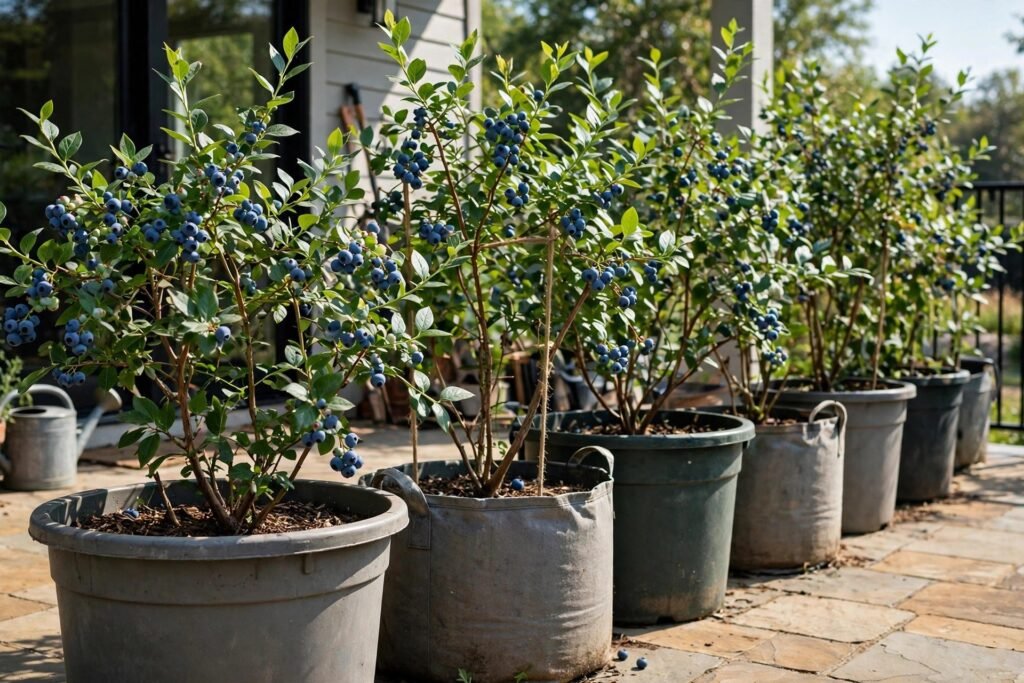
How to Grow Blueberries in Containers: The Complete Pot-Grown Guide
Fresh blueberries at $5 a pint make home growing look like a license to print money — and blueberries are one of the few fruits that genuinely thrive in containers, often outperforming in-ground plants. No sprawling orchard needed: two pots on a sunny patio can yield pounds of berries yearly for decades. But blueberries have one non-negotiable demand that kills most beginners’ plants: acidic soil. Get the pH right and containers make everything else easier — perfect drainage, controlled soil, no weeding, and the ability to move plants for winter protection. Here is the complete container blueberry system.
Variety Selection: The Two-Bush Rule
Blueberries are not self-fertile enough to grow solo — plant at least two different varieties of the same type for cross-pollination, which can double yields versus a single bush. Match the type to your climate: Northern Highbush (Bluecrop, Jersey, Patriot) for zones 4–7 — the classic, most productive type; Southern Highbush (Misty, Sunshine Blue) for zones 7–10 with mild winters; Rabbiteye (Tifblue, Powderblue) for zones 7–9 heat; and Half-High or dwarf varieties (Top Hat, Northsky) bred specifically for containers.
For pots, prioritize compact growth habit and self-fertility as a bonus: ‘Sunshine Blue’ (semi-dwarf, gorgeous fall color, zones 5–10), ‘Top Hat’ (true dwarf for small pots), ‘Jelly Bean’ and ‘Blueberry Glaze’ from the BrazelBerries series (bred for containers, ornamental enough for front-porch display). Buy 2–3 year old nursery plants, not tiny plugs — blueberries are slow to establish, and starting with a substantial plant buys you a year of harvests. Two different varieties, two big pots, one sunny patio: that is the whole orchard.
The Acid Test: Soil pH Is Everything
Blueberries demand pH 4.5–5.5 — far more acidic than almost any other garden plant, and the number-one killer of container attempts. Standard potting mix (pH ~6.5) slowly starves them: leaves yellow with green veins (iron chlorosis), growth stalls, and the plant declines over 1–2 seasons while the gardener blames everything but pH. Test before planting and yearly after.
The container mix recipe: 50 percent peat moss or coco coir (naturally acidic), 30 percent pine bark fines (acidity plus drainage), 20 percent perlite (aeration). Never use garden soil or mushroom compost (alkaline). Water with rainwater when possible — hard tap water (pH 7.5+) gradually raises soil pH; if your tap is alkaline, acidify occasionally with a tablespoon of vinegar per gallon or use a dedicated acid fertilizer. Fertilize with ammonium-based, acid-forming fertilizer formulated for azaleas/rhododendrons — never nitrate-based or calcium-rich feeds, which push pH up. A $12 pH meter pays for itself the first time it catches drift before symptoms appear. The same attentive watering discipline in houseplant care applies here — consistency beats intensity.
Container Specs
Minimum 18–20 inches diameter per bush (bigger is better — 24 inches ideal), with excellent drainage holes. Glazed ceramic or wood looks best; black plastic overheats roots in summer sun. One bush per pot — crowding two in one container starves both.
Water, Sun, and Seasonal Care
Blueberries are thirsty: containers dry fast, and inconsistent water causes berry drop and small fruit. Water deeply whenever the top inch dries — daily in summer heat, sometimes twice for small pots. Mulch the surface with 2–3 inches of pine needles or bark to retain moisture and add acidity as it breaks down. Full sun (6–8 hours) maximizes yield and sweetness; afternoon shade is acceptable in brutally hot climates.
Seasonal rhythm: in spring, prune out dead wood and the oldest canes (blueberries fruit on second-year wood — learn the pruning, it is the skill that separates pounds from handfuls). During fruiting, net the bushes — birds can strip a container bush in a day, and netting is non-negotiable. After harvest, a light acid fertilizer application fuels next year’s buds. In fall, the foliage turns brilliant red — container blueberries earn their keep ornamentally long after the berries end. Reduce watering as dormancy approaches but never let pots go bone-dry in winter; roots still need occasional moisture. And when the harvest comes in, reducing kitchen food waste starts with preserving the bounty — freeze berries on sheet trays for year-round use.
Winter Protection and Longevity
Container roots are exposed to colder temperatures than in-ground roots — a bush hardy to zone 5 in the ground may need zone-6 protection in a pot. In cold climates: cluster pots against the house’s south wall, wrap pots in bubble wrap or burlap, mulch heavily, and consider an unheated garage for the coldest months (water monthly). Blueberries need 400–1000 chill hours (hours below 45°F) to fruit — do not bring them into heated space, which breaks dormancy and ruins the crop.
Longevity is the payoff: well-cared container blueberries produce for 20+ years, with yields increasing as bushes mature. Repot or top-dress with fresh acidic mix every 2–3 years as organic matter breaks down and pH drifts. The bushes get more beautiful with age — gnarled stems, spectacular fall color — becoming permanent patio residents that happen to produce breakfast. Few container investments pay dividends for decades like this one.
Troubleshooting: Reading the Leaves
Yellow leaves with green veins: iron chlorosis from high pH — test soil, acidify, switch to rainwater. No flowers/fruit: insufficient chill hours, pruning off fruiting wood, or missing pollinator partner — verify you have two compatible varieties. Small berries: underwatering or overcrowding — water more, thin fruit clusters. Leggy growth: insufficient sun — move to a brighter spot. Birds ate everything: net earlier next year — the lesson every blueberry grower learns exactly once.
Most container blueberry failures trace to three causes: wrong pH, underwatering, or a single lonely bush. Fix those and the plants largely care for themselves — they are among the lowest-pest fruits you can grow, with few serious diseases in containers. Your state’s cooperative extension offers free diagnosis for anything stranger; use it before guessing.
Authoritative Container Blueberry Guides
For variety-specific and soil-mix details beyond this article, two resources stand out: Penn State Extension’s container blueberry guide covers cultivar selection and overwintering with research-backed precision, and Cornell University’s gardening resources offer soil pH management techniques tested in the Northeast’s challenging conditions. Both are free, science-based, and regularly updated.
Conclusion
Growing blueberries in containers succeeds on four pillars: two compatible varieties, acidic soil (pH 4.5–5.5) in big pots, consistent water, and winter protection matched to your climate. Master those and a sunny patio becomes a decades-long berry patch yielding pounds per bush. The $5 pints at the store will never look the same — you will be eating better berries, picked at peak ripeness, steps from your door. Plant this spring; harvest for twenty years.
Frequently Asked Questions
How many blueberry bushes do I need in containers?
Minimum two different varieties of the same type for cross-pollination — yields can double versus a single bush. One bush per pot; two pots minimum for a real harvest.
What soil pH do blueberries need?
4.5–5.5, strongly acidic — far lower than most plants. Use a peat/pine-bark/perlite mix, water with rainwater when possible, fertilize with acid-forming feed, and test yearly. pH drift is the top killer of container blueberries.
Can blueberries survive winter in pots?
Yes, with protection: container roots experience colder temperatures than in-ground ones, so provide one zone of extra hardiness via insulation, sheltered placement, or unheated garage storage. They still need winter chill hours — never bring them into heated rooms.
How long until container blueberries produce fruit?
Nursery plants (2–3 years old) often fruit lightly the first year and substantially by year two or three. Remove flowers the very first spring to let roots establish — the patience pays back in much larger harvests from year two onward.