What Does It Cost to Install a Remote Starter? (2026)
There is a special kind of misery in scraping ice off a windshield at 6:45 a.m. in a Chicago January while your breath freezes on your scarf. A remote starter promises to end it: press a button from your kitchen, and by the time you reach the driveway the car is warm, the windows are clearing, and the seats are toasty. But the price tag is a mystery — quotes range from a couple hundred dollars to well over a thousand. What does installing a remote starter actually cost, and what are you really paying for?
This guide breaks down real 2026 installed prices, explains why quotes vary so wildly, covers the DIY-versus-pro decision honestly, and flags the compatibility gotchas — especially for push-button-start and manual-transmission cars — that can blow up your budget.
What a Remote Starter Costs Installed in 2026
For most automatic-transmission vehicles, a professionally installed basic remote starter costs between $250 and $450 all-in. A mid-range two-way system — where the remote confirms the car actually started — runs $400 to $650 installed. Premium long-range or smartphone-controlled systems with GPS tracking land between $600 and $1,000-plus installed.
Those ranges assume a mainstream vehicle. Luxury brands, push-button-start systems, and vehicles with complex anti-theft immobilizers can push installation toward $800 to $1,200 because they need extra bypass modules and more labor. Manual-transmission cars cost more too — and some shops will not install on them at all, for reasons we will cover below.
What the parts cost versus the labor
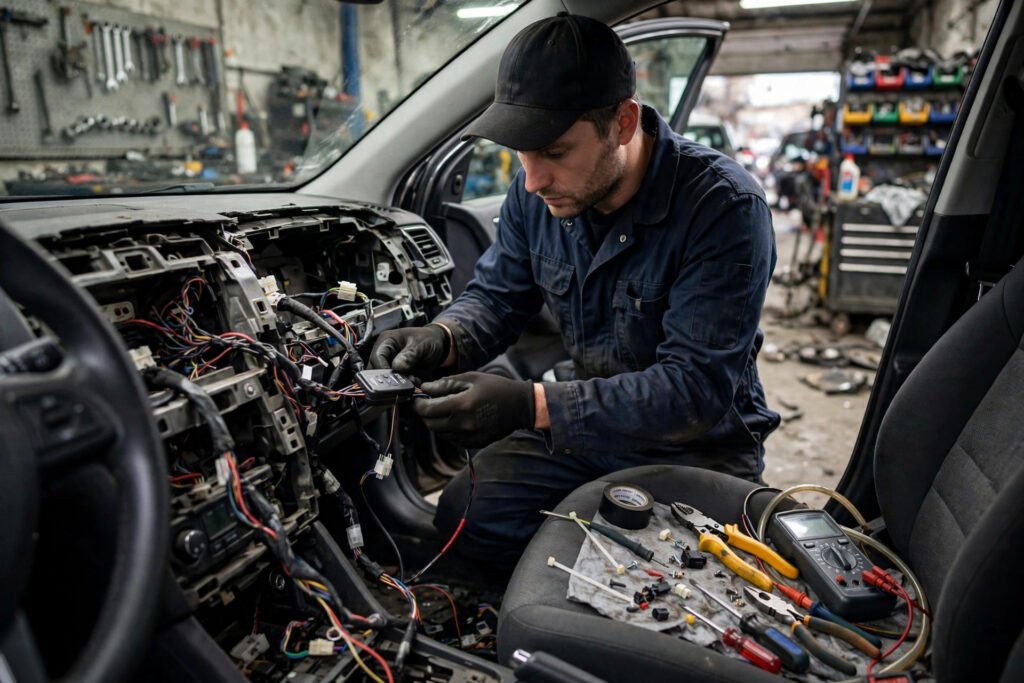
The hardware itself is the smaller half of the bill. A quality basic starter module retails for $80 to $150; two-way and smart systems run $150 to $400. Vehicle-specific bypass modules and wiring harnesses add $50 to $150. Labor is the real cost: two to four hours at $100 to $150 an hour is typical, because modern installations involve interfacing with the car’s computer networks, not just splicing wires.
Why Quotes Vary So Much
Your car’s technology level
A 2012 sedan with a traditional key is a simple install. A 2024 SUV with push-button start, a proximity key, and an encrypted immobilizer needs a data bypass module programmed to your specific vehicle — more parts, more labor, more cost. European luxury cars are the most expensive installs in the business, sometimes requiring dealer-level programming.
Range and features
Basic one-way remotes work from a few hundred feet — fine if you park in your driveway. Two-way systems confirm with a beep or screen that the engine is running, worth it if you park far from your home or office. Smartphone-controlled systems use a cellular connection, giving you effectively unlimited range plus lock/unlock and vehicle location — but they add $50 to $100 a year in subscription fees after the first year or two.
Who installs it
Dedicated car-audio and remote-start shops usually offer the best combination of price and expertise — this is all they do. Dealerships charge the most, often 30 to 50 percent more, though their work will not jeopardize your factory warranty. Big-box electronics retailers sit in the middle on price but vary wildly in installer skill; ask how many installs the specific technician has done on your exact vehicle.
DIY Installation: Should You?
Remote starter kits are sold to consumers, and handy owners do install them. But modern cars make this far harder than the YouTube videos suggest. A mistake can trigger airbag faults, disable the immobilizer, or — in the worst cases — cause electrical fires. Most manufacturers and many installers warn that improper installation can void portions of your electrical warranty.
The honest rule: if your car is older with a traditional key and you have real 12-volt electrical experience, DIY is feasible. If your car has push-button start, a complex CAN-bus system, or is still under warranty, pay a professional. The $300 you save is not worth a $2,000 electrical repair. If you are the hands-on type, start with simpler projects first — the easiest way to learn basic car maintenance builds the electrical confidence you will need before tackling anything wired into your car’s computer.
Compatibility Gotchas to Check First
Manual transmissions
Remote starters on manual-transmission cars are a safety minefield: if the car is left in gear, it can lurch forward on remote start. Quality systems include a “reservation mode” sequence that verifies neutral before allowing remote start, but installation is more complex and many shops refuse the job. Expect to pay a premium and sign a liability waiver.
Push-button start and factory systems
Many newer cars offer factory remote start — sometimes as a standard feature, sometimes as a dealer accessory, sometimes buried in a subscription app. Check your owner’s manual and the manufacturer’s app before buying aftermarket: you may already own the feature. Factory systems integrate cleanly and preserve your warranty, though subscriptions add ongoing cost.
Diesels and hybrids
Diesels need a longer crank delay for glow plugs, which the system must support. Hybrids and EVs generally do not need traditional remote starters at all — most offer cabin preconditioning through the manufacturer’s app, which warms the car using battery power. Do not pay for hardware your car does not need.
Legal and Practical Considerations
Many cities and states limit unattended idling — often to three to five minutes — with fines for violations, and some homeowner associations restrict it too. Federal winter driving guidance also notes that driving gently warms engines faster than extended idling. Remote starters also do not warm your engine the way driving gently does; automotive engineers consistently note that 30 seconds of idle followed by easy driving warms the engine faster and with less wear than extended idling. Use the starter for comfort and defrosting, not as an engine warm-up ritual.
Security-wise, quality systems shut the engine off if someone opens a door or presses the brake without the key present, so a remote-started car is not an invitation to thieves. Cheap no-name systems may lack these safeguards — another reason to buy reputable brands like Compustar, Viper, or Directed and have them installed by specialists.
For winter drivers, a remote starter pairs well with broader cold-weather prep: keeping an emergency kit in your car covers the situations no gadget can fix, like a dead battery in a remote parking lot.
Conclusion
Expect to pay $250 to $450 installed for a basic remote starter on a mainstream automatic, $400 to $650 for a two-way system, and $600-plus for smartphone-controlled setups — more for luxury, push-button-start, or manual-transmission vehicles. Get quotes from dedicated install shops, check whether your car already has a factory system first, and skip DIY unless you have genuine electrical experience. Done right, a remote starter is one of the best quality-of-life upgrades a cold-climate driver can buy.
Frequently Asked Questions
Will a remote starter void my car’s warranty?
Not automatically. Under the Magnuson-Moss Warranty Act, a manufacturer must prove the aftermarket part caused the failure to deny a claim — the FTC’s explanation of auto warranty rights lays out exactly where you stand. That said, shoddy installation that damages wiring can absolutely cause denied claims — use a reputable installer.
How far away does a remote starter work?
Basic one-way systems: a few hundred to 1,000 feet. Long-range two-way systems: up to a mile or more. Smartphone-controlled systems: unlimited range via cellular, but with annual subscription fees.
Can you install a remote starter on a leased car?
Usually yes, but check your lease agreement first — some prohibit modifications. Use a professional installer and keep all original wiring intact so the system can be cleanly removed at lease end.
Does remote starting waste a lot of gas?
Ten minutes of idling burns roughly a third of a gallon — a few dollars a week in winter. It is a comfort expense, not a budget-breaker, though idling laws in your area may limit how long you can run it.
Is a remote starter worth it on a hybrid?
Probably not as aftermarket hardware. Most hybrids offer cabin preconditioning through the manufacturer’s app, which accomplishes the same thing without an extra install. Check your car’s app first.