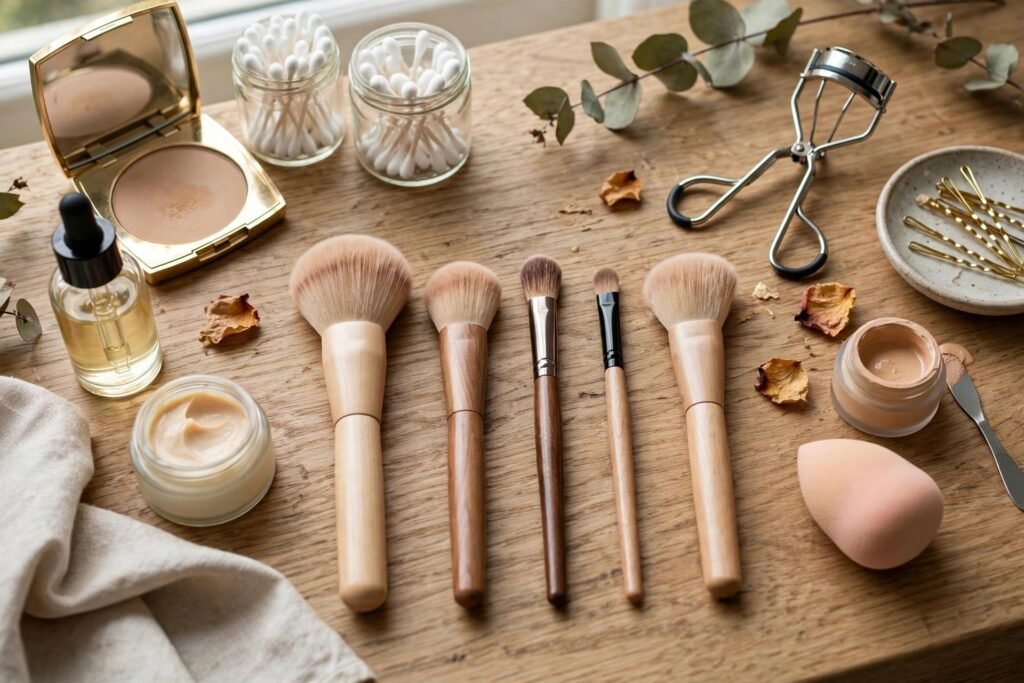
When Should You Replace Your Makeup Brushes? Full Timelines
Be honest: when did you last replace your makeup brushes? If the answer involves squinting and counting years on your fingers, you are in the majority — surveys suggest most people keep brushes far longer than they should, washing them rarely and replacing them almost never. The result is a familiar cascade: streaky foundation, muddy eyeshadow, and the mysterious breakouts that no skincare routine seems to fix.
Makeup brushes are not lifetime tools. They degrade, harbor bacteria, and quietly sabotage your makeup. This guide gives you the real replacement timelines by brush type, the signs a brush is done, how proper care extends life, and what to buy when it is time.
The Replacement Timelines (By Brush Type)
Foundation and concealer brushes (liquid/cream): every 1-2 years with regular washing. Liquid product breaks down bristle glue and ferrules fastest, and these brushes accumulate the most bacteria.
Powder, blush, and bronzer brushes: every 2-3 years. Dry product is gentler on bristles, so these last longest — but they still lose shape and softness.
Eyeshadow brushes: every 1-2 years. Small, densely packed brushes lose their precision edge relatively quickly, and eye-area hygiene matters most.
Eyeliner and brow brushes: every 1-2 years, leaning toward 1. Angled brushes lose their sharp edge, and anything near the eye demands the strictest hygiene.
Beauty sponges: every 1-3 months. Sponges are porous bacteria hotels — they degrade fastest and should be treated as semi-disposable. If yours has tears, permanent stains that survive washing, or a sour smell, it is overdue.
These are with proper washing (below). Unwashed brushes should be replaced sooner — or better yet, start washing them.
Signs Your Brush Is Done
Shedding. A bristle or two occasionally is normal; consistent shedding means the ferrule glue has failed. Shed bristles also end up on your face, which defeats the purpose.
Splaying and loss of shape. When a flat-top foundation brush fans out permanently or an eyeshadow brush will not come to a point after washing and reshaping, its precision days are over.
Scratchiness. Run the brush across the back of your hand. If it scratches or feels rough compared to new, the bristle tips have degraded. Continuing to use it means micro-abrasion on your face daily.
Persistent odor or staining. A brush that smells sour after thorough washing is harboring bacteria deep in the ferrule — replace it. Permanent staining alone is cosmetic, but staining plus odor is a retirement notice.
Loose ferrule. If the metal band wobbles or the handle is cracked, the brush is structurally done. A wobbling ferrule also traps moisture and product, accelerating bacterial growth.
Breakouts with no other explanation. Dermatologists routinely trace recurring jawline and cheek breakouts to dirty or degraded brushes. If your skincare is dialed in and spots persist, interrogate the tools before the products.
Washing: The Habit That Doubles Brush Life
The official guidance: wash brushes you use with liquid/cream products weekly, powder brushes every 1-2 weeks, and sponges after every few uses. The method matters less than the consistency:
Wet bristles with lukewarm water (never hot — it loosens glue), swirl in a drop of gentle cleanser (brush shampoo, baby shampoo, or fragrance-free dish soap for heavy buildup), rinse with bristles pointing down so water does not seep into the ferrule, gently squeeze out water, reshape, and dry flat or hanging bristles-down. Never dry bristles-up in a cup — water drains into the ferrule and rots the glue.
Deep-clean monthly: soak bristles (not ferrules) for a few minutes in diluted cleanser, or use a silicone brush-cleaning mat for textured scrubbing. Between washes, a quick-dry brush cleanser spray handles daily sanitizing — especially valuable for eye brushes.
Good brush hygiene is part of the same cleanliness discipline as keeping the rest of your routine fresh — similar to the habits behind looking stylish on a tight budget, where maintaining what you own beats constantly replacing it. And when foundation or lipstick inevitably migrates to clothing, our guide to removing stains from white shirts has saved many a collar.
Natural vs. Synthetic: Does It Affect Lifespan?
Synthetic brushes (nylon, taklon) dominate the modern market for good reasons: they do not absorb liquid product, wash clean easily, dry fast, are cruelty-free, and generally outlast natural brushes with cream and liquid formulas. For foundation, concealer, and cream products, synthetic is the clear winner on both performance and longevity.
Natural brushes (goat, squirrel, sable) excel at picking up and diffusing powder products — many artists still prefer them for powder, blush, and eyeshadow blending. But they are porous (absorbing oils and bacteria more readily), harder to wash thoroughly, slower to dry, and degrade faster with liquid products. They also raise ethical and allergy considerations.
The practical takeaway: build a mostly-synthetic set, keep a few natural-hair brushes for powder work if you love the feel, and never use natural brushes with liquids.
What to Buy (Without Overpaying)
You do not need a 24-piece set. A functional core is 6-8 brushes: foundation (flat-top or buffing), concealer, powder, blush, two eyeshadow (one flat packing, one fluffy blending), angled brow/liner, and a sponge. Mid-range sets ($30-$60) from established brands perform within a whisper of luxury brushes for most users — the performance curve flattens hard above that.
When shopping, check density (bristles should feel full, not sparse), the ferrule (crimped tightly, no wobble), and the handle weight (balanced, not top-heavy). Read reviews specifically mentioning shedding after washing — that is the quality tell. And replace strategically: upgrade the two brushes you use daily first; the rarely used ones can wait.
The FDA’s cosmetics safety resources cover product hygiene and contamination guidance, and the AAD’s makeup hygiene tips align with the washing protocols described here.
Conclusion
Replace liquid-product brushes every 1-2 years, powder brushes every 2-3, and sponges every 1-3 months — sooner if they shed, splay, scratch, or smell. Mark replacement dates on a calendar so the timeline stays honest. Wash weekly, dry bristles-down, favor synthetics for liquids, and treat persistent breakouts as a possible tool-hygiene problem. Your brushes are the interface between expensive products and your face; when the interface degrades, everything downstream suffers.
Frequently Asked Questions
How often should you replace makeup brushes?
Foundation/concealer brushes: 1-2 years. Powder/blush brushes: 2-3 years. Eyeshadow and liner brushes: 1-2 years. Beauty sponges: 1-3 months. Regular washing extends these timelines; neglect shortens them.
How often should I wash my makeup brushes?
Brushes used with liquid or cream products: weekly. Powder brushes: every 1-2 weeks. Sponges: every few uses. Eye brushes benefit from quick-dry cleanser between washes.
Can old makeup brushes cause breakouts?
Yes. Dirty or degraded brushes harbor bacteria, old product, and oils that transfer to skin — dermatologists frequently trace recurring cheek and jawline breakouts to brush hygiene. Persistent breakouts with good skincare warrant new or newly washed tools.
Are expensive makeup brushes worth it?
Up to a point. Mid-range brushes ($30-$60 sets) perform close to luxury for most users. Above that, you are paying for branding and marginal gains. Brush care matters more than brush price.
Should I choose synthetic or natural brushes?
Synthetic for all liquid and cream products (more hygienic, longer-lasting, cruelty-free); natural hair is optional for powder products if you prefer the blending feel. Never use natural brushes with liquids.