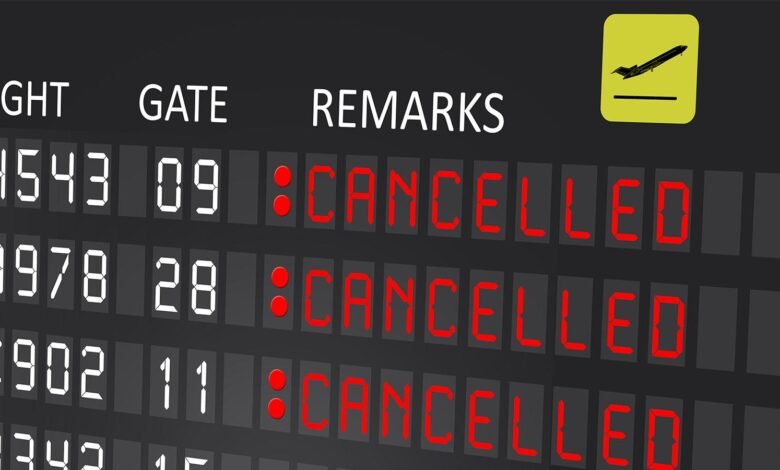
Flight Cancelled at the Airport? Do These 7 Things First
Flight Cancelled at the Airport? Do These 7 Things First
What should I do if my flight gets cancelled at the airport? I dug into this properly, and what I found surprised me — here’s the no-fluff version.
I've been stranded by cancellations four times — including once at midnight in Chicago with 200 fellow refugees. The people who got rebooked fast all did the same things; the people who waited in the 3-hour line did not.
Here's the playbook, in order of urgency.
The complete breakdown
Step 1: Get on the phone AND in the app simultaneously
While everyone queues at the desk, call the airline and open the app — phone agents and app rebooking often beat the line by an hour. The app sometimes shows rebooking options before agents announce them. Multi-channel is the whole game: desk line as backup, phone and app as primary. My fastest rebooking took 11 minutes by phone while the desk line hadn't moved.
Step 2: Know your rights before you negotiate
US airlines must refund you (not just voucher) if they cancel and you choose not to travel. For controllable cancellations (mechanical, crew), airlines owe rebooking plus often meals/hotels — check the DOT's airline dashboard for your carrier's commitments. EU flights have even stronger compensation (€250-600). Knowledge is leverage; agents help informed passengers faster.
Related reading: Beat Jet Lag Faster: The Science-Backed Recovery Plan
Step 3: Ask for specific alternatives, not 'anything'
Instead of 'get me home,' try: 'Can you put me on the 7pm through Dallas? I see seats available.' Agents work faster with concrete requests, and you can check availability in the app first. Ask about partner airlines too — they can rebook you on competitors, but often won't offer unless asked. Specificity gets results.
Step 4: Accept the hotel/meal vouchers — then document
For overnight controllable cancellations, request hotel and meal vouchers before leaving the airport. Keep every receipt regardless — if vouchers aren't offered, you're often entitled to reimbursement later. Photograph everything: boarding passes, cancellation notices, receipts. Documentation turns a bad night into a successful claim.
Step 5: Have a backup plan ready
If rebooking looks like tomorrow at best: check nearby airports, consider renting a car for short hops (a 4-hour drive beats a 20-hour airport wait), and know your travel insurance or credit card delay benefits ($500+ in expenses on many cards). Twice I've driven instead of waiting — both times I got home 12 hours sooner.
My honest take
The Chicago midnight cancellation taught me the golden rule: never join the back of the line first. Phone + app while walking toward the desk. I was rebooked and in a hotel shuttle while people were still queueing. Channels beat queues, every time.
FAQs: What should I do if my flight gets cancelled at the airport?
Here are the questions I hear most often about this topic:
Will the airline pay for my hotel if my flight is cancelled?
For controllable cancellations (mechanical, staffing), major US airlines commit to hotels/meals per the DOT dashboard. For weather, generally not — that's what travel insurance and credit card benefits cover.
Should I accept a voucher or demand a refund?
If you're abandoning the trip: refund, always (it's your legal right for airline-cancelled flights). If rebooking: take the rebooking plus any vouchers offered.
How do I file a complaint that works?
DOT complaints (transportation.gov/airconsumer) get airline attention — carriers must respond. Be factual, include documentation, and state what resolution you want.
The bottom line
Phone plus app immediately, know your refund and care rights, request specific rebookings, collect vouchers and receipts, and keep a backup plan warm. Cancellations are miserable, but the prepared passenger is the rebooked passenger.
For deeper background, check out the FAA's flyer resources — both are solid, reputable resources worth bookmarking.
More from Daily Magazine 24
- Beat Jet Lag Faster: The Science-Backed Recovery Plan
- Pacific Coast Highway Road Trip: The Complete Planning Guide
One more thing worth knowing
And remember why you're going in the first place. It's easy to turn a trip into a checklist to optimize — sights seen, photos taken, boxes ticked. But the trips I treasure most are the ones where I slowed down enough to actually be somewhere: the unhurried coffee, the long walk with no destination, the conversation with a stranger. See the sights, yes — but also just be there.
One more thing worth knowing
One thing seasoned travelers learn fast: the best trip is rarely the most expensive one — it's the best planned one. An hour of research before you go routinely saves hundreds of dollars and multiple headaches. Read recent reviews (not just the glowing ones), check seasonal quirks, and learn three local customs. Preparation doesn't kill spontaneity; it funds it, by removing the preventable disasters that eat your time and budget.
One more thing worth knowing
Here's my golden rule for any trip: plan the skeleton, leave the flesh loose. Book the non-negotiables (flights, first-night stay, must-do tickets) and leave deliberate gaps for discoveries — the restaurant you stumble into, the viewpoint a local mentions, the detour that becomes the highlight. Over-planned trips feel like work; under-planned ones waste precious days. The sweet spot is structure with breathing room.
One more thing worth knowing
A quick word on travel insurance, since it comes up constantly: for cheap, flexible domestic trips you can usually skip it, but for expensive or complicated itineraries it's the cheapest peace of mind in travel — typically 4-8% of trip cost. Check your credit card benefits first; many premium cards already include solid trip protection. Don't double-pay for coverage you already have.
One more thing worth knowing
Packing philosophy that changed my travel life: lay out everything you plan to bring, then remove a third. Almost everyone overpacks by 30-40%, and every extra item is weight you carry through airports, up stairs, and into taxis. The things you truly need on a trip fit in less space than you think — and anything you forget can usually be bought at your destination, often cheaper and as a fun souvenir.