The Best Way to Store Leftovers So They Stay Fresh
The Best Way to Store Leftovers So They Stay Fresh
Leftovers are free meals — unless they go slimy on day two because they were stored wrong. Most leftover spoilage isn’t about the food; it’s about cooling too slowly, wrong containers, or fridge chaos. Stored right, most leftovers stay fresh and safe for 3 to 4 days.
Here’s the complete system, from stove to fridge to day-three lunch.
Cool It Fast, Store It Right
The danger zone is 40°F to 140°F — bacteria double every 20 minutes in it. Get food out of the danger zone fast: divide large pots of soup, stew, or chili into shallow containers (depth matters more than anything — a deep pot stays warm in the middle for hours). An ice bath (pot set in a sink of ice water, stirred) cools things dramatically faster. Get it refrigerated within 2 hours of cooking — 1 hour if the room is above 90°F.
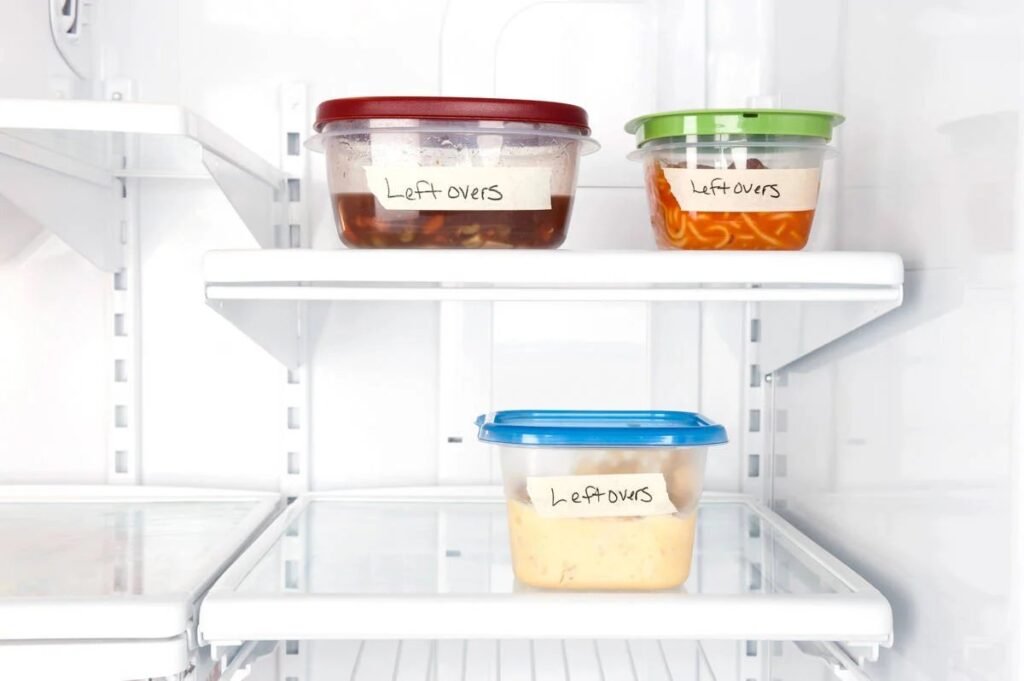
Containers: airtight is everything. Glass containers with locking lids ($25 for a set) are the gold standard — they don’t stain, don’t absorb odors, and go from fridge to microwave to dishwasher. Cool food before sealing only if it’s steaming heavily (trapped steam creates condensation); otherwise, refrigerate promptly even if slightly warm — modern fridges handle it, and food safety beats the old “cool completely first” advice. Label with the date using masking tape and a marker; “mystery container” is how leftovers die uneaten.
Fridge Strategy and What Goes Where
Your fridge has temperature zones — use them. The back of the bottom shelf is coldest: store meat leftovers there. The door is warmest (temperature swings every opening): condiments only, never leftovers or dairy. Keep leftovers visible and at eye level — out of sight is out of mind, and forgotten leftovers are wasted leftovers. A designated “eat first” shelf or bin corrals them.
Don’t overpack: air needs to circulate for the fridge to maintain temperature. Raw meats stay on the bottom shelf (below ready-to-eat foods) to prevent drip contamination. Soups and stews in particular benefit from the shallow-container rule — and freeze what you won’t eat in 3 days rather than watching it decline. The freezer is a pause button; use it aggressively. Portion into single servings before freezing for grab-and-go lunches.
Reheating and the 3-4 Day Rule
Most leftovers are safe for 3 to 4 days refrigerated (the USDA’s guideline — mark your calendar). After that, freeze or toss; “it smells fine” is not a safety test for everything, since some pathogens don’t announce themselves. Reheat to 165°F throughout — steaming hot, not just warm. Microwaves heat unevenly, so stir halfway and let stand a minute for the heat to equalize.
Reheat only what you’ll eat — repeated cooling and reheating cycles degrade both safety and quality. Sauces and soups reheat beautifully; fried foods go soggy (revive in the oven or air fryer, not the microwave); pasta dries out (splash water before reheating, cover to steam). Rice deserves special mention: cool it fast (spread on a sheet pan), refrigerate within an hour, and reheat steaming hot — rice can harbor Bacillus cereus, which is why leftover rice has a worse reputation than it deserves. Handled right, it’s perfectly safe.
Leftover Storage Rules
The system:
- Cool fast: shallow containers, ice bath if needed; fridge within 2 hours.
- Store airtight: glass locking containers are the gold standard.
- Label everything with the date — no mystery containers.
- Eat within 3-4 days; freeze anything you won’t.
- Keep leftovers visible at eye level; don’t overpack the fridge.
- Reheat to 165°F; stir microwaved food halfway.
- Cool rice fast and refrigerate within an hour.
The Bottom Line
Storing leftovers right means cooling quickly, sealing airtight, dating everything, and eating within 3 to 4 days. It’s a simple system that turns leftovers from a gamble into reliable free meals.
The freezer is your best friend for anything past day three. Future you, eating a perfect portioned lunch, thanks present you for the 30 seconds of labeling.
Freezing Leftovers Like a Pro
The freezer is a time machine for leftovers — but only if you freeze correctly. Cool food before freezing (not to room temperature necessarily, but out of the steaming stage), portion into single or family servings before freezing (you can’t easily split a frozen block), and remove as much air as possible — air causes freezer burn, the icy dehydration that ruins texture. Press flat in zip bags for efficient stacking and fast thawing; a flat frozen bag of soup thaws in an hour versus half a day for a container block.
Label everything with contents and date — frozen mystery meals get thrown away uneaten, defeating the purpose. Use within 3-4 months for best quality (safe indefinitely at 0°F, but quality declines). The foods that freeze beautifully: soups, stews, chili, casseroles, cooked grains, sauces, cooked beans, shredded meats. The foods that freeze poorly: fried foods (soggy), cream-based sauces (separate), raw vegetables like lettuce and cucumber (mushy), and cooked pasta in sauce (mushy — freeze sauce separately and cook fresh pasta).
Thaw safely: in the fridge overnight (best), in cold water changed every 30 minutes (fast — 1-2 hours for most portions), or in the microwave if cooking immediately. Never thaw on the counter. And the reheating rule stands: 165°F throughout, stir for even heating. A well-managed freezer means you’re never more than a day from a home-cooked meal — it’s the ultimate leftover strategy, turning Sunday’s cooking into Wednesday’s effortless dinner.
Quick Answers
How long do leftovers last in the freezer?
3-4 months for best quality; safe indefinitely at 0°F but texture and flavor decline over time.
Can I freeze leftovers after 3 days in the fridge?
Yes — freezing on day 3-4 pauses the clock. Don’t freeze food that’s already questionable; freeze while it’s still good.
What’s the safest way to thaw frozen leftovers?
In the fridge overnight (best), cold water changed every 30 minutes (fast), or microwave if cooking immediately. Never on the counter.
The ‘cook once, eat thrice’ planning mindset turns leftovers from accident into strategy. When cooking, deliberately make 1.5x — the extra portion becomes tomorrow’s lunch with zero additional effort. Designate certain meals as ‘leftover generators’ (roast chicken becomes chicken salad becomes soup; chili becomes chili-mac becomes nachos). This planned-over approach beats hoping for leftovers accidentally. Keep a mental (or written) inventory of what’s in the fridge, plan the week’s eating around using it, and watch food waste drop to near zero. The most efficient kitchens don’t minimize leftovers — they maximize their intentional use.
Further reading: FoodSafety.gov on leftovers and food safety, the USDA on safe food storage.