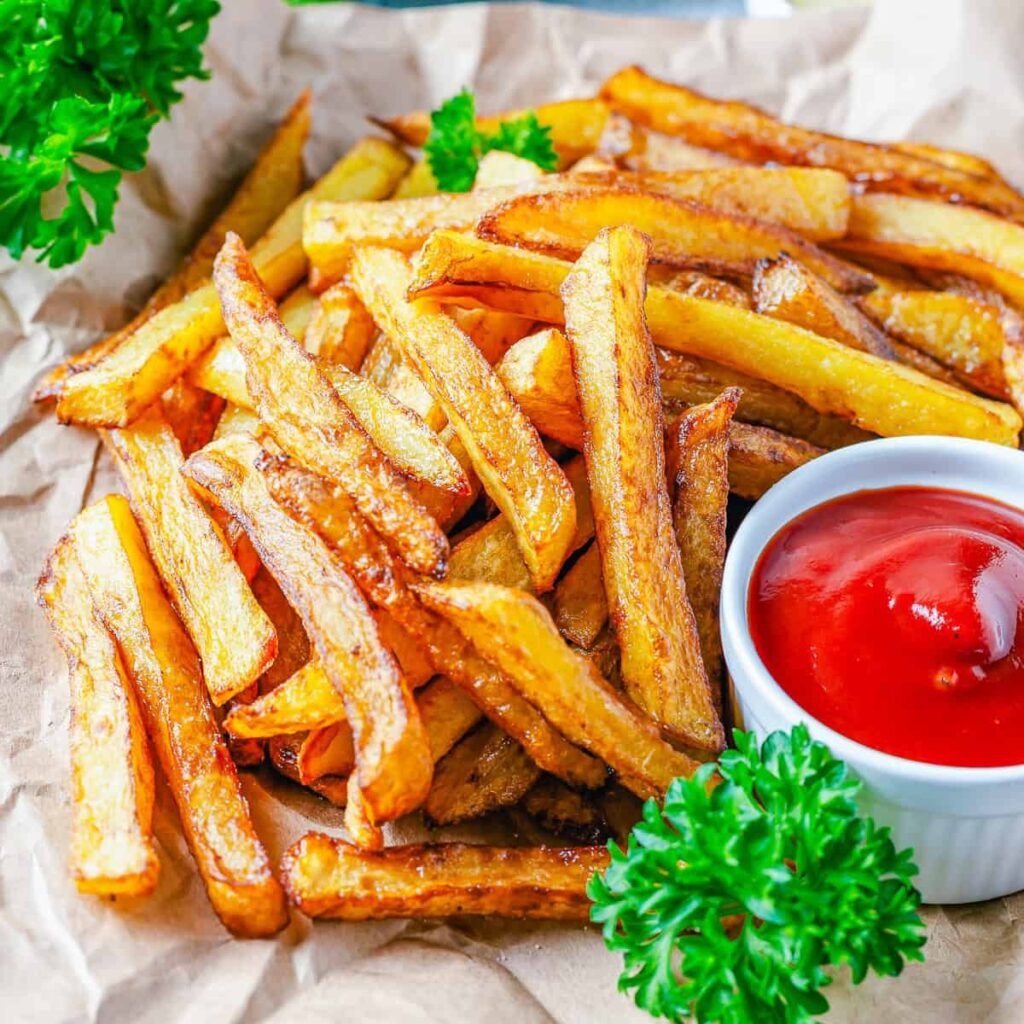
How to Make Crispy French Fries Without a Deep Fryer
How to Make Crispy French Fries Without a Deep Fryer
Deep fryers are messy, smelly, and single-purpose — but the craving for crispy fries is real. The good news: you can get genuinely crispy fries without one. The secret isn’t the equipment; it’s moisture management. Crispy fries are about driving water out of the potato, and three methods do it brilliantly.
Here they are, ranked.
Method 1: The Air Fryer (Easiest)
The air fryer is essentially a tiny convection oven, and it’s the closest to deep-fried texture with a fraction of the oil. Cut potatoes into even sticks (uniformity = even cooking), soak in cold water 30 minutes (removes surface starch that causes sogginess), dry thoroughly — this step is critical; wet potatoes steam instead of crisping.
Toss with just a tablespoon or two of oil and salt. Air fry at 400°F for 18-22 minutes, shaking the basket every 5-7 minutes. Don’t overcrowd — cook in batches if needed; crowded fries steam. The result: golden, crispy outsides, fluffy insides, with about 80% less oil than deep frying. For extra crunch, a light cornstarch coating (1 tablespoon per pound, tossed on after drying) creates a shattering crust. Season immediately after cooking while the oil is still tacky.
Method 2: The Oven (Biggest Batches)
For feeding a crowd, the oven wins on volume. Same prep: even cuts, 30-minute soak, thorough drying. Preheat the oven to 425°F with the baking sheet inside — a screaming-hot pan jump-starts crisping on contact. Toss dried potatoes with 2 tablespoons of oil, spread in a single layer with space between pieces (use two pans rather than crowding one), and roast 30-40 minutes, flipping halfway.
The pro moves: parboil the cut potatoes for 5 minutes first, then rough up the surfaces by shaking in the colander — the roughed edges become ultra-crispy bits. Or toss with a little cornstarch as with the air fryer. Convection setting (if you have it) at 400°F works even better. Oven fries won’t exactly match deep-fried, but with the hot-pan and parboil tricks, they get remarkably close — crispy, golden, and you made a whole sheet pan at once.
Method 3: Shallow Pan-Fry (Closest to Deep-Fried)
When only true fried texture will do: pour half an inch of high-smoke-point oil (peanut, canola, or avocado) into a heavy skillet, heat to 350-375°F, and fry in small batches, 3-4 minutes per side until deep golden. The double-fry method (fry once at 325°F, rest 10 minutes, fry again at 375°F) produces the crispiest results — it’s what Belgian friteries do.
Safety rules: never leave hot oil unattended, keep a lid nearby to smother any flare-up (never water on a grease fire), and don’t overfill — oil plus potato moisture bubbles vigorously. Drain on a wire rack over a sheet pan (not paper towels — they trap steam and soften the crust). Salt immediately. This method uses more oil than the others but far less than a deep fryer, with 95% of the texture. For the potato itself: Russets are the fry potato — high starch, low moisture. Waxy potatoes (red, Yukon) make limp fries regardless of method.
Crispy Fry Rules (All Methods)
Non-negotiables:
- Use Russet potatoes — high starch is essential.
- Cut evenly; soak 30 minutes; DRY thoroughly.
- Don’t crowd — space lets moisture escape (crisp) instead of trapping it (soggy).
- High heat: 400°F+ air fryer, 425°F oven, 350°F+ oil.
- Cornstarch coating (1 tbsp/lb) for extra crunch.
- Salt immediately after cooking while surfaces are tacky.
- Drain fried batches on a wire rack, not paper towels.
The Bottom Line
Crispy fries without a deep fryer come down to moisture management: soak, dry thoroughly, high heat, and don’t crowd. The air fryer is easiest, the oven handles crowds, and shallow-frying gets closest to the real thing.
Master the soak-and-dry prep and your method matters less than you’d think. The potato does the work; you just get the water out of its way.
Seasoning Blends That Elevate Homemade Fries
Plain salt is fine, but seasoning blends turn homemade fries into an event. The classics: garlic-parmesan (toss hot fries with grated parmesan, garlic powder, and parsley — the cheese melts slightly onto the hot surface), Cajun (paprika, garlic powder, onion powder, cayenne, thyme — the spicy-sweet complexity that makes restaurant Cajun fries addictive), and truffle-parmesan (a few drops of truffle oil plus parmesan — the steakhouse move, shockingly easy at home).
International variations worth trying: poutine-style (gravy plus cheese curds over hot fries — the Canadian icon, and homemade fries are the ideal base), patatas bravas style (smoky paprika aioli drizzled over crispy potatoes), and loaded fries (cheese sauce, bacon bits, scallions, sour cream — dinner disguised as a side). The key with all toppings: the fries must be truly crispy first — toppings on soggy fries make everything worse. Crisp is the foundation; toppings are the architecture.
Make your own fry salt: blitz salt with dried herbs, garlic powder, or smoked paprika in a spice grinder — custom blends that beat anything store-bought. Store in a shaker by the stove. And the finishing move for all methods: toss fries in a large bowl (not on the tray) with seasonings immediately after cooking — the bowl toss coats evenly while the tray method leaves bald spots. It’s a small technique difference with a big flavor payoff.
Quick Answers
What oil is best for frying fries?
High-smoke-point neutral oils: peanut, canola, or avocado. Peanut is the traditional fry-shop choice for flavor and heat tolerance.
Why are my oven fries soggy?
Usually overcrowding (steam trapped between pieces), insufficient drying before cooking, or oven not hot enough. Space them out, dry thoroughly, 425°F+.
Can I make fries ahead of time?
Par-cook (blanch/first fry), cool, then finish-crisp just before serving. Restaurants do exactly this — it’s why theirs are always perfect.
The potato science is worth understanding because it explains every fry method. Potatoes are roughly 80% water — crispiness is literally the process of driving that water out while the exterior starches gelatinize and brown. The soak removes surface starch (which would glue fries together and inhibit crisping); the drying prevents steaming; the high heat flash-evaporates surface moisture before the interior overcooks. Every great fry method, from Belgian double-frying to the air fryer, is just a different strategy for winning this moisture battle. Understand the physics and you can improvise with any equipment.
Cut size is the variable most home cooks get wrong. Too thin (shoestring) and they burn before crisping through; too thick (steak fries) and the exterior is done while the interior stays dense. The sweet spot for home methods: 1/4 to 3/8 inch — thick enough for fluffy interiors, thin enough to crisp through. And uniformity matters more than the exact size: mixed sizes mean mixed doneness, with thin pieces burnt and thick pieces soggy. Take the extra two minutes to cut evenly — it’s the highest-leverage prep step in fry-making, and no cooking method compensates for uneven cuts.
Further reading: the USDA on potato nutrition and safety, Serious Eats on fry technique.