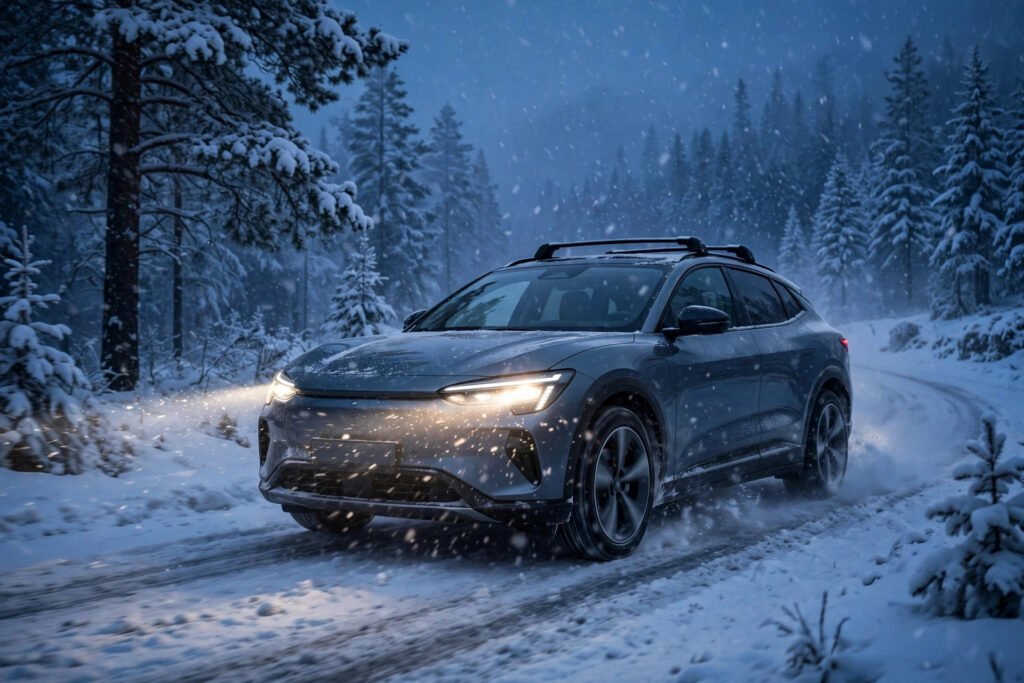
What Is the Best Electric Car for Cold Climates? (2026)
Cold is the enemy of electric cars. Lithium-ion batteries are chemical devices, and chemistry slows down in the cold — cutting range by 20 to 40 percent, slowing charging to a crawl, and turning a confident 300-mile rating into a white-knuckle 180 miles on the coldest January mornings. For Midwest drivers, “best EV” and “best EV for winter” are two very different questions.
This guide names the electric cars that handle cold climates best in 2026, explains the technology that separates winter winners from losers — heat pumps, battery preconditioning, thermal management — and gives you the real-world strategies that keep any EV practical when the temperature drops below zero.
Why Cold Hits EVs So Hard
Three things happen when temperatures plummet. First, the battery’s internal resistance rises, reducing the energy it can deliver — this is the core range loss, and no software update repeals physics. Second, cabin heating in most EVs comes from resistive heaters that devour battery power, unlike gas cars that heat the cabin with waste engine heat. Third, DC fast charging slows dramatically because cold batteries cannot accept charge quickly without damage; the car must spend energy warming the battery before charging speeds recover.
The good news: the penalty is predictable and manageable. EV owner surveys in Norway — where half of new cars are electric and winters are brutal — show that drivers adapt quickly, a finding backed by Recurrent’s winter range studies on thousands of real vehicles, and satisfaction remains extremely high. The key is choosing a car engineered for the cold rather than one merely tolerating it.
The Winter Tech That Matters Most
Heat pump
A heat pump heats the cabin two to three times more efficiently than a resistive heater, saving 10 to 15 percent of range in cold weather. In 2026, heat pumps are standard on most serious EVs but still optional or absent on some budget models — compare efficiency ratings on the EPA’s fuel economy site before deciding. For a cold-climate buyer, this is a must-have checkbox — verify it specifically, because it is not always obvious from the trim name.
Battery preconditioning
Preconditioning warms the battery to its optimal temperature before DC fast charging, restoring much of the lost charging speed. The best systems do this automatically when you navigate to a charger; weaker implementations require manual activation or do not exist at all. If you will ever road-trip in winter, automatic preconditioning is nearly as important as the heat pump.
Thermal management and AWD
Liquid-cooled battery packs with active thermal management hold range better than air-cooled designs. All-wheel drive adds winter traction and safety on snow — dual-motor EVs also distribute load across two motors, which can slightly improve cold-weather efficiency. Winter tires matter more than drivetrain, but AWD plus proper tires is the confident combination.
The Best Electric Cars for Cold Climates in 2026
Tesla Model Y — the winter benchmark
The Model Y remains the cold-climate reference point: standard heat pump, excellent battery preconditioning integrated with navigation, the densest fast-charging network in North America, and an octovalve thermal system that scavenges waste heat brilliantly. Real-world winter range loss runs 25 to 30 percent — better than most rivals — and the Supercharger network means charging stops are short and predictable. It is the default answer for a reason.
Hyundai Ioniq 5 / Kia EV6 — the charging champions
Hyundai-Kia’s E-GMP platform brings 800-volt architecture for exceptionally fast charging and standard heat pumps with battery preconditioning on recent model years. Winter range loss is competitive with Tesla, and the vehicles’ vehicle-to-load capability can even power your home essentials during an outage — a genuinely useful cold-climate party trick. Verify the heat pump is included on the specific trim you are considering.
Ford Mustang Mach-E — the cold-weather workhorse
The Mach-E’s available heat pump and solid thermal management make it a credible winter EV, and its conventional dealer network appeals to buyers who want local service. Ford’s winter testing in Michigan shows, and owner reports from Minnesota and Wisconsin are positive. Range loss in deep cold runs similar to the class average — plan for 30 percent and you will not be surprised.
Rivian R1S / R1T — the adventure pick
Rivian engineered its vehicles for real winter: standard heat pump, robust thermal management, and genuine off-road and snow capability. Efficiency is lower than the crossovers above because these are big, heavy vehicles — but for drivers who need an EV that doubles as a ski-trip and towing machine, nothing else combines this capability with this much winter engineering. Just budget for the range hit on a larger battery.
What about budget EVs?
Cheaper EVs like the Chevrolet Equinox EV and base Nissan Leaf trims can work in cold climates for local commuting, but scrutinize the winter spec sheet: some lack heat pumps or full preconditioning, and smaller batteries mean the percentage range loss translates to fewer usable miles. For a 40-mile round-trip commute with home charging, they are fine. For road trips, spend up. Whatever you choose, winter driving demands preparation — packing an emergency kit for your car with blankets and a phone charger is even more important when your “fuel” gauge is temperature-sensitive.
Real-World Winter Strategies for Any EV
Garage parking is the single biggest winter upgrade — even an unheated garage keeps the battery 15 to 20 degrees warmer than the driveway. Precondition the cabin while plugged in, so heating energy comes from the wall, not the battery. Use seat and steering-wheel heaters instead of blasting cabin heat; they use a fraction of the energy. Keep the battery between 20 and 80 percent for daily use, charge to 100 percent only before long trips, and plan charging stops with 20 percent buffer in winter instead of 10.
Learn your car’s preconditioning routine and actually use it — navigating to a fast charger 20 minutes out lets the car warm the battery en route, cutting a 45-minute winter charge session nearly in half. And get real winter tires: EVs are heavy and torquey, and all-seasons are a compromise you will feel on ice. Beyond tires, the easiest way to learn basic car maintenance covers the 12-volt battery checks and tire care that keep any EV reliable through winter.
Conclusion
The best electric cars for cold climates in 2026 — the Tesla Model Y, Hyundai Ioniq 5, Kia EV6, Ford Mustang Mach-E, and Rivian lineup — all share the same winning formula: a heat pump, automatic battery preconditioning, active thermal management, and AWD availability. Buy the winter tech, not just the range number, since a 300-mile rating means little if the car cannot heat itself efficiently or charge quickly in January. Pair the right car with garage parking, plugged-in preconditioning, and winter tires, and cold-climate EV ownership stops being a compromise — it becomes the better way to drive.
Frequently Asked Questions
How much range do EVs actually lose in winter?
Typically 20 to 40 percent depending on temperature, speed, and heating use. At 20°F, expect around 25 to 30 percent loss on a well-engineered EV; below 0°F with highway speeds and full cabin heat, 40 percent is possible. Heat pumps significantly reduce the penalty.
Can you charge an EV outside in freezing weather?
Yes. Level 2 home charging works fine in the cold — the car warms the battery as needed. DC fast charging is slower until the battery warms, which is why preconditioning before arriving at the charger matters so much.
Do EVs need special winter maintenance?
Less than gas cars, but check the 12-volt auxiliary battery (a common winter failure point on EVs too), keep washer fluid rated for low temperatures, and inspect tires — EV torque wears them faster. Software updates often include winter-efficiency improvements, so keep them current.
Is a heat pump really that important?
For cold climates, yes. It is the single most impactful winter-efficiency feature, worth roughly 10 to 15 percent of range in cold weather. Always verify it is included — on some models it is trim-dependent or part of a package.
Should I keep my EV plugged in overnight in winter?
If you have home charging, yes — staying plugged in lets the car maintain battery temperature using wall power instead of draining the battery, and ensures preconditioning is ready for your morning departure.