What Is the Best Age to Start Kids in Gymnastics?
Every few months, another viral video of a four-year-old doing backflips reignites the same parental debate: is my kid starting gymnastics too late — or dangerously early? Gymnastics is one of the few sports where elite athletes peak in their teens, which creates real pressure to start young. But starting too early, or in the wrong kind of program, is one of the fastest ways to burn a child out before they ever discover whether they love the sport.
This guide gives an honest, age-by-age breakdown of when kids should start gymnastics — from toddler movement classes to competitive team tracks — based on how gymnastics organizations actually structure their programs and what pediatric experts recommend.
The Short Answer by Age
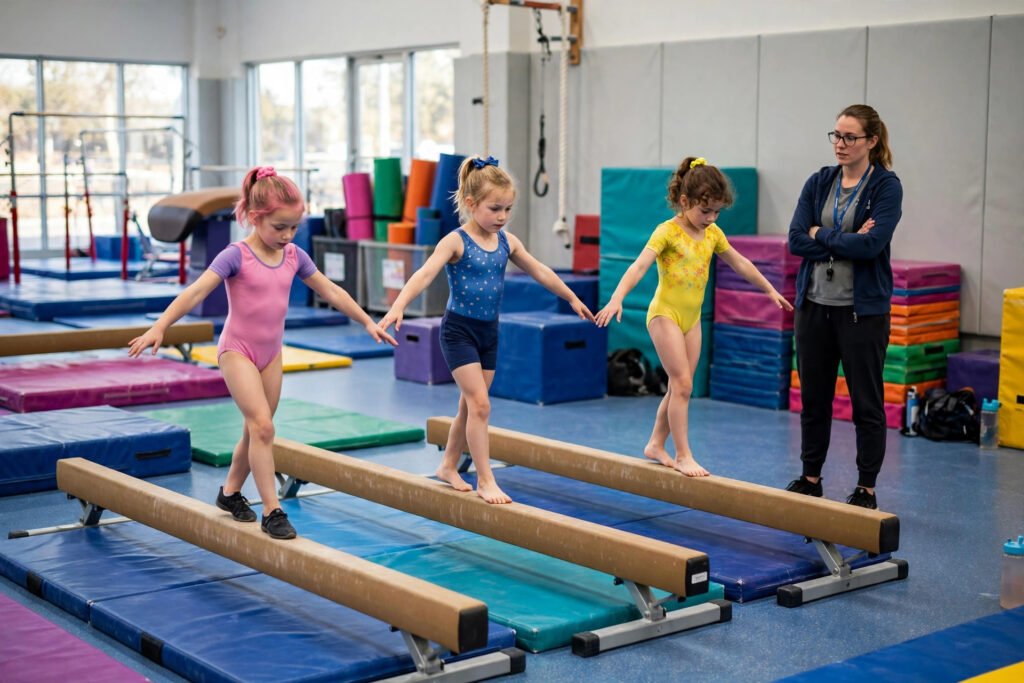
18 months–3 years: Parent-and-child movement classes. These are about coordination, following directions, and safe tumbling play — not gymnastics technique. Ages 3–4: Preschool gymnastics with no parent in the gym. Short classes focused on basic shapes (tuck, pike, straddle), listening skills, and fun. Ages 5–6: The sweet spot for starting real recreational gymnastics. Kids this age can follow multi-step instructions, handle a 60-minute class, and learn foundational skills properly. Ages 6–8: The typical entry point for pre-team and developmental programs that feed competitive tracks. Ages 9+: Absolutely not too late for recreational gymnastics, tumbling, or even programs like Xcel that offer competition without the year-round grind.
The single most important line: there is no age at which a child is “too late” to benefit from gymnastics. The “too late” anxiety only applies to the Olympic track, which involves roughly 0.001% of gymnasts.
What USA Gymnastics Programs Actually Look Like
USA Gymnastics, the sport’s national governing body, structures its developmental pipeline around long-term athlete development. Recreational classes have no age requirements and focus on fundamental movement. The Developmental Program (the traditional competitive track, levels 1–10) typically sees gymnasts competing level 3–4 around ages 7–9, though gyms vary enormously.
The Xcel program deserves special mention for parents: it is USA Gymnastics’ alternative competitive track with flexible routines, fewer required hours, and entry points at every age. For the kid who starts at 10 and wants to compete without training 20 hours a week, Xcel is often the perfect fit. Trampoline & tumbling (T&T) is another path that welcomes later starters.
Signs Your Child Is Ready (Beyond Age)
Age is a proxy; readiness is the real criterion. A child is ready for structured gymnastics when they can follow a coach’s instructions for several minutes, take turns without melting down, separate from a parent for the class duration, and handle gentle correction. Physical signs include basic body awareness — can they jump and land on two feet, hang from a bar briefly, roll forward without fear?
Just as important are the signs they are not ready: crying through most of class after the first few weeks, dread about going, or a coach who suggests your three-year-old needs private lessons to “keep up.” A good preschool program should look like organized play, not training. If it does not, find a different gym.
The Early Specialization Debate
Gymnastics has historically been the poster child for early specialization — and the research pushing back is worth hearing. The American Academy of Pediatrics advises that early sport specialization is associated with higher injury rates and burnout, recommending sampling multiple sports through at least age 12 for most kids. Gymnastics is somewhat exceptional because of its early peak, but even within the sport, the trend among top programs has shifted toward building broad athletic foundations first.
What does that mean practically? A five-year-old doing one or two recreational gymnastics classes a week plus soccer or swimming is in a great spot. A seven-year-old training 16 hours a week year-round is in the risk zone for overuse injuries (Sever’s disease in the heels, gymnast wrist, stress fractures) and psychological burnout. More hours before age 10 do not reliably produce better gymnasts — but they reliably produce more injuries.
Choosing the Right Gym Matters More Than Timing
A great gym at age 7 beats a mediocre gym at age 4 every time. Look for: USAG member clubs with safety-certified coaches, reasonable class sizes (8:1 or better for preschool), a visible recreational track that is not treated as a second-class afterthought, and coaches who talk about fun and fundamentals rather than “talent identification” for toddlers. Watch a class before enrolling. The vibe tells you everything — are the kids smiling? Are corrections kind and specific?
Ask about the gym’s philosophy on moving kids up. Programs that advance children based on birthdays or parent pressure rather than skill mastery create frustrated kids. And be wary of any program that discourages other sports before puberty; the best gyms encourage well-rounded athletes. Balancing training with school matters too — many gym families find that helping kids manage homework alongside activities becomes the real weekly challenge, not the gymnastics itself.
What If Your Kid Starts “Late”?
A nine-year-old beginner is not washed up — they are actually at an advantage in some ways. Older beginners learn faster, understand corrections better, and can handle longer practices. Many gyms run beginner classes grouped by age, so a 10-year-old is not stuck with five-year-olds. Within a year or two of consistent recreational classes, a motivated older beginner can be doing back handsprings and competing Xcel Bronze or Silver.
Tumbling, trampoline, and cheer-adjacent programs are especially welcoming to later starters and often more fun-focused. And the physical literacy gymnastics builds — strength, flexibility, air awareness, discipline — transfers to every other sport. A kid who does gymnastics from 9 to 12 then switches to diving, pole vault, or martial arts is not behind; they are ahead. A simple home workout routine with bodyweight basics can supplement classes nicely for older beginners building strength.
The Bottom Line
The best age to start kids in gymnastics is whenever they are physically ready, emotionally willing, and you have found a gym that prioritizes their long-term love of movement over short-term results. For most kids, that is somewhere between 5 and 8 — but 3-year-old movement classes and 12-year-old beginners both have wonderful places in the sport. Start with fun, keep the hours sane, sample other sports, and let the child’s enthusiasm set the pace. The CDC’s youth physical activity guidelines recommend 60 minutes of daily activity for kids — gymnastics is a joyful way to get there, at any starting age.
Frequently Asked Questions
What is the best age to start gymnastics for the Olympics?
Elite-track gymnasts typically start structured training between ages 5 and 7, but the Olympic path requires exceptional talent, a top-tier gym, and enormous family commitment. For 99.9% of kids, the goal should be skill development and enjoyment, not the Olympics.
Is 10 years old too late to start gymnastics?
No. Ten-year-olds learn quickly and can progress to skills like back handsprings and Xcel competition within a year or two. Trampoline, tumbling, and recreational programs are especially welcoming to older beginners.
How many hours a week should a beginner do gymnastics?
One to two hours per week (one or two classes) is ideal for recreational beginners under 8. More than that should be driven by the child’s enthusiasm, not the gym’s sales pitch.
What should a 4-year-old learn in gymnastics?
Basic body shapes (tuck, pike, straddle), forward rolls, beginner bar hangs, low beam walking, and — most importantly — listening, taking turns, and having fun. Real technique comes later.