Fun Indoor Activities for Kids on a Snow Day
Fun Indoor Activities for Kids on a Snow Day (18 Ideas by Age)
Looking for fun indoor activities for kids on a snow day? The key to surviving a snow day isn’t one perfect activity — it’s having a rotation ready before the cabin fever sets in. I’ve been through snow days with kids of various ages, and the pattern is universal: 90 minutes of excitement, then the whining starts unless you have the next thing queued up. Here are 18 ideas organized by age, plus the parent survival strategies that make the day actually enjoyable.
Toddlers and Preschoolers (Ages 2-5)
- Indoor “snow” sensory bin: Baking soda + shaving cream = moldable fake snow. (Supervised — it’s taste-safe-ish but not tasty.)
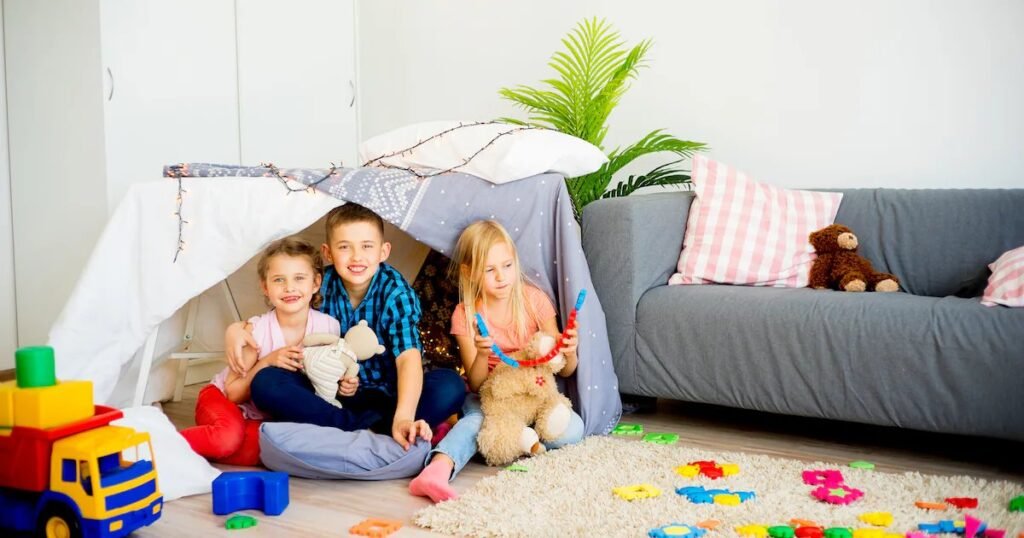
- Fort building: Couch cushions, blankets, chairs. The undisputed champion of indoor play — every age loves it, but little ones live in it.
- Tape roads on the floor: Painter’s tape race tracks for toy cars. Hours of entertainment for under $5.
- Dance freeze party: Music + dancing + freezing when it stops. Burns energy, teaches listening.
- Sticker and coloring stations: Novelty matters — save special sticker books for snow days.
School-Age Kids (Ages 6-10)
- Baking together: Cookies, homemade ice cream, or decorate a cake. The mess is part of the fun.
- Science experiments: Volcano (baking soda + vinegar), slime, ice excavation (freeze toys in a block, chip them out). YouTube has endless kid-safe experiments.
- Scavenger hunt: Riddle-based clues around the house; prize at the end. Takes 20 minutes to set up, entertains for an hour.
- Cardboard box creations: Save big boxes — they become castles, spaceships, stores. Add markers and let imagination run.
- Board games: Family board games — snow days are board game days.
- Indoor camping: Sleeping bags in the living room, flashlights, shadow puppets, “campfire” snacks.
Tweens (Ages 11-13)
- Cooking challenge: Chopped-style competition with pantry ingredients. Tweens take this very seriously.
- Movie marathon with a theme: Full trilogy, studio marathon (all the Pixar films), or bad-movie night. Build a blanket fort for viewing.
- DIY spa day: Face masks, nail art, hair styling. Works for all genders — call it “self-care day” for buy-in.
- Learn a skill: Magic tricks, juggling, a new video game together, basic coding. Novelty + mastery = engagement.
All Ages Together
- Family movie night (upgraded): Tickets, popcorn bar, intermission — make it an event, not just a movie.
- Blanket fort village: Everyone builds their own fort; connect them into a village. The meta-fort is peak snow day.
- Talent show: Every family member performs something. The worse, the better. Video it for future blackmail… er, memories.
Parent Survival Strategies
- Lower your standards. The house will be destroyed. Screen time rules can flex. Survival > perfection.
- Rotate, don’t marathon. 60-90 minutes per activity, then switch. Have the next thing ready before the current one dies.
- Build in quiet time. After lunch, everyone does something calm (reading, drawing, audiobooks) for 30-45 minutes. Parents need the reset as much as kids.
- Go outside briefly. Even 20 minutes of actual snow play resets everyone’s mood. Suit up, embrace it, come back in for hot chocolate.
- Prep the night before when snow is forecast: charge devices, pull out board games, check baking supplies. Morning-you will be grateful.
The Takeaway
Snow days survive on rotation: plan 4-5 activities across the day, mix active with calm, include one cooking project and one fort, and lower your standards gracefully. The kids won’t remember a perfect day — they’ll remember the blanket fort village and the talent show. For rainy-day equivalents with older kids, teen rainy day ideas apply the same principles.
Frequently Asked Questions
How do I limit screen time on a snow day without a mutiny?
Don’t announce limits — structure the day so screens aren’t the default. The rotation approach works: activity, then free time (screens allowed), then activity. Kids accept “we’re doing X now” better than “no more screens.” Also: upgrade the screen time (movie marathon together beats solo tablet time), and save some screen time for the late afternoon when everyone’s energy dips. Total abstinence backfires; intentional inclusion works. Aim for balance, not battle.
What supplies should I keep on hand for snow days?
The snow-day kit: art supplies (paper, markers, stickers, tape, glue), baking basics (flour, sugar, chocolate chips, sprinkles), a few unopened board games or puzzles (novelty!), blankets and pillows for forts, and hot chocolate supplies. Restock in November. The secret weapon: one “new” thing saved specifically for snow days — a craft kit, a LEGO set, a science experiment — novelty buys you hours. Total annual investment: $30-50. Worth every penny.
How do I work from home with kids on a snow day?
The honest answer: lower expectations and tag-team if possible. Practical tactics: front-load independent activities (movie, craft kits, audiobooks) during your critical work blocks; use the “quiet time” after lunch for calls; trade shifts with a partner if available; and communicate with your employer early — snow days are universally understood. Save 15-minute “check-in” breaks between work blocks to reset the kids with the next activity. It’s not going to be your most productive day; aim for “adequate” and forgive the rest.
At what age can kids play outside in the snow unsupervised?
General guidelines: under 6 needs direct supervision; 6-8 can play in a visible yard with check-ins; 9-12 can play with friends in the neighborhood with clear boundaries and time limits; teens are fine with a phone and a check-in plan. Factors: traffic, temperature (frostbite risk below 0°F wind chill — limit exposure), and the specific child. Set rules in advance: stay where I can see you / stay on our street, come in every 45 minutes to warm up, dry clothes immediately after. When in doubt, supervise — hypothermia and frostbite are real risks, not just parental anxiety.
What about teenagers on snow days?
Teens need a different approach — they won’t do scavenger hunts (or they’ll pretend not to enjoy them). What works: cooking challenges with real stakes, video game tournaments with friends invited over, movie marathons they’ve chosen themselves, and creative projects with genuine autonomy (not “crafts”). The friend factor is everything — a teen alone on a snow day retreats to their room, while a teen with two friends is suddenly having a great day. See our rainy day activities for teenagers for the full playbook — the principles are identical, just add snow. And let them sleep in; rested teens are cooperative teens.