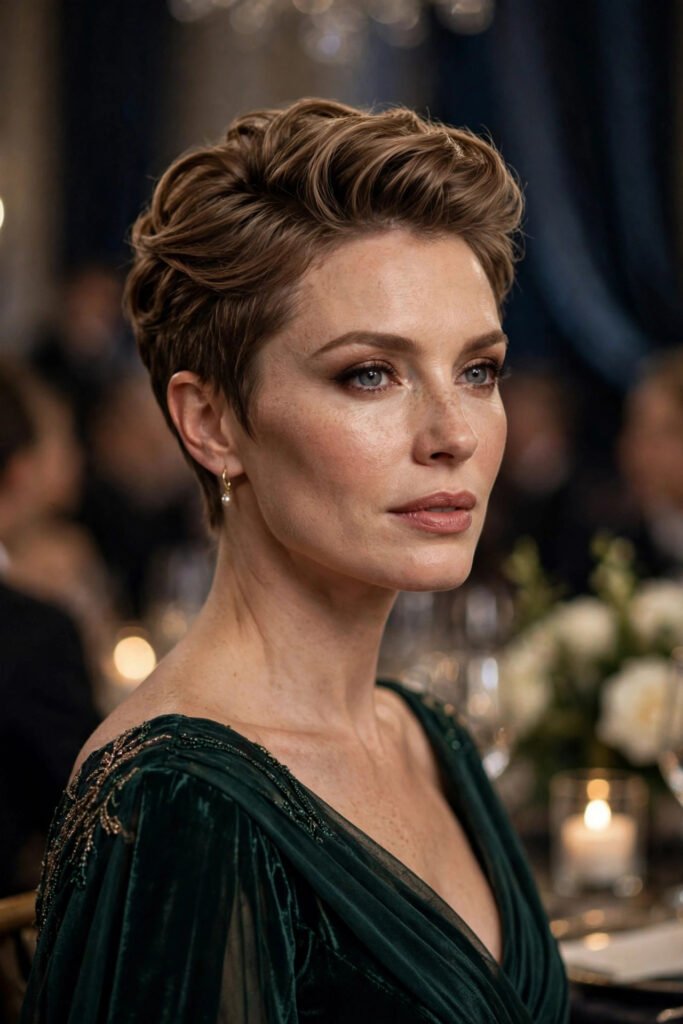
How to Style Short Hair for Formal Events (2026 Guide)
The wedding invitation says black tie. Your hair is a pixie, a bob, or a chin-length cut — and every “formal hairstyle” tutorial starts with “gather your long hair into…” Short hair at formal events can feel like a limitation. It is actually an advantage: short hair photographs beautifully, holds style all night without the weight-drag that collapses long updos, and reads modern and confident in a sea of curls. The trick is styling it with intention rather than just showing up with daytime hair.
Here is how to style short hair for formal events: the principles that make short hair look evening-ready, specific styles for pixies, bobs, and lobs, the products and tools that matter, and the accessories that elevate everything.
What Makes Short Hair Look Formal
Three things separate evening short hair from daytime short hair: polish (smooth, intentional texture — frizz reads casual), definition (piece-y texture, sculpted waves, or sleek lines — deliberate shape), and finish (shine, accessories, or a bold detail like a deep side part). You do not need length; you need intention. A pixie with piece-y texture and a jeweled clip looks more formal than long hair scraped into a limp ponytail.
Styles by Length
Pixie cuts: texture and accessories
The pixie is the easiest short cut to formalize. Options: piece-y texture with wax or pomade, swept into a deep side part for asymmetry and drama; sleek and tucked — flat-ironed smooth with one side tucked behind the ear, revealing a statement earring; or sculpted waves using a small curling iron on the longer top pieces. Then accessorize: a jeweled headband, decorative pins on one side, or a silk scarf tied as a headband transforms any pixie instantly. The growing-out-pixie crowd has an advantage here — the classic grow-out tricks (texture, deep parts, accessories) are exactly the formal-event playbook.
Bobs: sleek, wavy, or pinned
The bob is the most versatile formal length. Sleek and straight with a center or deep side part reads minimalist and chic — flat-iron in small sections, finish with shine serum. Soft waves (curling iron or flat-iron waves, brushed out) create classic Hollywood glamour. Or pin one side back with decorative clips for asymmetric elegance — the pinned side shows off earrings and neckline. A faux-hawk style (volume at the crown, sides smoothed) adds edge for fashion-forward events.
Lobs and shoulder length: half-up options
At lob length, half-up styles enter the picture: a twisted or braided crown section pinned at the back, a small top knot with the rest sleek, or face-framing pieces curled while the back stays smooth. These read formal while showing off the cut’s shape.
Products and Tools That Matter
Heat protectant first, always — formal styling means more heat than usual, and the American Academy of Dermatology stresses protection before any hot-tool work. For texture: waxes and pomades (pixies), texturizing spray (bobs), smoothing serum (sleek looks). Drugstore versions perform beautifully — formal styling is technique, not price tags, which is the whole philosophy behind learning to look stylish on a tight budget. For hold: a flexible-hold hairspray that survives hugging and dancing without helmet-head. Tools: a flat iron (the short-hair MVP — straightening, waves, and detail work), a small-barrel curling iron for pixie texture, and plenty of bobby pins matched to your hair color.
Practice the style at least once before the event — formal-morning experimentation is how disasters happen. Photograph the trial in different lighting; what looks good in bathroom light can look flat in event photography flash.
Accessories: The Great Equalizer
On short hair, accessories do the work that length does on long hair. Jeweled headbands, pearl pins, gold cuffs, silk scarves, statement earrings (visible with short hair — use this), and even fresh flowers for weddings. One bold accessory beats five small ones. Match metals to your jewelry, and consider the neckline — strapless and off-shoulder dresses pair beautifully with tucked-behind-the-ear styles that show skin.
Working With Your Stylist (or Not)
A professional blowout or styling session ($40–$80) before a major event is money well spent — stylists see angles you cannot and their work photographs better. Book the trial with the event in mind, bring reference photos, and wear a top with a similar neckline to the event outfit. If you DIY, the Cleveland Clinic’s dermatologists remind heat-stylers to keep tools moving and avoid the highest settings — formal styles need control, not maximum heat. Either way, budget the styling into how much you budget for monthly self-care so event prep never becomes a financial surprise.
Formal Styles for Specific Events
Weddings (as a guest): soft texture with an elegant accessory — jeweled pins or a headband — reads celebratory without competing with the bridal party. Avoid white or ivory accessories; everything else is fair game. Black-tie galas: sleek is safest — a polished pixie or glass-smooth bob with a deep side part matches the formality of the dress code. The sleeker the hair, the more formal it reads.
Holiday parties: this is the moment for drama — sculpted waves, bold accessories, a little more volume than usual. Festive events forgive (and reward) the looks that would be too much for a boardroom. Job-adjacent formals (award dinners, fundraisers): polished but understated — neat texture, minimal accessories, nothing that distracts from you. And for outdoor summer formals, prioritize hold: humidity-tested products and secure pinning beat delicate styles that collapse in the first hour.
The emergency kit
Pack for the event: travel hairspray, bobby pins, a small comb, blotting papers, and your lipstick. Short formal styles are low-maintenance but not no-maintenance — a two-minute bathroom touch-up halfway through the evening keeps everything intentional. Stash the kit with whoever holds your phone; you will thank yourself at 10 p.m.
Second-day formal hair
Multi-day events (wedding weekends, conferences) need a refresh plan, not a restyle. Sleep with hair wrapped in silk, revive in the morning with dry shampoo at the roots and a quick pass of the flat iron on the pieces that lost shape, then re-accessorize. Day-two texture is often better than day-one — slightly lived-in short styles have a relaxed elegance that reads confident rather than overdone.
Conclusion
Styling short hair for formal events means adding polish, definition, and finish to your cut: piece-y texture and accessories for pixies, sleek/wavy/pinned versatility for bobs, half-up options for lobs. Invest in heat protectant, the right texture products, and one great accessory — and practice once before the event. Short hair does not need to apologize at formal events. Styled with intention, it is the most modern hair in the room.
Frequently Asked Questions
Can you do an updo with short hair?
A true updo needs length, but pinning techniques create updo illusions on bobs and lobs — twisted and pinned sections suggest an updo’s structure. Pixies work better with texture and accessories than pinned illusions.
How do I make short hair look elegant, not casual?
Polish (smooth, frizz-free finish), deliberate shape (not air-dried default), shine, and one elevated detail — a deep part, an accessory, or a statement earring. Elegance is intention made visible.
Should I get my short hair professionally styled for a wedding?
For major events, yes if the budget allows — $40–$80 buys expertise and longevity that shows in photos. For smaller formals, practiced DIY with good products works beautifully.
What accessories work best for short formal hair?
Jeweled headbands, decorative pins and clips, silk scarves, and statement earrings. One bold piece beats several small ones, and metals should coordinate with your jewelry.