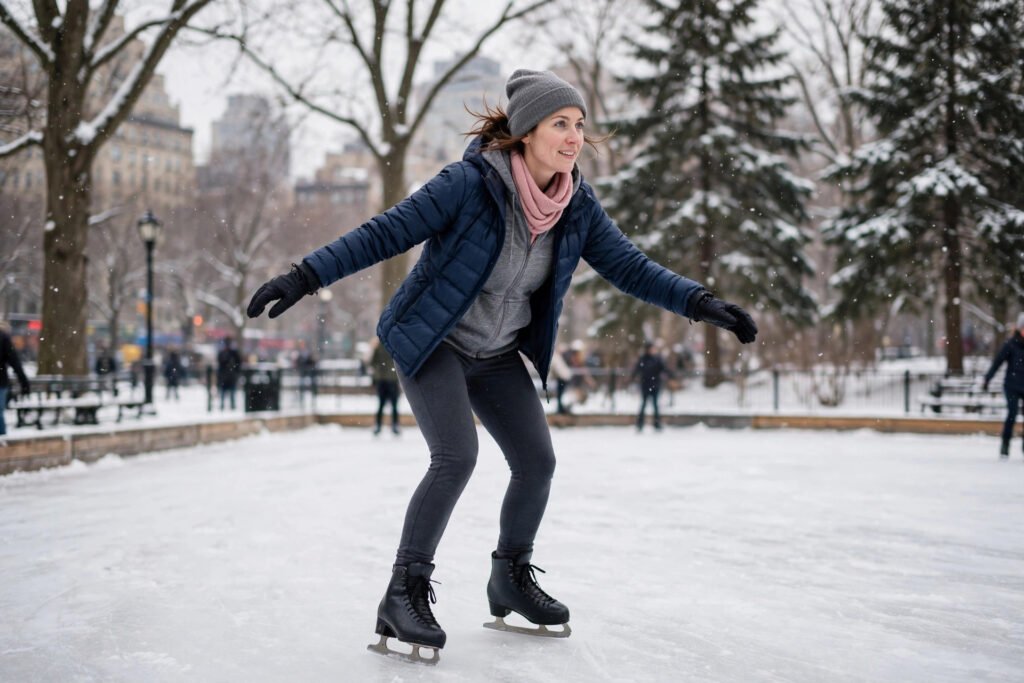
How to Start Ice Skating as an Adult Beginner (2026)
Learning to ice skate as an adult feels ridiculous for exactly one session — and then it becomes one of the most joyful things you do all winter. Adults assume skating is a kids’ sport, but rinks across Chicago are full of 30-, 40-, and 60-somethings taking their first strides. It is superb exercise, genuinely fun, and far more learnable than it looks from the boards.
This guide covers how to start ice skating as an adult beginner — what to expect, the gear you need (and do not), how to survive the first sessions without injury, the fastest path to real skating, and where Chicago adults learn. Lace up.
What to Expect: The Honest First-Session Preview
Your first session: you will cling to the wall, your ankles will wobble, you will feel like balance is impossible — and then, around minute 40, something clicks and you glide a few feet unassisted. That tiny glide is addictive. Most adults can skate slowly around the rink within 3-5 sessions and stop reliably within 8-10. You will not be doing crossovers in week one, and that is fine.
Adults actually learn faster than kids in some ways: you understand instructions, you can analyze what went wrong, and you practice deliberately. Kids learn faster through fearlessness; adults learn faster through comprehension. The main adult disadvantage is fear of falling — which is legitimate (we break more easily) and manageable with the right approach.
Falling is part of it. Everyone falls learning to skate. The goal is not never falling — it is falling safely (more below) and getting up laughing. Budget 10-15 sessions to feel genuinely comfortable; after that, skating becomes one of your favorite winter activities.
Gear: What You Need (and What to Skip)
Skates: Rent first (most rinks rent for $5-$10). Rental skates are dull and unsupportive, but they are fine for sessions 1-3 while you decide if you love it. When you commit, buy recreational figure skates or hockey skates ($80-$150 for decent beginners — Jackson, Riedell) — not expensive competitors’ models. Get fitted at a real skate shop; skates should be snug with toes just brushing the front. Lace tightly at the ankle (the wobble is usually loose lacing, not bad balance).
Protection: A helmet is smart for true beginners (bike helmet works), wrist guards prevent the most common adult skating injury (wrist fractures from catching falls), and knee pads help confidence enormously. Experienced skaters may skip these; beginners should not. Gloves are mandatory — rinks are cold and ice is unforgiving on bare hands.
Clothing: Layers, flexible pants (no jeans — they restrict and get miserable when damp), and thin-but-warm socks (thick socks bunch and reduce control). Skip: expensive skating outfits, anything you would not fall in. US Figure Skating’s adult programs list equipment guidance for beginners.
Learning Safely: Falls, Stops, and First Skills
How to fall: Bend your knees, try to fall sideways or onto your padded rear — never stiff-armed forward (broken wrists) or straight backward (head injuries). Practice falling intentionally in your first session; it removes the fear and teaches the muscle memory. How to get up: roll to hands and knees, put one skate flat on the ice, push up — the standard technique every instructor teaches first.
The skill sequence: 1) Marching in place and small steps (forget gliding initially). 2) Two-foot glide with knees bent. 3) Stopping — the snowplow stop (toes in, push out) first; T-stops later. Stopping is the skill beginners neglect and need most — learn it by session 3. 4) Forward stroking (pushing with alternating feet). 5) Turns and crossovers. Each builds on the last; do not skip ahead.
Take lessons. This is the highest-ROI advice in the article. Group adult beginner classes ($100-$200 for 6-8 weeks at most rinks) accelerate learning 3x versus self-teaching and prevent the bad habits that cause injuries. Chicago options include the Chicago Park District’s ice rinks (McFetridge, Morgan Park — affordable adult classes) and suburban rinks with US Figure Skating Basic Skills programs. One class series replaces months of flailing.
Where Chicago Adults Skate and What It Costs
Park District rinks: McFetridge Sports Center (Irving Park) and Morgan Park Sports Center are the city’s flagship indoor rinks — public skate sessions run $7-$10 plus rental, with adult lesson programs among the cheapest anywhere. Millennium Park’s McCormick Tribune Ice Rink: free admission (rentals ~$15-$20), skating with the skyline — magical, crowded, go weekday mornings.
Suburban rinks: dozens across the metro (Oakton, Winnetka, Northbrook, Darien, etc.) offer public sessions and adult programs, often with better ice and smaller crowds than city rinks. Outdoor neighborhood rinks: many park districts flood outdoor rinks in winter — free, atmospheric, weather-dependent.
Realistic budget: $15-$25 per public session with rental; $150-$300 for skates + protective gear to own; $100-$200 for a beginner class series. For a winter of weekly skating, budget $400-$600 all-in — cheaper than most gym memberships and infinitely more fun. Pair skating days with proper winter packing strategy if you are traveling to skate, and build general fitness with injury-free running in the off-season — cardio and leg strength transfer directly to the ice.
Off-ice training accelerates on-ice progress. Balance exercises (single-leg stands, wobble boards), leg strength (squats, lunges), and core work all transfer directly to skating stability — and they are free to do at home. Even 15 minutes twice a week noticeably shortens the wobbly phase. Pair it with general cardio fitness and you will arrive at each session with more stamina to practice, which compounds into faster learning.
Conclusion
Starting ice skating as an adult means: renting skates for the first sessions, wearing a helmet and wrist guards without embarrassment, learning to fall and stop before anything fancy, taking a group beginner class (the ultimate accelerator), and giving it 10-15 sessions. Chicago’s rinks — from Millennium Park’s free ice to the Park District’s affordable lessons — make it one of the easiest cities in America to start. The wall-clinging phase ends faster than you think; the gliding lasts all winter.
Frequently Asked Questions
Is it too late to learn ice skating as an adult?
No — adults learn skating successfully at every age, with rinks full of 30-60+ beginners. Adults learn efficiently through instruction and deliberate practice; expect basic competence in 10-15 sessions.
How much do ice skating lessons cost for adults?
Group adult beginner classes typically run $100-$200 for a 6-8 week series. Chicago Park District rinks offer some of the most affordable options; private lessons run $40-$80/hour plus ice time.
What should I wear for my first ice skating session?
Warm flexible layers (no jeans), thin warm socks, gloves (mandatory), and a helmet and wrist guards for safety. Dress for ~40°F — rinks are cold but you warm up fast.
How do I stop on ice skates as a beginner?
Learn the snowplow stop first: glide with feet apart, turn toes inward, and push outward with the inside edges. Practice it deliberately from session 3 — stopping is the most important beginner skill.
Figure skates or hockey skates for adult beginners?
Either works. Figure skates’ toe picks help beginners feel stable (but catch if you lean forward); hockey skates offer more ankle mobility and feel familiar to inline skaters. Try rentals of both before buying.