How to Start a Car in Extreme Cold (2026)
How to start a car in extreme cold: when the thermometer reads -20°F and your engine won’t turn over, panic is the natural response — but most cold-start failures are preventable, and the fixes are straightforward. Chicago and Ohio winters regularly deliver the kind of cold that kills weak batteries and thickens oil to sludge. Here’s exactly what to do before, during, and after extreme cold to keep your car starting reliably.
Why Cars Won’t Start in Extreme Cold
Three things conspire against you on the coldest mornings of the year. Battery capacity plummets: at 0°F, a battery delivers ~60% of its rated power; at -20°F, ~40%. A battery that’s merely “okay” in October is dead in January. Oil thickens: conventional oil turns to molasses in deep cold, forcing the starter to work exponentially harder. Fuel issues: gasoline doesn’t freeze, but water condensation in fuel lines can, and diesel gels without winter additives.
Understanding this trio tells you the entire prevention strategy: strong battery, right oil, and smart habits. The Department of Energy’s cold-weather vehicle guidance confirms these fundamentals and adds fuel-economy context for winter driving.
Before the Cold: Prevention (Fall Checklist)
Do this every October, before the first hard freeze: Test your battery — most auto parts stores test free in minutes, no appointment needed. Replace batteries older than 4–5 years proactively; a $150 battery beats a $200 tow plus a missed workday plus the misery of standing in -10°F waiting for rescue. Switch to full synthetic oil (0W-20 or manufacturer-specified winter weight) — synthetic flows at temperatures where conventional oil solidifies. This single change is the highest-ROI cold-weather move. Check antifreeze strength (should protect to -35°F), inspect belts and hoses (cold makes brittle rubber fail), and keep fuel above half a tank all winter (reduces condensation, and you’ll thank yourself if stranded).
Consider a block heater ($50–$150 installed) if you park outside in serious cold — warming the engine block for 2–3 hours before starting transforms -20°F starts into non-events. A battery blanket ($30) helps marginal batteries survive. And learn your car’s systems — basic car maintenance skills make fall prep quick and cheap.
The Morning Of: Starting Technique
When it’s brutally cold: Turn off all accessories (heat, lights, radio, heated seats) before cranking — every amp matters. Turn the key to “on” for 2–3 seconds first (lets the fuel pump prime). Crank for max 10 seconds — longer just overheats the starter. If it doesn’t catch, wait 30–60 seconds (lets the battery recover) and try again. Three failed attempts = stop and troubleshoot, not keep grinding.
For push-button starts, the same logic applies — foot on brake, one press, and don’t pump anything. If the engine cranks slowly but won’t catch, it’s usually battery (jump it) or fuel (possible line freeze — move to a warmer spot if possible). If it cranks normally but won’t fire, suspect fuel delivery or ignition issues beyond DIY scope.
Jump-Starting Safely in the Cold
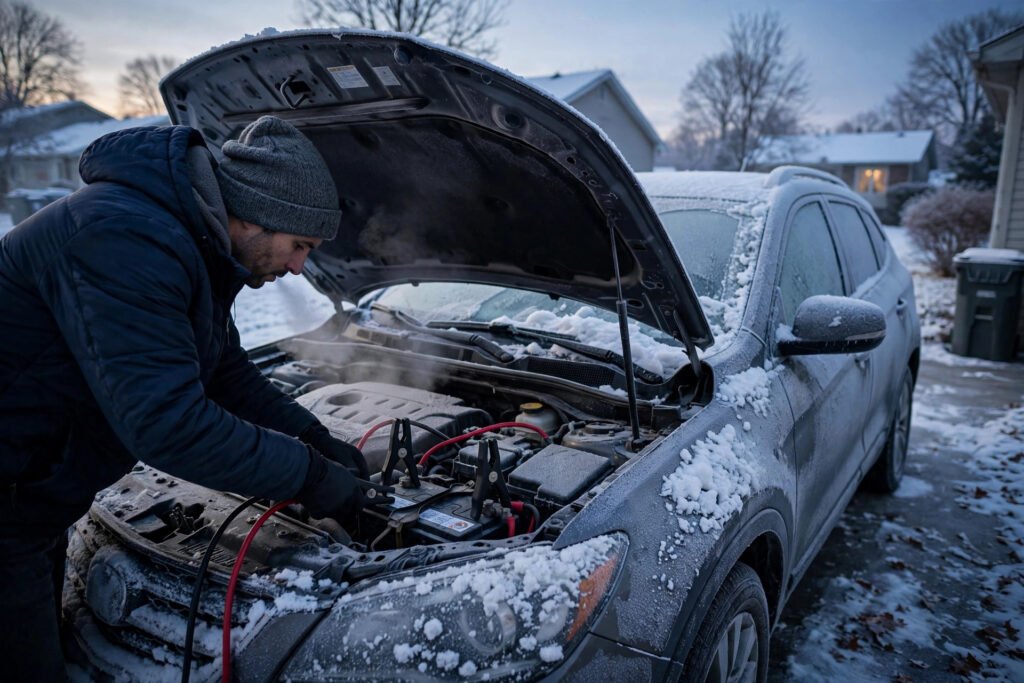
Carry jumper cables or a lithium jump starter ($60–$100 — one of the best winter investments; no second car needed). Cable order: dead car’s positive (+), donor’s positive (+), donor’s negative (-), then dead car’s unpainted metal ground (NOT the dead battery’s negative — sparks near a struggling battery are dangerous). Start the donor car, wait 2–3 minutes, then crank the dead car.
After starting: let it idle 30–60 seconds (not 15 minutes — modern engines warm faster under gentle driving, and extended idling wastes fuel and increases engine wear), then drive gently until fully warm. Critical: drive for at least 20–30 minutes to recharge the battery — a 5-minute trip after a jump leaves you stranded again tomorrow. If the battery needed a jump once, get it tested immediately — it’s telling you it’s dying.
Diesel and EV Cold-Weather Notes
Diesel owners: diesel fuel gels in extreme cold — use winter-blend diesel or anti-gel additives when temperatures drop below 10°F, keep the tank full, and consider a block heater essential rather than optional. Diesel glow plugs need extra cycle time in deep cold: turn the key to “on,” wait for the glow plug light to go out, then crank.
EV owners: cold cuts range 20–40% and slows charging dramatically. Preheat while plugged in (uses wall power, not battery), keep charge above 20% in winter, and expect slower DC fast charging. EVs actually start reliably in cold (no engine to crank) — the challenge is range, not starting. Park in a garage when possible; even an unheated garage is 10–15°F warmer than outside.
When It Still Won’t Start: Troubleshooting
Clicking but no crank = dead battery (jump or replace). Slow crank that fades = weak battery or corroded terminals (clean terminals with a wire brush — corrosion is a top cold-weather culprit). Cranks fine but won’t fire = fuel or spark issue (possible frozen fuel line — try a garage or wait for warming; add isopropyl-based fuel-line antifreeze preventatively). Nothing at all (no lights, no click) = completely dead battery or loose connection.
Know when to call for help: repeated failures after jumping, any burning smell, or temperatures below -25°F where even healthy cars struggle. Roadside assistance (AAA, insurer-provided, or manufacturer) is worth its weight in gold — a $60/year membership beats a $150 tow. And always carry a winter emergency kit — if your car won’t start in extreme cold, your safety depends on what’s in the trunk. The NHTSA’s winter safety resources cover emergency preparedness in detail.
Conclusion
Starting a car in extreme cold comes down to prevention (test and replace the battery each fall before it fails you, use full synthetic winter-weight oil, keep fuel above half a tank all winter), technique (accessories off, 10-second crank limit, patience between attempts), and equipment (portable jump starter in the trunk, block heater for outdoor parking). Do the fall checklist and -20°F mornings become routine instead of crises. Your car can handle Chicago and Ohio winters — it just needs you to prepare it.
Frequently Asked Questions
Why exactly won’t my car start when it’s really cold outside?
Battery output drops 40–60% in extreme cold, oil thickens making the engine harder to turn, and fuel-line condensation can freeze. Weak batteries that work in fall fail in January.
How long should I warm up my car on a freezing winter morning?
30–60 seconds of idling, then drive gently until warm. Extended idling wastes fuel, increases wear, and warms the engine slower than gentle driving.
Should I invest in a block heater for Chicago winters?
If you park outside where temperatures regularly drop below 0°F, yes — $50–$150 installed, and it transforms extreme-cold starts. Plug in 2–3 hours before starting (a timer saves electricity).
Is it safe to jump-start a car in freezing cold weather?
No, when done correctly — follow the cable order carefully and never connect to the dead battery’s negative terminal. A portable lithium jump starter eliminates the need for a donor car entirely.
What motor oil weight is best for extreme cold weather?
Full synthetic in your manufacturer’s winter weight (often 0W-20) — synthetic flows at temperatures where conventional oil thickens to sludge and starves your engine. It’s the single highest-ROI cold-weather change you can make.