How to Introduce a New Puppy to Older Dogs (Step-by-Step)
The puppy is eight weeks old, all ears and enthusiasm. Your twelve-year-old Lab watches from the rug with the weary expression of someone whose quiet retirement just got canceled. Introducing a new puppy to older dogs is one of the most delicate operations in pet ownership — done well, it gives your senior a companion and your puppy a mentor. Done badly, it creates months of stress, resource guarding, and vet bills.
Here is how to introduce a new puppy to older dogs the right way: the preparation that prevents most problems, the first meeting protocol, managing the critical first two weeks, and how to handle the common friction points — jealousy, rough play, and the older dog who just wants to be left alone.
Before the Puppy Comes Home
Vet-check the older dog first
An older dog in pain is an older dog with a short fuse. Get a full senior wellness check before the puppy arrives: arthritis, dental pain, vision or hearing loss, and thyroid issues all reduce tolerance for puppy nonsense. Treating a sore hip or bad tooth before introductions can be the difference between grumpy acceptance and a bite. This is not optional — it is the foundation everything else rests on.
Set up the environment
Create separate spaces before day one: the puppy gets a crate and pen area, the older dog keeps their established spots undisturbed. Set up separate feeding stations in different areas — food is the number-one trigger for inter-dog conflict. Remove high-value shared resources (favorite bones, coveted toys) until the relationship stabilizes. Baby gates are invaluable: they allow visual contact without physical access during the adjustment period.
Honestly assess your older dog’s temperament
Some older dogs genuinely enjoy puppies; others merely tolerate dogs in general and will find a puppy exhausting. A dog with a bite history, severe resource guarding, or extreme anxiety may not be a candidate for a puppy housemate at all — and admitting that before the puppy arrives is kinder than a failed introduction. If you are unsure, a pre-adoption consult with a certified trainer or veterinary behaviorist is money well spent. The American Kennel Club maintains directories of certified trainers by region.
The First Meeting: Neutral Ground Protocol
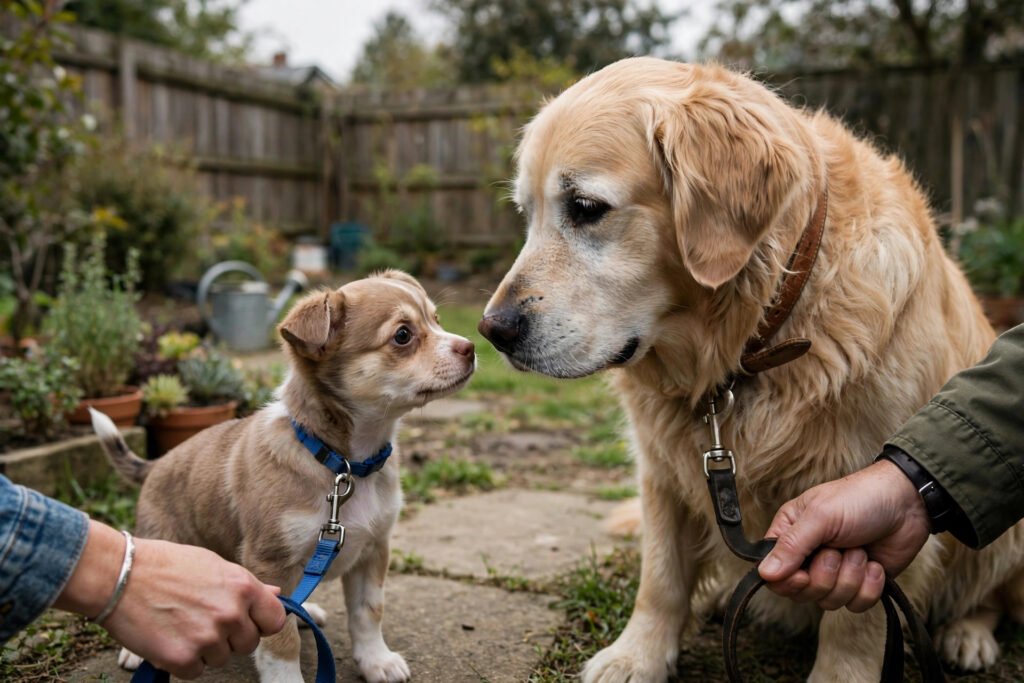
Do not bring the puppy straight into the house. The older dog’s territory is their security; a surprise invasion triggers defensive reactions. Instead, meet on neutral ground — a quiet park or a neighbor’s yard. Both dogs on leash, handlers relaxed (dogs read your tension instantly).
Start with parallel walking: handlers walk the dogs in the same direction, 10 to 20 feet apart, gradually decreasing distance as both dogs stay calm. Let them notice each other without forced interaction. If body language stays loose — soft eyes, relaxed tails, play bows — allow a brief sniff greeting, then move on. Keep first greetings to a few seconds; long face-to-face meetings escalate tension. End on a positive note and head home separately.
At home, let the older dog enter first, then bring the puppy into their confined area. Supervise every interaction for the first two weeks — no exceptions. The puppy should not have free roam of the house until the relationship is clearly stable. Expect accidents during the adjustment — budgeting professional carpet cleaning for the transition months is just realistic.
Managing the First Two Weeks
Protect the older dog’s rest
Puppies are relentless; older dogs need 14-plus hours of sleep. Enforce naps by crating the puppy regularly — overtired puppies are bitey, obnoxious puppies, and an exhausted senior will snap. Give the older dog puppy-free sanctuary time daily: a closed room, a long chew, or a solo walk. This is not favoritism; it is stress management.
Feed separately, always
Feed in separate areas with doors or gates between them, and pick up bowls when meals end. Do not “test” whether they can eat together — there is no prize for it and real risk. The same goes for high-value chews: separate spaces, supervised, collected afterward.
Train the puppy, advocate for the senior
Teach the puppy from day one that the older dog’s space is respected: interrupt mounting, face-biting, and relentless chasing immediately and redirect to a toy. Reward the older dog generously for calm tolerance — you are paying them for patience, and they notice. If the older dog corrects the puppy with a growl or snap, do not punish the correction (within reason) — that is appropriate dog communication. Intervene only if corrections escalate or the puppy cannot read the signals.
Common Friction Points and Fixes
The puppy will not leave the older dog alone
Normal puppy behavior, miserable for seniors. Solution: more structure — scheduled crate naps, leashed indoor time, and separate play sessions where the puppy burns energy without using the older dog as entertainment. A tired puppy is a polite puppy.
Jealousy over attention
Dogs do experience jealousy-like behavior. Counter it deliberately: greet and pet the older dog first, give treats to the older dog first, maintain their routines exactly. The older dog’s life should change as little as possible; all the disruption belongs to the puppy’s schedule.
Resource guarding between dogs
Stiffening over food, toys, or resting spots needs immediate management: separate resources, no competition, and professional help if it escalates beyond mild posturing. The ASPCA’s guide to common dog behavior issues covers the warning signs that distinguish normal adjustment from problems needing intervention.
When to get professional help
Call a certified professional dog trainer (CPDT-KA) or veterinary behaviorist if you see: bites that break skin, escalating fights rather than diminishing tension after two weeks, one dog that stops eating or becomes withdrawn, or resource guarding directed at humans. Early intervention works; entrenched patterns are harder and more expensive to fix.
The Payoff
Done right, the relationship that emerges is worth every bit of management. Older dogs often become calmer and more engaged with a young companion; puppies learn bite inhibition, social cues, and house rules faster from a stable older dog than from any human. Many owners report their senior seeming years younger within months. The first two weeks are work — the next ten years are the reward.
Adding a second dog is a major commitment, and it is worth thinking through honestly — the same careful evaluation behind deciding whether a pet fits a busy lifestyle applies doubly when you already have one. Two dogs means double the vet bills, double the training, and a dynamic you must manage, not just enjoy.
Conclusion
Introduce a new puppy to older dogs by vet-checking the senior first, meeting on neutral ground with parallel walking, supervising every interaction for two weeks, feeding separately always, and fiercely protecting the older dog’s rest and routines. Manage the puppy’s energy so the senior is not the entertainment, reward calm coexistence generously, and get professional help early if tension escalates instead of fading. Patience in the first month buys a decade of companionship — for all three of you.
Frequently Asked Questions
Should I get a puppy or an adult dog as a companion for my senior?
Often an adult dog is easier: past the destructive phase, known temperament, calmer energy. Puppies work when the senior is tolerant and you can commit to intensive management. Match energy levels, not ages.
How long does it take for dogs to accept each other?
Initial tolerance often appears within two weeks; genuine comfort typically takes one to three months. Do not rush it — dogs that are forced together before they are ready develop lasting negative associations.
Is it normal for my older dog to growl at the puppy?
Yes — growling is communication, not aggression. Appropriate corrections teach the puppy boundaries. Intervene only if corrections are disproportionate (full attacks over minor annoyances) or increasing in intensity.
Should the dogs share a crate?
No. Every dog needs their own den — a private space to decompress. Shared confinement removes escape options and creates conflict. Crate them separately, always.
My senior dog seems depressed since the puppy arrived. Is this normal?
Mild adjustment blues for a week or two are normal. Persistent withdrawal, appetite loss, or lethargy beyond two weeks warrants a vet visit — rule out medical issues first, then address the routine and sanctuary time.