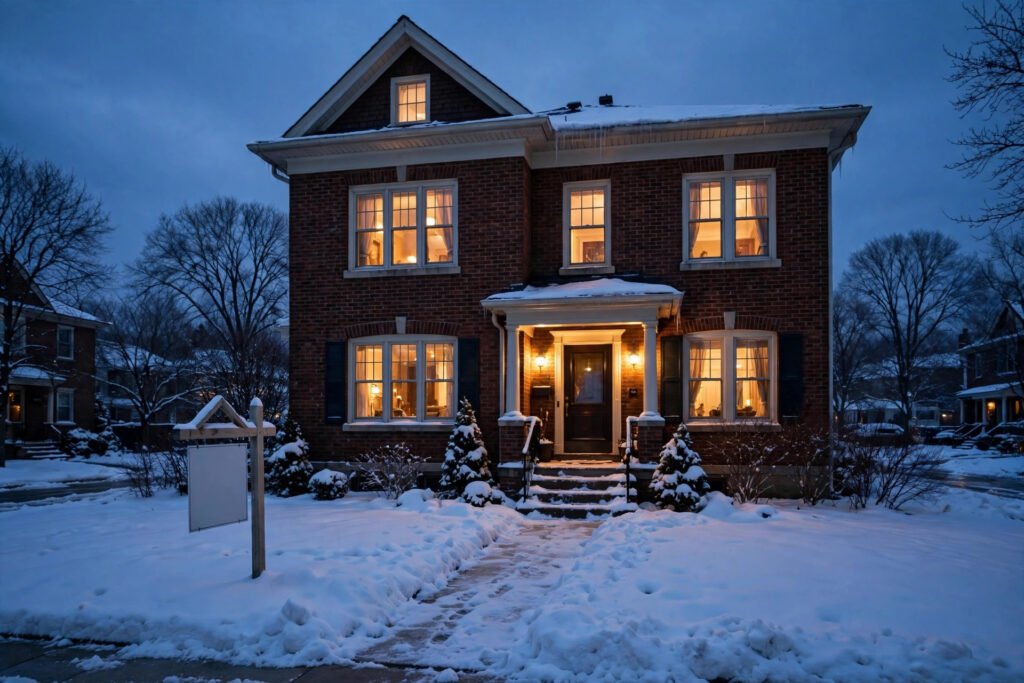
How to Sell a House in Winter in Chicago (2026 Guide)
Conventional wisdom says never sell a house in a Chicago winter. Fewer buyers, gray skies, snow-covered curb appeal, the holidays sucking up everyone’s attention. And there is truth in it — spring brings more buyers and often better prices. But life does not always wait for April: job relocations, divorces, and financial pressures force winter sales every year, and plenty of them succeed brilliantly.
The secret is that winter selling in Chicago is not about fighting the season — it is about exploiting it. Fewer listings mean less competition, winter buyers are serious buyers, and a warm, well-presented home stands out dramatically against dreary alternatives. This guide covers pricing, staging, curb appeal, and marketing tactics built specifically for selling a Chicago home between December and February.
Price for the Season — Honestly
Winter is a buyer’s market in Chicago, and pricing must reflect that. Data consistently shows winter sellers who price at or slightly below recent comps sell faster and often net more than those who price optimistically and chase the market down through spring. A 2-4% seasonal discount versus spring pricing is realistic in most Chicago neighborhoods.
The danger is overpricing into a thin market. With fewer showings, an overpriced winter listing goes stale fast — and a stale listing in March faces the fresh spring inventory at a disadvantage. Price to generate immediate activity: your best offer usually arrives in the first three weeks. If you are not getting showings in week two, the price is wrong, not the season.
That said, do not give the house away. Winter buyers are motivated — relocations, lease expirations, investors — and motivated buyers pay fair prices for the right home. Price fairly, not fearfully.
Winterize the Showing Experience
Your home must feel like a refuge from the Chicago winter. Keep the thermostat at 68-72°F for showings — a cold house feels neglected and makes buyers rush through. Maximize light: open all blinds, turn on every lamp, and consider daylight-temperature bulbs. Gray winter afternoons make bright interiors feel twice as valuable.
Handle the practical winter issues before listing. Service the furnace and keep records — buyers’ inspectors will test it hard. Clear the driveway, walkways, and sidewalks immaculately before every showing; a treacherous front walk kills deals and creates liability. Put down an attractive entry mat and have a plan for wet boots. Keep gutters clear of ice dams, and make sure the roof’s condition is documented — winter is when roof problems reveal themselves.
Small comforts matter: a crackling fireplace (real or electric), warm throws on the couch, the faint smell of baking or fresh coffee. You are selling the feeling of coming home from a brutal commute to this. Lean into hygge hard.
Curb Appeal When Everything Is Frozen
You cannot fix a dormant lawn in January, but you can still make the exterior inviting. Keep snow cleared and apply pet-safe ice melt. Add winter planters with evergreens, birch branches, and red berries by the front door — they photograph beautifully against snow. Install warm-white landscape lighting on a timer so evening drive-bys see a glowing, welcoming home.
Clean the windows inside and out (winter grime is very visible), touch up the front door paint, and make sure house numbers are readable in the dark. If you have listing photos from summer or fall, ask your agent about including one or two — buyers understand seasons, and a green-lawn photo helps them imagine the property’s potential. Just label them honestly as prior-season photos.
Inside, emphasize the features winter buyers care about: the heated garage, the mudroom, the fireplace, the new windows, the finished basement. Eliminating drafts before listing pays double — lower heating bills to show off and a warmer-feeling home. And if your windows are aging, understand what full window replacement costs so you can decide whether to replace or credit.
Market to Motivated Winter Buyers
Your buyer pool is smaller but more serious — market accordingly. Professional photography is even more critical in winter: shoot on the brightest day possible, use twilight shots with interior lights glowing, and consider a video tour since fewer buyers will brave the cold for a first look. Virtual tours and 3D walkthroughs earn their keep in winter.
Target the actual winter buyer segments: corporate relocations (many happen in Q1), first-time buyers with expiring leases, and investors hunting off-season deals. Your agent should be marketing to relocation companies and running targeted online ads, not just waiting for spring traffic. Flexible showing availability matters too — winter buyers often tour on weekends only, so accommodate them.
Be strategic about timing within winter. Listing the first week of January catches the new-year relocation wave; mid-December is the dead zone to avoid if you have any choice. And keep the home show-ready at all times — with fewer buyers in the market, missing one showing hurts more.
Negotiate With Winter Leverage in Mind
Expect lower initial offers — winter buyers know they have leverage, and many will test you. Do not take it personally; counter firmly but fairly. The buyers who lowball hardest in December are often the ones who close fastest in January, because they are motivated.
Watch the inspection closely. Winter inspections surface furnace, roof, insulation, and ice-dam issues that summer inspections miss. Pre-inspect your own home if you can — a $400 pre-inspection that finds the failing heat exchanger lets you fix it on your timeline instead of renegotiating under pressure. Disclose everything; winter buyers’ attorneys are thorough, and surprises kill deals.
Finally, be flexible on closing timelines. A buyer who needs to close before a January start date is doing you a favor by buying in winter — accommodating their timeline can be worth more than the last $5,000 in negotiation.
For broader market context, the National Association of Realtors’ research data tracks seasonal selling patterns nationally, and Zillow’s housing research publishes metro-level price trends that help Chicago sellers benchmark pricing against current conditions rather than last spring’s headlines.
Conclusion
Selling a Chicago house in winter is absolutely doable — it just requires seasonal pricing, a warm and bright showing experience, winter-specific curb appeal, and marketing aimed at serious buyers. Price fairly, present warmth, and stay flexible. The sellers who treat winter as an opportunity rather than a penalty consistently outperform the ones who list reluctantly and price hopefully.
Frequently Asked Questions
Is winter a bad time to sell a house in Chicago?
It is slower than spring, with fewer buyers and often slightly lower prices. But competition is also lower, buyers are more serious, and well-priced winter listings sell successfully every year.
How much less do winter homes sell for in Chicago?
The seasonal discount is typically 2-4% versus spring prices in most Chicago neighborhoods, though well-presented homes in desirable areas see little to no discount.
Should I take my house off the market for the holidays?
Generally no — unless you need a break. Serious December buyers face almost no competition, and your listing gets their full attention. Just keep decorations tasteful and minimal for showings.
What scares winter homebuyers most?
Heating system condition, roof and ice-dam issues, drafty windows, and high utility bills. Address these proactively and have documentation ready.
When do Chicago buyers start looking again after winter?
Buyer activity typically rebounds in late February and surges in March. Listing in late January positions you ahead of the spring wave while catching early movers.