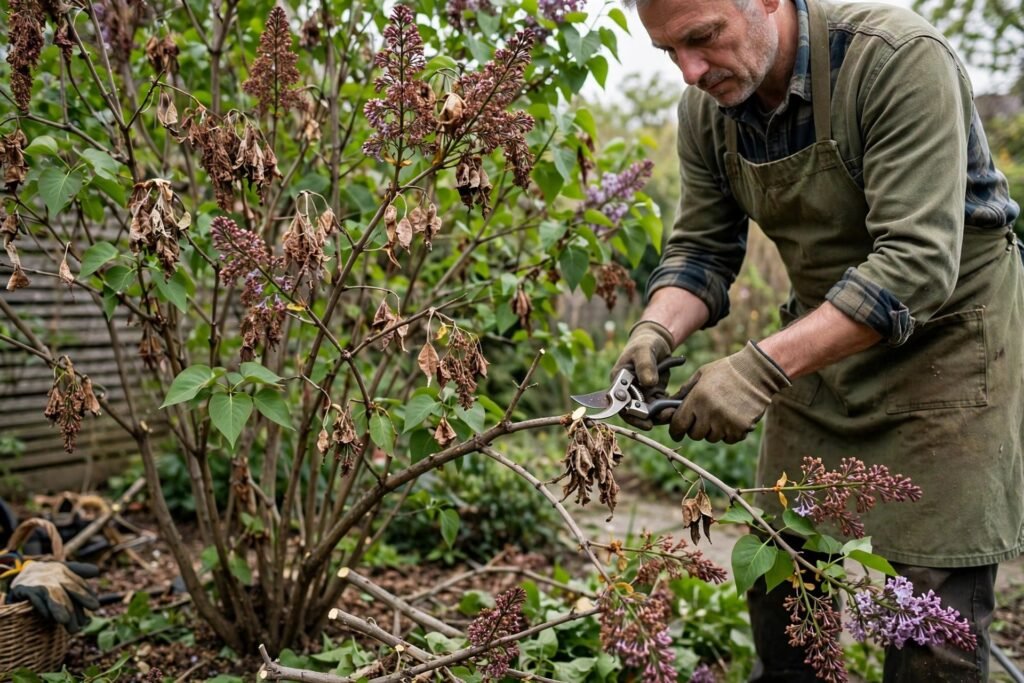
How to Prune Lilac Bushes After Blooming for More Flowers Next Year
Your lilac bloomed gloriously this spring — and now it is a tangle of spent flower heads, leggy stems, and last year’s confusion about when to prune. Lilacs are famously unforgiving of bad timing: prune in fall or winter and you amputate next spring’s flowers, since buds form on old wood the previous summer. Prune correctly, though — immediately after blooming — and lilacs reward you with decades of increasing glory. Pruning lilac bushes after blooming is one of gardening’s highest-leverage annual tasks. Here is exactly how to do it.
Timing: The Two-Week Window
The rule is absolute: prune within two weeks after flowering finishes. Lilacs set next year’s flower buds on new growth during the summer — pruning in June/July (right after bloom) gives the plant maximum time to produce flowering wood before fall. Prune in August and you risk cutting forming buds; prune in fall, winter, or early spring and you remove the flowers you have been waiting all year for.
This timing surprises everyone who learned “prune in winter” for most shrubs — lilacs are the exception that proves horticultural rules have exceptions. Mark your calendar when blooms fade; the window is short and non-negotiable. If you missed it, the disciplined choice is to wait until next year — a skipped year of pruning costs far less than a year with no flowers. Deadheading (removing spent blooms) can extend slightly beyond the window since it does not remove wood, but structural pruning must be prompt.
Deadheading: The Annual Essential
Start every year with deadheading: cut off spent flower clusters just below the bloom, above the first pair of leaves. This serves two purposes — it prevents seed formation (which drains energy that would otherwise go to next year’s buds) and it tidies the plant for the shaping to come. On large bushes this is real work; prioritize the reachable blooms and do not agonize over the top — the plant manages.
While deadheading, assess the bush’s structure with fresh eyes. Lilacs bloom best on young wood (1–3 years old); old, thick, gray-barked stems produce few flowers. Your pruning goal each year: remove a portion of the oldest wood to stimulate young replacement growth, maintaining a perpetual cycle of renewal. A lilac managed this way blooms heavily for 50+ years; a neglected one becomes a tall thicket of bare legs with flowers only at the unreachable top.
The One-Third Renewal Rule
Each year after blooming, remove up to one-third of the oldest, thickest stems — cut them to the ground. This gradual renewal replaces the entire bush over three years without ever sacrificing a full season of bloom. It is the single most important lilac technique, and the one most gardeners never learn.
Rejuvenating the Neglected Lilac
Inherited a monster — 15 feet tall, flowers only at the top, a thicket of ancient stems? You have two options. Gradual (recommended): apply the one-third rule for three consecutive years — the bush renews without ever looking butchered, and you keep some bloom throughout. Drastic: cut the entire bush to 6–8 inches in late winter — lilacs resprout vigorously from the base, but you sacrifice 2–3 years of flowers for the reset.
Choose gradual unless the bush is truly hopeless or in the way of construction. During rejuvenation, top-dress with compost each spring and water during drought — the plant is rebuilding its entire framework and needs resources. The suckers that erupt after hard pruning are your future flowering wood; thin them to the strongest, best-placed 6–8 stems rather than letting dozens compete. Patience is the method: a rejuvenated lilac in year three is unrecognizable from the thicket you started with. For the front-yard impact, pair renewal with broader curb-appeal improvements — the lilac becomes the anchor, not the eyesore.
Suckers, Shape, and Ongoing Care
Lilacs sucker enthusiastically from the base and roots — some suckering is desirable (it is how the bush renews naturally), but uncontrolled suckers become a thicket. Each spring, remove suckers growing far from the main clump and thin interior suckers to maintain 6–12 main stems with good air circulation. Grafted lilacs (named varieties on common rootstock) need stricter sucker control — rootstock suckers bloom as plain purple and will eventually overwhelm the graft.
Ongoing care is refreshingly minimal: lilacs need no regular fertilizing (excess nitrogen produces leaves at the expense of flowers — the most common cause of bloomless lilacs), prefer neutral to slightly alkaline soil, and want full sun for maximum flowering. The classic bloomless-lilac diagnosis: too much shade, too much nitrogen, or wrong-time pruning — in that order. Indoor plant instincts about light apply outdoors too: flowering shrubs are solar-powered, and shade is the usual culprit when blooms fail.
Propagation: Free Lilacs From Pruning
Your annual pruning produces propagation material: lilacs root from softwood cuttings taken in early summer (right after blooming — convenient timing). Take 4–6 inch tips of new growth, strip lower leaves, dip in rooting hormone, and pot in perlite/peat mix under humidity. Suckers with roots attached transplant even more easily — dig them in spring with a spade, keeping roots intact.
Seed-grown lilacs take 4–7 years to bloom and do not come true to variety — cuttings and suckers are the way for named cultivars. Pot up your propagations and grow them on for a year before planting out; by the time they are garden-ready, you will have forgotten they were free. A lilac hedge planted from your own divisions costs nothing and becomes a neighborhood landmark within a decade.
Pruning References With Photographs
Lilac pruning is visual work — good diagrams matter. The Missouri Botanical Garden’s pruning guides illustrate proper cut placement for flowering shrubs with botanical precision, and Penn State Extension’s shrub pruning publications explain the renewal-pruning cycle that keeps old lilacs blooming for decades. Study the cut diagrams before picking up the loppers.
Conclusion
Pruning lilac bushes after blooming follows one timing rule and one technique: cut within two weeks of flower fade, deadhead everything, and remove a third of the oldest wood yearly for perpetual renewal. Neglect the timing and you lose next year’s flowers; master the renewal cycle and the bush outlives you, blooming more heavily each decade. The two weeks after bloom are the most important fortnight in the lilac year. Do not miss them.
Frequently Asked Questions
What happens if I prune lilacs in the fall?
You remove the flower buds that formed over summer — the bush will leaf out normally next spring but produce few or no flowers. One year of bloom lost. If you already did it, wait: the following year’s bloom will be normal.
Why is my lilac not blooming?
The top causes in order: too little sun (needs 6+ hours), excess nitrogen fertilizer, pruning at the wrong time (fall/winter/spring), and immaturity (new plants need 3–5 years). Address in that order before assuming anything exotic.
How far back can I cut an overgrown lilac?
For gradual renewal, one-third of oldest stems to the ground yearly. For drastic rejuvenation, the whole bush to 6–8 inches in late winter — it will resprout, but you will wait 2–3 years for significant bloom. Gradual is almost always better.
Should I deadhead lilacs every year?
Yes — it prevents energy waste on seed production and keeps the plant tidy for structural pruning. It is the single easiest annual task with the most visible payoff, and it takes minutes on a well-maintained bush.