How to Protect Your Dog’s Paws From Road Salt This Winter
Road salt keeps Michigan highways drivable all winter — and quietly tortures your dog’s paws every single walk. The salt crystals lodge between toes, dry out paw pads until they crack, and cause chemical burns on prolonged contact. Then your dog licks the salt off, ingesting de-icing chemicals that can cause vomiting and worse. If your dog lifts paws, limps on salted sidewalks, or chews at their feet after winter walks, road salt is almost certainly the culprit.
Here is how to protect your dog’s paws from road salt all winter: the prevention routine that actually works, how to choose booties your dog will tolerate, what to do when salt damage has already happened, and the pet-safe alternatives worth knowing about.
Why Road Salt Hurts Dogs’ Paws
Sodium chloride — plain road salt — damages paws three ways. The sharp crystals cause mechanical irritation between the toes. The salt draws moisture out of the paw pads, drying and cracking them much like it chaps human skin. And many municipalities now use salt blended with calcium chloride or magnesium chloride, which are more corrosive and can cause chemical burns on prolonged contact.
The secondary danger is ingestion. Dogs lick their paws clean, swallowing whatever the sidewalk left behind. Small amounts cause drooling and stomach upset; larger amounts of calcium-chloride blends can cause serious gastrointestinal distress. The ASPCA’s poison control experts flag ice-melting products as a genuine winter toxin risk for pets — this is not just a comfort issue. If your dog shows vomiting, excessive drooling, or lethargy after a winter walk, call your vet or the ASPCA Animal Poison Control Center.
The Winter Paw Protection Routine
Before the walk: barrier protection
Paw balm or paw wax — applied to clean, dry pads before heading out — creates a semi-permeable barrier that reduces salt contact and prevents drying. Products based on beeswax and plant oils work well; apply a thin layer to pads and between toes. It is not armor — it buys time and reduces damage — but combined with the steps below, it is the foundation of the routine.
Booties: the real solution
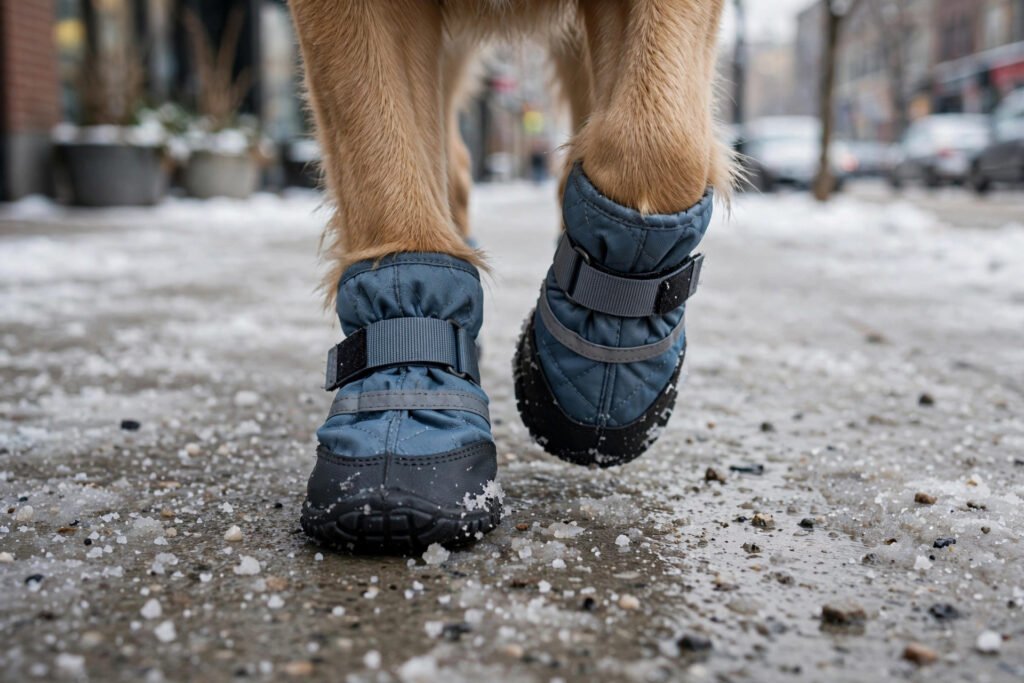
Nothing protects like a physical barrier. The challenge is compliance: most dogs hate booties at first. Success comes from gradual training — let the dog wear one bootie indoors with treats, then two, building up over a week before the first real walk. Fit matters enormously: measure paws per the manufacturer’s guide, since too-tight booties cut circulation and too-loose ones spin off in snowbanks. Look for flexible soles with good tread, secure Velcro closures above the ankle, and reflective trim for dark winter evenings. Bring a spare — losing one bootie mid-walk is a rite of passage.
After the walk: the rinse
Every winter walk should end with a paw rinse. Keep a shallow basin of lukewarm water and a towel by the door: dip each paw, gently separate the toes to flush trapped salt, and dry thoroughly. Moisture left between toes invites yeast infections and cracking. This two-minute routine prevents the vast majority of salt-related paw problems and stops your dog from licking chemicals off their feet.
Choosing Routes That Spare Their Feet
Not all winter walking surfaces are equal. Fresh snow is the kindest surface — soft, clean, and salt-free. Heavily salted downtown sidewalks and parking lots are the worst. Neighborhood streets that get plowed but lightly salted sit in the middle. After a salting event, stick to parks, trails, and your own yard for a day or two while the worst of it washes or gets tracked away. Pet Poison Helpline’s de-icer safety information lists which common ice-melt chemicals pose the highest ingestion risk. Walking on the snow-covered grassy strip beside the sidewalk instead of the sidewalk itself can cut salt exposure dramatically.
Treating Salt-Damaged Paws
If the damage is done — cracked pads, redness between toes, limping — start with gentle care. Soak paws in lukewarm water, pat dry, and apply paw balm or plain coconut oil to moisturize. Keep the dog off salted surfaces until healed; even short exposures re-irritate damaged pads. Trim the fur between the toes — long interdigital fur traps salt crystals and ice balls, compounding the problem.
See a vet if you notice bleeding cracks, swelling, discharge, persistent limping beyond a day, or any sign of infection. Chemical burns from concentrated de-icers can look minor at first and worsen over 24 to 48 hours, so when in doubt, get professional eyes on it early rather than waiting to see.
Contain the mess
All that rinsing and balming still leaves winter’s residue somewhere — usually your entryway and your car. A washable mat by the door catches most of it, and for the rest, these strategies for keeping your car clean with kids and pets handle muddy-paw season surprisingly well. If winter travel takes you and your dog on the road, planning ahead with pet-friendly hotels that do not charge huge fees keeps the trip affordable — just pack the paw balm and booties, since destination cities salt their sidewalks too.
Pet-Safe De-Icers for Your Own Property
You cannot control the city’s salt trucks, but you can control your own driveway and walkway. Pet-safe ice melts — typically based on urea or magnesium chloride in lower concentrations — are genuinely less irritating to paws, though “pet-safe” does not mean “edible,” so the post-walk rinse still applies. Sand, kitty litter, or coffee grounds provide traction without chemicals for low-traffic areas. The AVMA’s cold-weather pet safety tips cover de-icer safety alongside hypothermia and frostbite prevention. Whatever you use, apply sparingly: more product does not mean more melting, just more residue on paws.
Conclusion
Protecting your dog’s paws from road salt comes down to a simple winter ritual: paw balm before the walk, well-fitted booties for salted routes, and a lukewarm rinse after every outing — plus route choices that favor snow over salted concrete and pet-safe products on your own property. Do this consistently and your dog’s paws will come through April as healthy as they entered December. Skip it, and you will spend the season treating the cracks, burns, and stomach upsets that salt leaves behind.
Frequently Asked Questions
Is road salt actually toxic to dogs?
Plain sodium chloride causes irritation and stomach upset when licked off paws. Blends containing calcium chloride or magnesium chloride are more corrosive to skin and more toxic ingested. Large ingestions can cause serious illness — keep de-icer bags stored where dogs cannot reach them.
How do I get my dog to keep booties on?
Gradual positive training: one bootie indoors with treats, building to full sets over a week. Proper fit is critical — measure paws and follow sizing guides. Most dogs that “hate booties” were simply rushed or given the wrong size.
Can I use Vaseline on my dog’s paws instead of paw balm?
Plain petroleum jelly works as a basic moisture barrier in a pinch, but dedicated paw balms with beeswax adhere better and include nourishing ingredients. Avoid anything with fragrances, essential oils, or xylitol — all potentially harmful to dogs.
How can I tell if my dog’s paws are damaged by salt?
Look for redness between the toes, dry or cracked pads, excessive licking or chewing at feet after walks, and limping specifically on salted surfaces. Persistent symptoms beyond a day warrant a vet visit.