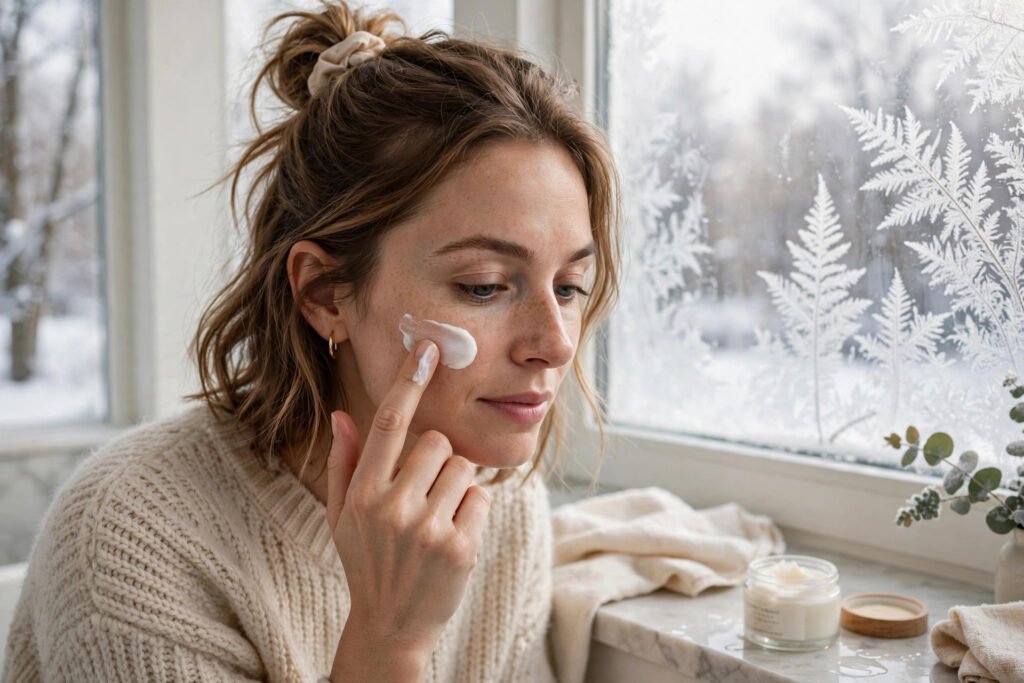
How to Keep Skin Hydrated During Harsh Midwest Winters
Midwest winter is a special kind of assault on skin. The air outside drops to single digits with humidity in the teens, indoor heating bakes the remaining moisture out of every room, and hot showers finish the job. By February, skin that was normal in October is tight, flaky, itchy — and no amount of your summer moisturizer fixes it. Keeping skin hydrated through a harsh Midwest winter requires a different strategy, not just a heavier cream.
Here is the winter skin hydration playbook dermatologists actually recommend: why winter destroys skin, the routine order that maximizes hydration, the ingredients that work hardest, and the habits — from humidifiers to shower temperature — that protect your skin barrier all season.
Why Midwest Winters Destroy Skin
It comes down to transepidermal water loss (TEWL) — the constant, invisible evaporation of moisture from your skin. Cold air holds far less moisture than warm air, so winter air literally pulls water from your skin faster. Indoor heating compounds it: forced-air furnaces drop indoor humidity to 15–25 percent, drier than many deserts. Hot showers strip the natural lipids that seal moisture in. The result is a compromised skin barrier — the outermost layer that keeps water in and irritants out — which manifests as tightness, flaking, redness, and itch.
Once the barrier is damaged, everything gets worse: products sting, makeup pills, and skin becomes reactive to things it tolerated in summer. Winter skincare is therefore barrier-first skincare. Everything below serves that goal.
The Winter Routine: Order Matters
Cleanse gently, briefly
Switch to a creamy, non-foaming cleanser for winter — foaming cleansers with harsh surfactants strip barrier lipids. Wash with lukewarm water, never hot, and keep it under a minute. In the morning, many dermatologists say water-only cleansing is enough; save the full cleanse for evening. Over-cleansing is the fastest way to wreck winter skin.
Layer hydration: humectant, then emollient, then occlusive
This three-layer approach is the core winter strategy. First, apply a humectant serum (hyaluronic acid, glycerin) to damp skin — humectants pull water into the skin, but they need water to pull, so apply within 60 seconds of washing while skin is still moist. Second, an emollient moisturizer with ceramides, squalane, or fatty acids fills the gaps between skin cells and repairs the barrier. Third, in harsh conditions, seal it all with an occlusive — a thin layer of petrolatum-based balm or facial oil on the driest zones. Each layer locks in the last.
Do not skip sunscreen
Winter sun plus snow glare delivers real UV exposure — snow reflects up to 80 percent of UV rays. Apply SPF 30 daily as the final morning step. Choosing the right formula matters in winter dryness, so it helps to know how to choose the right sunscreen for sensitive skin — many winter-irritated faces behave like sensitive skin until spring.
Ingredients That Work Hardest in Winter
Ceramides are the headliners — they are literally the mortar between your skin cells, and ceramide-rich moisturizers measurably restore barrier function. Hyaluronic acid hydrates powerfully but must be sealed with moisturizer on top, or it can pull moisture out of skin in dry air (the classic winter mistake). Glycerin is the underrated workhorse — cheap, effective, and present in the best drugstore moisturizers. Squalane and facial oils seal and nourish without clogging most skin types. Niacinamide strengthens the barrier and calms redness. And petrolatum — plain Vaseline — remains the most effective occlusive known to dermatology, blocking 99 percent of water loss; the “slugging” trend is just this old science repackaged.
What to reduce in winter: strong retinoids (drop frequency or buffer with moisturizer), high-percentage AHAs, and any exfoliation beyond gentle weekly use. Actives that were fine in August can torch a compromised winter barrier. The American Academy of Dermatology’s dry skin relief guidance echoes this barrier-first approach.
Habits That Protect Skin All Winter
Run a humidifier
The single highest-impact non-product change. A bedroom humidifier raising indoor humidity to 40–50 percent measurably reduces overnight water loss — you will feel the difference in a week. Clean it regularly; a dirty humidifier breeds mold.
Fix the shower
Keep showers lukewarm and under 10 minutes. Apply body moisturizer within three minutes of toweling off — damp skin absorbs it far better. For severely dry body skin, “soak and seal”: a brief lukewarm soak followed immediately by a thick cream or ointment, not a lotion (ointments seal better than lotions, always).
Hydrate from the inside (with realistic expectations)
Drinking water helps overall health but does not directly hydrate skin the way products do — the barrier is the bottleneck, not your water bottle. Still, heated indoor air is dehydrating systemically, so steady hydration plus omega-rich foods supports skin from within. Lip balm with SPF deserves special mention: lips have no oil glands and chap fastest — reapply through the day.
When Dry Skin Needs a Doctor
See a dermatologist if dryness comes with intense itching that disrupts sleep — the National Eczema Association offers guidance on distinguishing winter dryness from eczema that needs prescription treatment, cracked skin that bleeds, eczema patches that spread, or no improvement after three weeks of proper barrier care. Winter unmasks conditions — eczema, psoriasis, perioral dermatitis — that need prescription treatment, not stronger moisturizer. Persistent, treatment-resistant dryness is a medical issue, not a cosmetic one.
Winter Hydration by Skin Type
Oily skin still needs winter hydration — skipping moisturizer makes oily skin overproduce oil while remaining dehydrated underneath. Use lightweight gel moisturizers with hyaluronic acid and niacinamide rather than heavy creams; the barrier needs support, not suffocation. Sensitive skin should simplify to the minimum: gentle cleanser, ceramide moisturizer, mineral sunscreen — every additional product is another potential irritant on a stressed barrier. Mature skin needs the richest approach: facial oils layered over moisturizer compensate for declining natural lipid production, and the neck and hands (which age fastest and get the least attention) deserve the same routine as the face.
Acne-prone skin faces a winter paradox: dry air plus heavy moisturizers can trigger breakouts. The solution is non-comedogenic hydration — gel textures, niacinamide, and azelaic acid (which hydrates, brightens, and fights acne simultaneously). Whatever your type, the principle holds: match the weight of your products to your skin’s needs, keep the layering order consistent, and let comfort be the guide. Skin that feels tight is asking for more; skin that feels congested is asking for less.
Conclusion
Keeping skin hydrated through harsh Midwest winters means switching to gentle cleansing, layering humectant-serum-emollient-occlusive on damp skin, prioritizing ceramides and barrier repair over aggressive actives, running a humidifier, and keeping showers lukewarm and short. Treat winter skincare as barrier defense, not cosmetic enhancement, and your skin comes through April intact — instead of spending March recovering. Fold winter skincare into how much you budget for monthly self-care so the humidifier, ceramide moisturizer, and gentle cleanser stay stocked all season.
Frequently Asked Questions
Why is my skin so much drier in winter?
Cold air holds less moisture, indoor heating drops humidity to desert levels, and hot showers strip protective lipids — together they accelerate water loss and damage the skin barrier. It is environmental, not a product failure.
Should I use a heavier moisturizer or layer products in winter?
Layering wins: humectant serum on damp skin, then ceramide moisturizer, then an occlusive seal on dry zones. A single heavy cream cannot match the hydration-retention of proper layering.
Does hyaluronic acid work in dry winter air?
Yes — but only sealed under moisturizer. Applied alone in low humidity, it can pull moisture from your skin instead of the air. Always layer an emollient or occlusive over it in winter.
How do I stop my face from stinging when I apply products in winter?
Stinging signals a compromised barrier. Pause all actives (retinoids, acids, vitamin C) for one to two weeks, switch to a minimal ceramide cleanser-moisturizer-occlusive routine, and reintroduce actives slowly once the sting stops.