How to Keep Lipstick From Feathering: Pro Prevention Tips
Feathering — those fine lines of color bleeding outward past the lip line into the tiny creases around the mouth — is the fastest way for a polished lip look to age you by a decade. It happens to everyone eventually: as skin loses collagen and lip volume shifts with age, the once-crisp border softens, and creamy lipsticks migrate into every micro-line they can find.
But feathering is preventable, and the fixes are mostly technique rather than products. This guide explains why lipstick bleeds, the prep routine that stops it, the application order professionals use, the products that actually help (and the ones that do not), and emergency fixes when you are already out the door.
Why Lipstick Feathers: The Mechanics
Feathering is physics meeting anatomy. Lipstick is pigment suspended in waxes and oils; warmth and movement liquefy the oils, and capillary action wicks them into the fine vertical lines around the lips (perioral rhytids, in dermatologist-speak). Several factors accelerate it:
Lip texture. Dry, flaky lips create an uneven surface that grabs and channels product outward. Dehydrated lips are the number one feathering accelerator — and the most fixable.
Formula. Creamy, glossy, and sheer formulas contain more mobile oils and feather fastest. Long-wear liquids and true mattes feather least — but can be drying, which creates its own problems.
Age and skin changes. Collagen loss softens the lip border’s “dam,” and repeated lip movements (talking, drinking through straws, smoking) etch the vertical lines that become migration channels. This is why feathering appears in the 40s-50s even in people who never had the problem before.
Over-application. More product means more mobile oils. The thick, opaque application that looks great in minute one is the application most likely to bleed by hour three.
The Prep Routine: 80 Percent of Prevention
Professional makeup artists will tell you: feather-proofing happens before the lipstick, not after.
1. Exfoliate gently. Once or twice a week, buff lips with a soft toothbrush, a damp washcloth, or a sugar scrub. This removes the flaky surface that catches product. Do not overdo it — raw lips feather worse.
2. Hydrate, then blot. Apply lip balm or a hyaluronic lip treatment 10-15 minutes before makeup, then blot off the excess with tissue. The lips should feel conditioned, not slippery — a slick base is a skating rink for lipstick.
3. Prime the perimeter. This is the pro secret: apply a thin ring of foundation, concealer, or dedicated lip primer around the outside of the lip line, not on the lips themselves. This fills the micro-lines with a matte barrier that blocks migration. Set it lightly with translucent powder for extra grip.
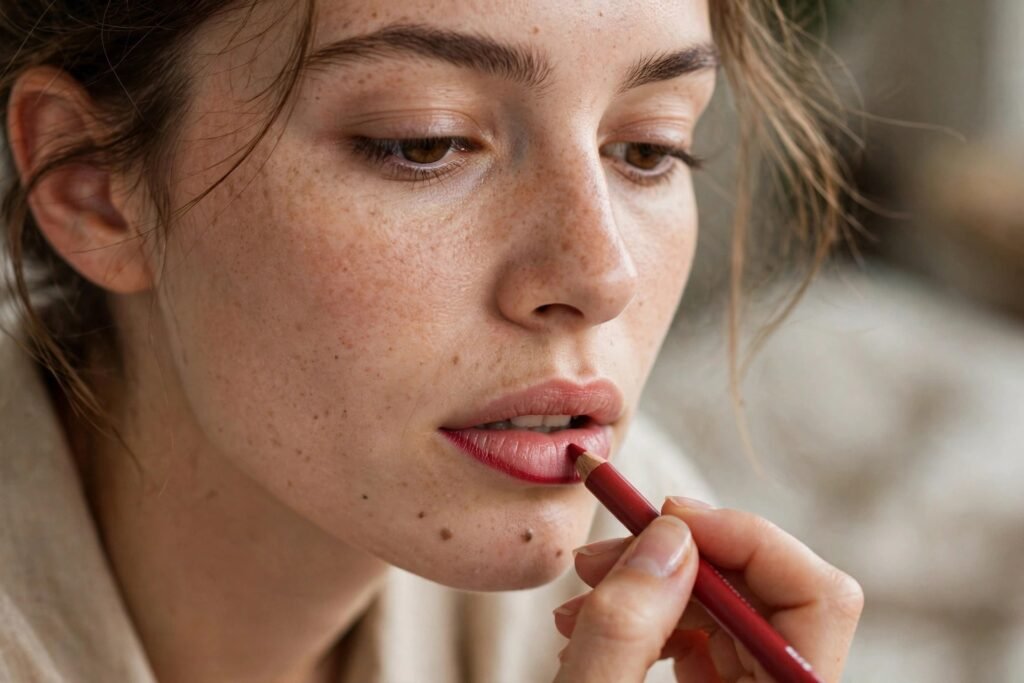
4. Line first — properly. Lip liner is not optional for feather-prone lips. Choose a liner matching your lipstick (or your natural lip tone for versatility), and line the actual vermilion border — not dramatically outside it (overlining accentuates bleeding when it migrates). For maximum hold, fill in the entire lip with liner as a base; the drier, waxier texture grips lipstick far better than bare lips.
Application Order That Stays Put
The feather-resistant layering sequence: exfoliate → hydrate and blot → prime the perimeter → line and fill with liner → apply lipstick in a thin layer with a brush (brushes deposit less product more precisely than bullets) → blot firmly with tissue → dust the faintest veil of translucent powder through a tissue over the lips → apply a second thin layer. The blot-powder-blot sandwich is the classic theatrical technique for a reason — it locks pigment while removing the mobile oils that cause bleeding.
Finish with a final perimeter check: run a small concealer brush with a touch of concealer just outside the lip line to sharpen the edge and create a clean barrier. This “clean-up ring” doubles as feather insurance.
Formula Choices That Help
Best: long-wear liquid lipsticks, true matte bullets, lip stains. Good with prep: satin and cream lipsticks over a full liner base. Highest risk: glosses, sheer balms-as-color, and very creamy traditional bullets worn alone. If you love gloss, try the compromise: matte lipstick as the base, a small dot of gloss pressed only into the center of the lower lip — the shine without the migration.
Products: What Actually Works vs. Marketing
Lip liner (essential). The single highest-impact product. Waxy, long-wear formulas grip best. Clear “invisible” liners work as a universal option — they create the barrier without color-matching fuss.
Lip primer (helpful). Silicone-based primers fill lines and add grip. Worth it for special occasions; daily users can substitute the concealer-perimeter technique.
Translucent powder (helpful). The blot-powder sandwich’s key ingredient. Use sparingly — too much dulls the color.
“Anti-feathering” topcoats (mixed). Some work as flexible sealants; others just add a plasticky layer that cracks. Read reviews from users over 40 — they are the real test audience.
Lip plumpers (use cautiously). Irritant-based plumpers swell lips temporarily but the inflammation can actually worsen line visibility as it subsides. Not a feathering solution.
And when color inevitably ends up where it should not — on a collar, a napkin, a white shirt — our guide to removing stains from white shirts covers lipstick specifically (dish soap and patience beat panic). For evenings when the lip look needs to go the distance, the same occasion-prep mindset as dressing up jeans for dinner out applies: prep early, build in layers, check before leaving.
Emergency Fixes (Already Out the Door)
Blot the migrated color with a tissue, then press translucent powder (or even a pinch of pressed powder from your compact) along the outer lip line to absorb oils and set a barrier. Re-line the border if you have the liner. In a real pinch, a tiny amount of eyeshadow primer or even milk of magnesia dabbed around the perimeter (let dry fully) creates an emergency oil-blocking shield. And switch to blotting-and-reapplying thin layers rather than adding more creamy product on top — layering fresh lipstick over migrated lipstick just feeds the bleed.
The Long Game: Lips That Feather Less
Topical habits compound: daily SPF lip balm (UV breaks down the collagen that maintains the lip border), overnight lip masks or plain petrolatum a few nights a week, staying hydrated, and not smoking. For established perioral lines, dermatologists offer in-office options — from hydrating fillers that support the border to laser resurfacing — but the daily technique in this guide handles the vast majority of cases without any of that.
The FDA’s cosmetics pages cover lip product safety and ingredient disclosure, and the AAD (aad.org) offers guidance on lip care as part of broader skin health.
Conclusion
Keeping lipstick from feathering is a prep-and-technique game: exfoliate and hydrate (then blot), prime the perimeter, line and fill as a base, apply thin layers with the blot-powder sandwich, and choose longer-wearing formulas for high-risk days. The products help, but the order of operations is what actually keeps color where you put it — inside the lines, all day.
Frequently Asked Questions
Why does my lipstick bleed into lines around my mouth?
Warmth liquefies the oils in lipstick, and capillary action wicks them into fine vertical lines around the lips. Dry lips, creamy formulas, over-application, and age-related collagen loss all accelerate feathering.
Does lip liner really prevent feathering?
Yes — it is the single most effective product. Liner’s drier, waxier texture creates a barrier at the lip border; filling the whole lip with liner as a base gives lipstick far more grip than bare lips.
What is the best lipstick formula to prevent feathering?
Long-wear liquids, true mattes, and stains feather least. Creamy and glossy formulas feather most. The compromise: a matte base with a small dot of gloss pressed into the center of the lower lip only.
How do I fix feathered lipstick when I’m already out?
Blot migrated color, press translucent powder along the outer lip line to absorb oils, and re-line the border. Avoid layering more creamy lipstick over the bleed — it feeds the migration.
Can I prevent lip lines from forming?
Daily SPF lip balm, hydration, not smoking, and avoiding repetitive straw-drinking all help preserve the lip border’s collagen. Established lines can be softened with the prep techniques here or addressed with dermatologist treatments.