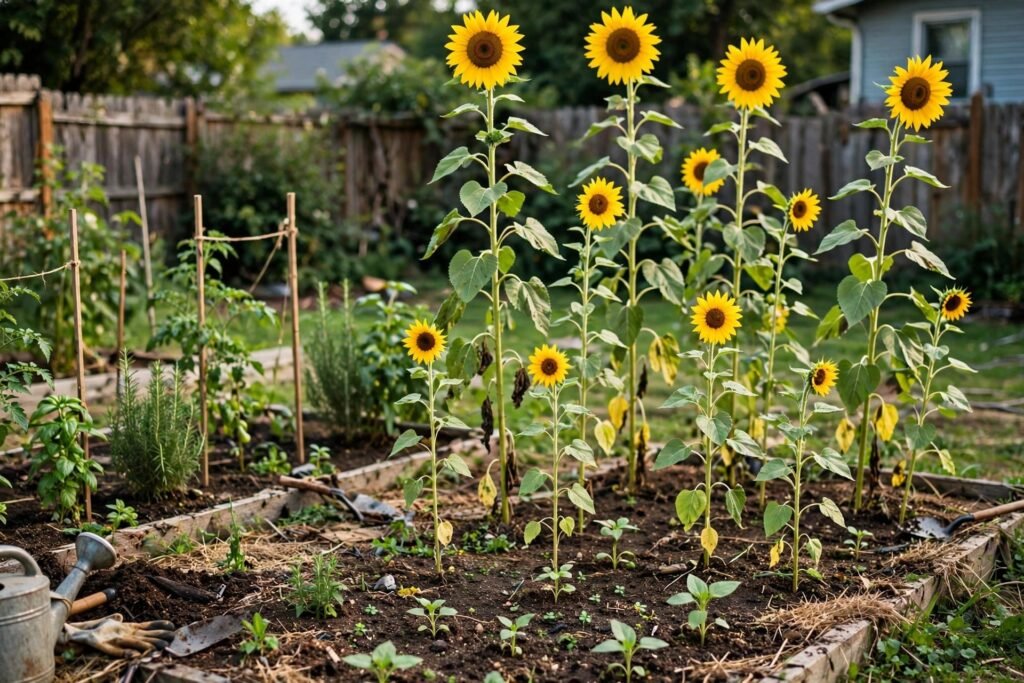
How to Grow Sunflowers From Seed Successfully, Start to Finish
A ten-foot sunflower, face tracking the sun, is the most joyful thing a garden can produce — and one of the easiest. Sunflowers germinate enthusiastically, grow visibly by the day, and bloom spectacularly with minimal intervention. Yet beginners still fail them regularly: seeds rot in cold soil, seedlings vanish overnight to slugs, and towering plants topple in the first storm. Growing sunflowers from seed successfully is about getting five things right — timing, depth, spacing, support, and succession. Here is the complete guide from packet to bloom.
Timing and Sowing: Warm Soil Is Everything
Sunflowers are warm-season sprinters: they germinate best when soil hits 70–85°F and sulk in cold ground. Sow direct after all frost danger, when daytime temperatures reliably reach 70°F — typically 1–2 weeks after your last frost date. Sowing too early is the classic failure: seeds sit in cold wet soil and rot, or emerge into a late frost that kills them. A $10 soil thermometer removes the guesswork.
Sow 1 inch deep, 6 inches apart (thin later to final spacing), in full sun — 6–8 hours minimum; shade produces leggy, flowerless stalks. Sunflowers resent transplanting (long taproots), so direct sowing outperforms indoor starts for all but the shortest seasons. For a continuous show, sow in succession: a new dozen seeds every 2 weeks from spring through midsummer gives blooms from July to frost instead of one overwhelming week. Mark each sowing date on the packet — succession only works if you actually follow through.
Variety Guide
Giants (‘Russian Mammoth’, ‘American Giant’): 10–14 feet, dinner-plate heads, the classic. Branching types (‘Autumn Beauty’, ‘Soraya’): multiple blooms per plant, longer display, better for cutting. Dwarfs (‘Teddy Bear’, ‘Sunspot’): 2–3 feet for containers and borders. Pollen-free hybrids (‘ProCut’ series): for cut flowers — no pollen means no stains and longer vase life, but no seeds for birds. Choose by purpose: spectacle, cutting, or wildlife.
Spacing, Support, and the Wind Problem
Final spacing determines everything: 6 inches apart for cut-flower production (thinner stems, smaller heads), 12 inches for garden display, 18–24 inches for giants competing for maximum size. Crowding is the beginner’s error — tight spacing produces spindly plants that shade each other and topple together. Thin ruthlessly at 6 inches tall; the removed seedlings are edible as microgreens, so nothing is wasted.
Support giants before they need it: drive 6–8 foot stakes at planting time (not after — driving stakes later spears roots), tying loosely with figure-eight ties as they grow. Better: plant in blocks rather than rows — block plantings shelter each other from wind, the number-one giant-killer. A 4×4 block of mammoths withstands storms that flatten a single row. Site selection helps too: a fence or hedge on the prevailing-wind side, without shading the plants. Once established, consistent watering discipline matters more than any other care — deep weekly soakings beat daily sprinkles.
Water, Feed, and Pest Patrol
Sunflowers are drought-tolerant once established but need consistent moisture during germination and early growth — the taproot must drive deep, and dry surface soil aborts the mission. Water deeply 1–2 times weekly; mulch to retain moisture. They are light feeders: rich soil actually reduces flowering (more leaves, fewer blooms). A modest compost application at planting suffices; skip the high-nitrogen fertilizers entirely.
Pests are manageable: slugs devour seedlings overnight — use iron-phosphate bait, copper rings, or nighttime patrols during the vulnerable first weeks. Cutworms fell seedlings at the base — cardboard collars prevent it. Birds love ripening seeds — net the heads if you are saving seed, or leave them as the wildlife feast sunflowers are famous for. Powdery mildew hits late-season foliage; it is cosmetic at that stage and ignorable. Deer browse young plants enthusiastically — fence or repellent until stems toughen. For the broader landscape, curb appeal plantings with a sunflower back row deliver maximum wow per dollar.
Harvest: Cut Flowers and Seed Saving
For cut flowers: harvest when petals just lift off the center disk (the “cracking” stage) — they open fully in the vase and last 7–10 days. Cut in the cool morning, strip lower leaves, and place immediately in water. Pollen-free varieties are superior for indoor arrangements (no yellow dust on everything).
For seeds: leave heads on the plant until the back turns yellow-brown and the head droops — then cut with a foot of stem and hang upside-down in a dry, airy space. Rub out seeds once fully dry; roast with salt for eating or save for planting (open-pollinated varieties grow true; hybrids do not). Leave some heads standing through winter — goldfinches cling to them acrobatically, and the garden’s winter interest doubles. The seed heads you leave are the ecosystem service sunflowers are famous for.
Troubleshooting Common Failures
Seeds never emerged: soil too cold/wet (wait for 70°F+), planted too deep, or eaten — re-sow; sunflowers germinate in 7–10 days in warm soil, and there is still time. Seedlings vanished overnight: slugs or cutworms — bait and collars, then re-sow. Tall but no flowers: insufficient sun (needs 6–8 hours) or excess nitrogen — relocate thinking for next year, stop feeding now.
Heads droop permanently: usually normal — mature heavy heads nod naturally; only worry if combined with wilting foliage (water stress) or stem lesions (disease). Multiple small heads instead of one big: branching variety doing its thing, or the terminal bud was damaged early — enjoy the bouquet effect. Leaning stalks: phototropism plus wind — stake, and next year plant in blocks. Sunflowers are forgiving; most “failures” are just timing or spacing lessons for next season’s even better display.
Variety and Timing Resources
Choosing varieties matched to your season length is half the battle. The Almanac’s sunflower growing guide lists days-to-maturity for popular varieties alongside ZIP-specific planting dates, and Colorado State Extension’s flower resources cover high-plains and mountain growing conditions where short seasons demand careful selection. Match the variety’s maturity to your frost window first; everything else is secondary.
Conclusion
Growing sunflowers from seed successfully means: warm soil before sowing, correct depth and ruthless thinning, block planting with support for giants, deep watering without rich feeding, and succession sowing for months of bloom. Five rules, one spectacular result. Sow the first dozen when the soil warms, keep sowing through summer, and spend August looking up at ten feet of pure horticultural joy. Few plants repay so little effort with so much wonder.
Frequently Asked Questions
How deep do you plant sunflower seeds?
One inch deep — deeper in sandy soil (up to 2 inches), shallower in heavy clay (half inch). The rule: plant at 2–3 times the seed’s diameter. Too deep delays or prevents emergence; too shallow risks drying out or bird theft.
Why are my sunflowers so short?
Usually variety (dwarfs are supposed to be short — check the packet), insufficient sun, or crowding. True giants need full sun, 18+ inch spacing, and decent soil. A ‘Russian Mammoth’ growing 3 feet tall was almost certainly shaded or starved.
Do sunflowers come back every year?
Most garden sunflowers are annuals — they die after seeding. But they self-sow enthusiastically; leave heads for birds and volunteers appear next spring. True perennial sunflowers (Helianthus maximiliani, H. angustifolius) exist and return yearly, spreading vigorously.
When should I plant sunflower seeds?
After all frost danger when soil reaches 70°F+ — typically 1–2 weeks after your last frost date. Succession-sow every 2 weeks through midsummer for continuous blooms. In warm climates, a late-summer sowing gives fall flowers.