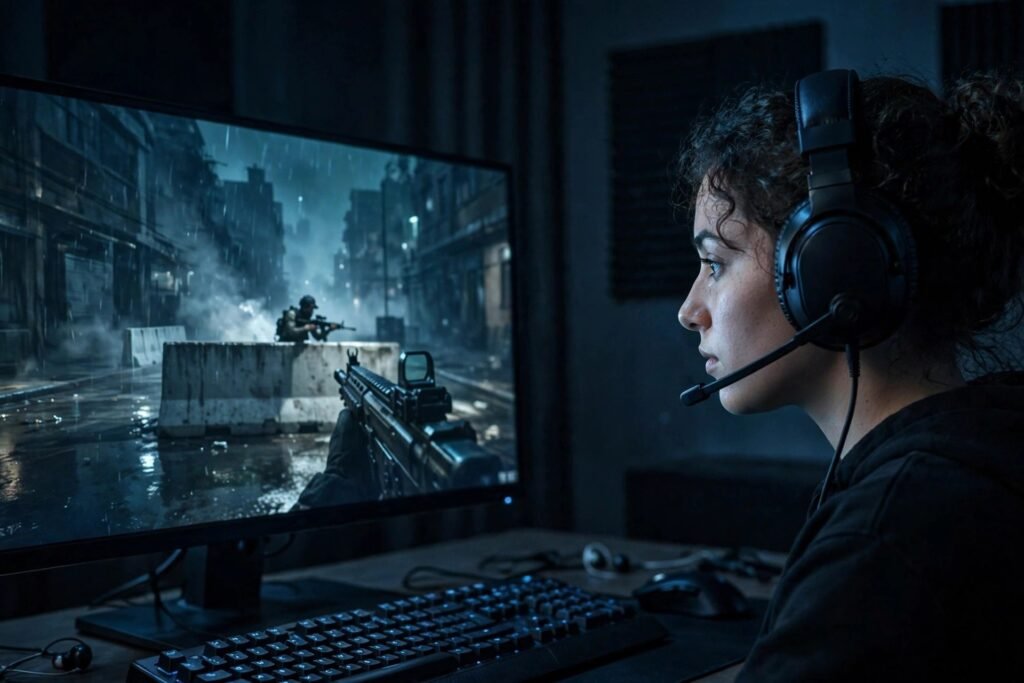
How to Get Into Competitive Valorant Ranked: Climb Guide
Valorant’s ranked ladder is one of the most competitive environments in gaming — millions of players grinding from Iron to Radiant, where the difference between ranks is measured in crosshair placement, utility timing, and composure under pressure. Breaking in feels brutal: smurfs, instalock duelists, teammates who do not communicate, and a ranking system that can feel rigged against you.
But climbing is a skill with learnable components, and most hardstuck players are missing the same handful of fundamentals. This guide covers the real path into competitive ranked: the mechanical foundations, the game-sense layer, agent selection, the mental game, and the practical setup that stops holding you back.
Phase 0: Foundations Before You Queue Ranked
Do not touch ranked until the basics are automatic. Riot’s own data shows new accounts that rush into competitive without fundamentals develop bad habits that take seasons to unlearn. The checklist:
Complete the tutorial and play unrated first. Learn all maps’ layouts, callouts, and basic agent abilities in unrated — ranked is not the place to discover what Ascent’s B main looks like. Aim for at least 20-30 unrated/swiftplay games.
Fix your settings. Sensitivity is the silent rank-killer: most pros play 0.3-0.5 at 800 DPI (roughly 200-400 eDPI). If your sensitivity is double that, your aim will never stabilize. Lower it, give it two weeks, and do not touch it again — constant sensitivity changes reset muscle memory. Set graphics for performance (low settings, high FPS) over beauty; frames win fights.
Crosshair and keybinds. Use a small, high-contrast crosshair (cyan or green, no bloom) and bind abilities to comfortable keys. Copy a pro’s crosshair code to start — then leave it alone.
The Mechanical Trinity: Aim, Movement, Crosshair Placement
Aim training (15-20 min/day). Use Aim Lab or the in-game range with purpose: counter-strafing drills (shoot only when fully stopped — moving accuracy in Valorant is near zero), flick-to-target drills, and spray control for the first 5-7 bullets. Consistency beats marathon sessions; daily short practice builds the neural pathways. Track scores weekly — plateaus of 2-3 weeks are normal before jumps.
Counter-strafing is non-negotiable. Valorant punishes movement harder than any major shooter: firing while moving sprays wildly. The rhythm — strafe, release keys, shoot, strafe — must become unconscious. Deathmatch (not team deathmatch) is the best practice ground: respawn instantly, take every duel, focus purely on the strafe-stop-shoot rhythm.
Crosshair placement is the highest-ROI skill in the game. Most low-rank players aim at the ground or chest and flick up on contact; high-rank players keep the crosshair at head height, pre-aimed at common angles, so kills require micro-adjustments instead of flicks. Drill it deliberately: in every deathmatch, your only goal is head-height crosshair — ignore the scoreboard. Within weeks, your headshot percentage climbs and duels feel unfair in your favor.
Game Sense: The Layer That Wins Rounds
Mechanics win duels; game sense wins matches. The components:
Learn one agent deeply. New players should main one agent (initiator or sentinel is ideal — duelists teach bad habits) and learn every lineup, timing, and interaction. An agent mastered beats five agents dabbled. Expand the pool only after hitting a plateau — and always have a comfort pick for every map.
Utility usage wins more rounds than aim. At low ranks, players hoard utility or waste it. The rule: use utility to take space or deny it — flashes before peeks, smokes to cross, mollys to clear corners. Watch one pro VOD of your agent per week and steal exactly one setup; implement it until it is reflex.
Play the clock and the economy. Know when to save (eco rounds buy next round’s rifles), when to force, and what the enemy can afford — the scoreboard’s economy readout is free information most players ignore. Post-plant positioning beats retake heroics; time is a weapon.
Communicate like a teammate, not a critic. Clear, calm, early callouts (“two B main, Jett dashed in”) win rounds; backseat IGL-ing and blame lose them. Mute toxic players instantly — your mental state is a resource, and one tilted teammate (especially you) costs more rounds than any strat.
Climbing the Ladder: Systems Over Grinding
Volume with review. Aim for focused blocks (2-3 hours) rather than exhausted 8-hour tilts. After each session, review 2-3 lost rounds in the replay — not to admire kills, but to find the decision error (bad peek timing, no utility, wrong positioning). One fixed leak per week compounds into ranks per season.
Queue with intention. Solo queue builds independence; duo/trio with comms builds consistency. Avoid 5-stacks unless coordinated — the matchmaking compensates. Play at consistent times when you are fresh; never queue ranked tilted, tired, or “one more game” chasing losses. The stop-loss rule: two losses in a row, take a 30-minute break. Non-negotiable.
Track RR honestly. Ranked Rating gains depend on round differential and individual performance relative to MMR — stomping 13-2 gains more than squeaking 14-12. Play for round wins, not KDA; the system rewards winning convincingly.
Your setup matters more than streamers admit: stable internet is a competitive requirement — our guide to improving home WiFi can fix the packet loss that loses duels, and a comfortable, social gaming space like the ones in our game night hosting guide keeps long sessions sustainable.
The Mental Game: Tilt Is the Final Boss
Every ranked player fights tilt — the frustration spiral where one bad round poisons the next five. The pros’ tools: process goals (“this game I focus on crosshair placement”) instead of outcome goals (“I must win”); the mute button used liberally; physical resets between games (stand, water, breathe); and session limits decided in advance. Ranked is a marathon measured in months — the players who climb are not the most talented but the most consistent, and consistency is a mental skill.
Check the official resources: Riot’s Valorant site for patch notes and agent guides (the meta shifts every act — what worked last season may be nerfed), and the ESRB’s ratings guidance for parents of younger players entering competitive play.
Conclusion
Getting into competitive Valorant ranked is a systems problem: lock in low sensitivity and high FPS, drill counter-strafing and crosshair placement daily, main one agent and learn its utility deeply, play the economy and the clock, communicate calmly, review losses for decision errors, and guard your mental state like the resource it is. Do that for a season and the ladder stops feeling rigged — because it never was. It was just waiting for you to build the fundamentals.
Frequently Asked Questions
What rank do most Valorant players reach?
The bulk of the player base sits in Silver through Platinum, with Gold the most populated tier. Diamond and above represent roughly the top 10-15%; Immortal and Radiant are the top 1-3%.
How long does it take to get good at Valorant?
Reaching Gold/Platinum with focused practice typically takes 3-6 months for new FPS players. Diamond+ usually requires a year or more of deliberate practice — daily aim training, VOD review, and game-sense development.
What sensitivity do Valorant pros use?
Most pros play roughly 200-400 eDPI (e.g., 0.3-0.5 in-game at 800 DPI). Lower sensitivity enables the precise micro-adjustments Valorant’s gunplay rewards. Whatever you choose, keep it constant — changing sensitivity resets muscle memory.
Should I play duelist to carry ranked games?
Not as a beginner. Duelists teach aggressive habits without the game sense to support them. Initiators and sentinels teach utility usage, positioning, and teamwork — the skills that actually climb. Add duelist to your pool after fundamentals solidify.
How do I stop tilting in ranked?
Set process goals per game (not win/loss), mute toxic players instantly, enforce a two-loss stop rule with real breaks, and cap session length in advance. Tilt is a physiological state — physical resets (stand, water, breathe) break it faster than willpower.