How to Dispose of Old Paint Safely in Ohio (2026)
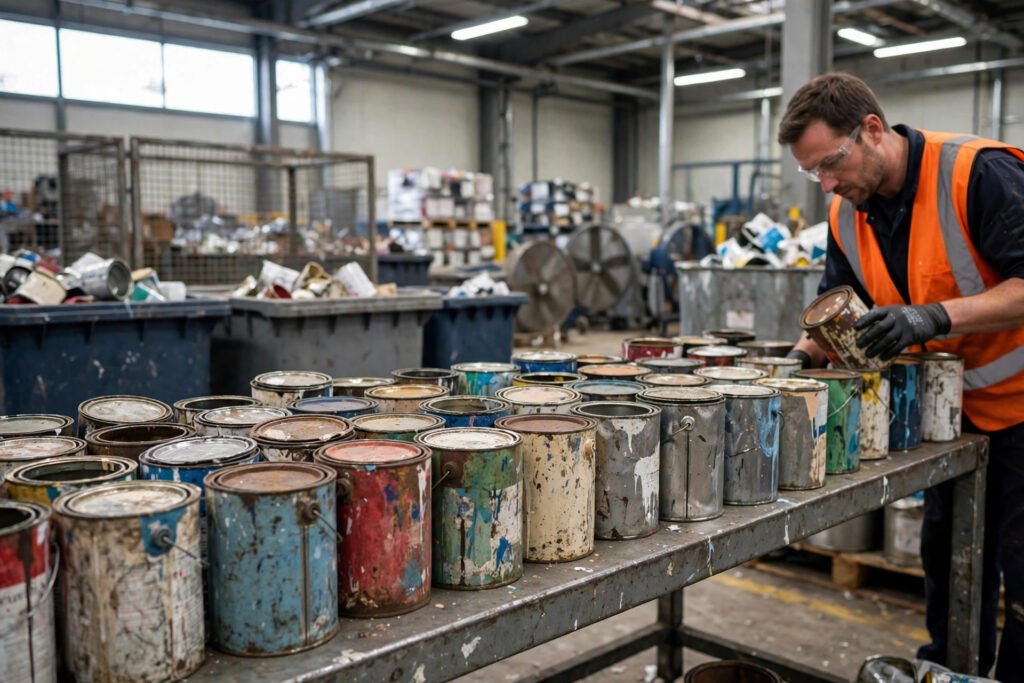
Every Ohio garage has them: the leaning tower of half-used paint cans — the bedroom color from 2019, the exterior paint from the fence project, mysterious cans with no labels. Old paint cannot go in the regular trash (legally, in most cases), cannot go down the drain (ever), and becomes genuinely hazardous as it ages. But disposing of it properly in Ohio is easier than most people think, and often free.
This guide explains how to dispose of old paint safely in Ohio — what is hazardous versus what is not, the dry-and-trash method for latex paint, where to take oil-based paints and aerosols, Ohio’s county collection programs, and how to store paint so it lasts instead of becoming waste.
Latex vs. Oil-Based: The Critical Distinction
Latex (water-based) paint: Not classified as hazardous waste once fully dried and solidified. In most Ohio counties, dried latex paint cans (lids off) can go in regular household trash. The key word is dried — liquid latex paint in the trash is prohibited because it leaks in garbage trucks and landfills.
Oil-based (alkyd) paint, stains, varnishes, and paint thinners: Hazardous waste, always. These contain volatile organic compounds and heavy metals (older paints may contain lead or mercury). They must go to a household hazardous waste (HHW) collection — never in the trash, never down any drain, never on the ground. Aerosol spray paints also count as hazardous due to propellants and residual pressure.
How to tell: Check the label — it says “latex,” “acrylic,” or “water-based” versus “alkyd” or “oil-based.” Cleanup instructions are the giveaway: soap-and-water cleanup means latex; mineral-spirits cleanup means oil-based. When in doubt, treat it as hazardous.
The Dry-and-Trash Method for Latex Paint
For latex paint you want gone: 1) Remove the lid and let small amounts (under an inch) air-dry in a ventilated area away from kids and pets. 2) For larger amounts, stir in paint hardener (sold at hardware stores for a few dollars), cat litter, or shredded newspaper — these absorb the paint and solidify it within hours. 3) Once completely solid with no liquid remaining, leave the lid off and place the can in your regular trash. The open lid shows haulers it is dried.
Even better: use it up. Combine similar latex colors for primer coats on sheds, fences, or basement walls. Donate usable paint to Habitat for Humanity ReStores (many Ohio locations accept unopened or lightly used paint), community theaters, or schools. One person’s “wrong beige” is a community theater’s set-painting gold.
Never pour latex paint down drains or into storm sewers — “water-based” does not mean “water-safe.” It still contains biocides, pigments, and microplastics that treatment plants are not designed to remove.
Ohio’s Hazardous Waste Collection Programs
For oil-based paints, aerosols, thinners, and solvents, use your county’s HHW program. Ohio’s system is county-based, and most populous counties run excellent programs:
Cuyahoga County: The county Solid Waste District runs regular HHW collections and a year-round drop-off facility — one of the state’s best programs. Franklin County (Columbus): SWACO operates drop-off events and facilities accepting HHW including paint. Hamilton County (Cincinnati): The county’s recycling and solid waste district runs periodic HHW collections. Summit, Lucas, Montgomery, and Stark counties all operate seasonal collection events.
How to use them: Check your county solid waste district’s website for schedules (most run spring-through-fall events plus limited year-round drop-offs). Keep paints in original labeled containers, transport upright in a lined trunk or truck bed, never mix different products, and bring ID proving county residency — most programs are free for residents. The Ohio EPA’s website links to county programs statewide, and the federal EPA provides household hazardous waste guidance.
Retailer take-back: Some paint retailers participate in take-back programs for unused paint. Ask at purchase — a few Ohio municipalities also run periodic paint-only collection events that are faster than full HHW days.
Lead Paint: The Serious Special Case
Paint manufactured before 1978 may contain lead — and Ohio’s older housing stock means plenty of it sits in garages statewide. Never dry-scrape, sand, or burn off suspected lead paint; this creates lead dust, which is far more dangerous than intact paint, especially to children.
For disposal: treat old unlabeled cans from pre-1978 projects as hazardous and take them to HHW collection. For lead paint on your house, Ohio follows federal RRP (Renovation, Repair, and Painting) rules — contractors must be lead-safe certified for work on pre-1978 homes. Homeowners doing their own work should use EPA lead-safe practices: contain the work area, use HEPA vacuums, and dispose of debris as directed. If you are repainting older interiors, review proper cabinet painting technique — and for whole rooms, bedroom repaint costs help you budget whether to DIY or hire.
Storing Paint So It Does Not Become Waste
Most “old paint” was good paint ruined by bad storage. Store cans indoors (not in freezing garages — freeze-thaw cycles destroy latex paint), lids hammered tight, stored upside down briefly to create an airtight seal (then right-side up for long-term). Label every can with the room, date, and color formula — the formula sticker from the paint store is gold; keep it.
Properly stored latex paint lasts 5-10 years; oil-based even longer. Before reusing old paint, stir thoroughly and test on cardboard — if it is lumpy, curdled, or smells rotten (bacterial contamination), it is done. Good storage turns the leaning tower of cans from a disposal problem into a touch-up supply.
A handy rule of thumb: if you are unsure whether a can is latex or oil-based, check the cleanup instructions on the label — soap and water means latex, mineral spirits means oil-based. When the label is missing entirely, treat it as hazardous and take it to HHW collection; the cautious route is always the legal one.
Conclusion
Disposing of old paint safely in Ohio means: drying latex paint solid for regular trash (or donating usable paint), taking all oil-based paints, aerosols, and solvents to your county’s free household hazardous waste collection, treating pre-1978 paint as potential lead hazard, and storing future paint properly so it lasts. The county programs exist, they are free, and using them keeps heavy metals and VOCs out of Ohio’s landfills and waterways.
Frequently Asked Questions
Can I put dried paint cans in the trash in Ohio?
Yes — fully dried latex paint (solid, no liquid, lid off) can go in regular household trash in most Ohio counties. Oil-based paint can never go in the trash, dried or not.
Where do I take oil-based paint in Ohio?
Your county’s household hazardous waste (HHW) collection program — check your county solid waste district’s website for event schedules and drop-off locations. Most are free for residents.
How do I dry out latex paint quickly?
Stir in paint hardener, cat litter, or shredded newspaper — it solidifies within hours. For small amounts under an inch, simply remove the lid and air-dry in a ventilated area.
Is old paint hazardous waste?
Oil-based paints, stains, varnishes, thinners, and aerosols are always hazardous waste. Latex paint is not hazardous once fully dried and solidified. Pre-1978 paint may contain lead and should be treated as hazardous.
Can I pour paint down the drain in Ohio?
Never — not latex, not oil-based, not rinse water in quantity. It violates local ordinances, damages treatment systems, and contaminates waterways. Even “water-based” paint contains pollutants.