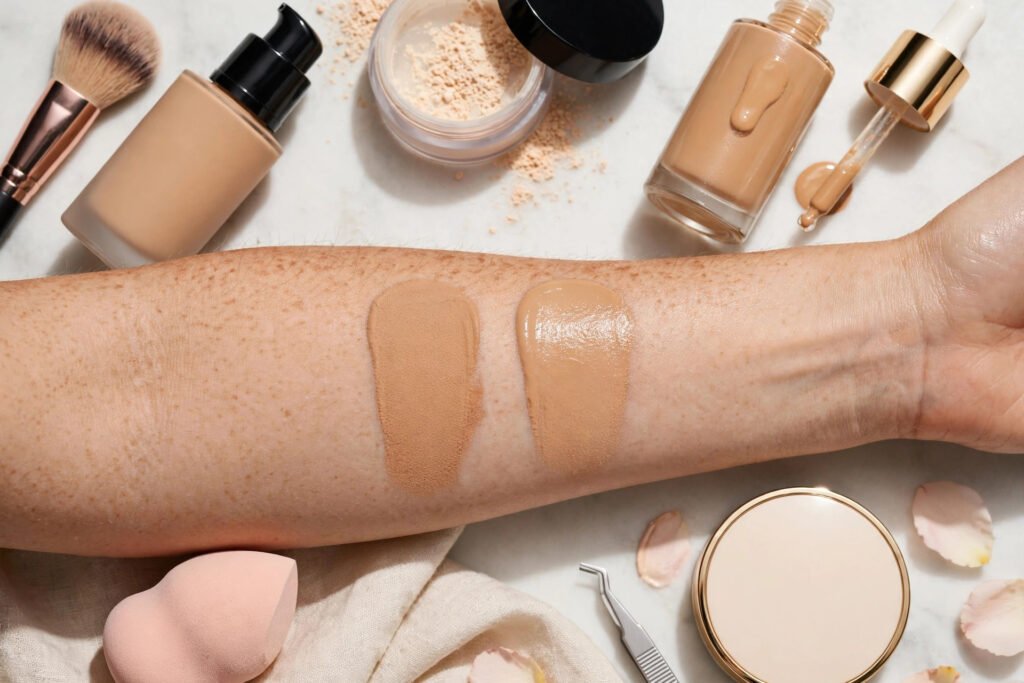
How to Choose Between Matte and Dewy Foundation (Guide)
Matte or dewy? It is the foundation question that launches a thousand beauty-counter debates — and the wrong choice is immediately visible. Matte on dry skin emphasizes every flake; dewy on oily skin slides off by noon. Yet most people choose based on trends or packaging rather than the actual variables that decide which finish works: skin type, skin age, climate, and the occasion. Get those right and the choice makes itself.
Here is how to choose between matte and dewy foundation: what each finish actually does, the skin-type matching rules, how age and climate change the answer, and the hybrid techniques that give you the best of both.
What Each Finish Actually Does
Matte foundation
Matte formulas absorb oil and reflect minimal light, creating a flat, velvety, shine-free finish. They typically offer fuller coverage and longer wear on oily skin, photograph without flashback or hotspots, and keep the T-zone controlled for hours. The trade-off: they can look flat and mask-like, emphasize dry patches and fine lines, and feel heavy or drying — especially in winter or on mature skin.
Dewy (luminous) foundation
Dewy formulas reflect light, creating a radiant, hydrated, skin-like glow. They typically feel lighter, look more natural, and flatter dry and mature skin by bouncing light away from fine lines. The trade-off: they emphasize oiliness on already-oily skin, wear shorter in heat and humidity, can look greasy rather than glowy by afternoon, and photograph with shine hotspots under flash.
The Skin-Type Matching Rules
Oily skin: matte (usually)
Oily skin plus dewy foundation is a short road to midday meltdown — the skin’s own oil amplifies the glow into grease. Matte or natural-matte formulas control shine longest. If you love the dewy look, use a matte base with dewy highlighter only on the high points (cheekbones, brow bone) — glow where you choose it, not everywhere.
Dry skin: dewy (usually)
Dry skin plus matte foundation is the classic caking disaster — matte formulas cling to flakes and emphasize every dry patch. Dewy, hydrating formulas with hyaluronic acid or glycerin keep dry skin looking alive. Prep matters enormously: the same hydration-layering that prevents cakey buildup around the nose — moisturizer fully absorbed, primer on textured zones — determines whether any foundation succeeds on dry skin.
Combination skin: zone it
Matte on the T-zone, dewy or natural finish on the cheeks — the professional “combination” approach. Or choose a natural/satin finish (the middle ground both finish families now offer) and set only the T-zone with powder. One formula rarely serves two zones perfectly.
Mature skin: dewy (almost always)
Matte foundation on mature skin is the fastest way to add five years — it settles into fine lines, emphasizes texture, and the flat finish reads aging. Dewy and luminous formulas reflect light away from wrinkles and keep skin looking hydrated. If oil control is needed, use blotting papers rather than matte foundation.
Climate and Occasion Change the Answer
Humidity pushes toward matte (dewy melts faster in heat — the same battle as keeping makeup intact through summer heat); dry winters push toward dewy. Photography pushes toward matte-satin (flash plus dew equals hotspots); candlelit evenings favor dewy radiance. There is no single right answer — the right answer changes with the calendar and the invitation.
Sunscreen layering matters for both: apply SPF first, let it set fully, then foundation. On finish choice, sunscreen type interacts — a dewy sunscreen under matte foundation works fine; a matte sunscreen under dewy foundation fights the glow. If your skin reacts to formulas, it helps to know how to choose the right sunscreen for sensitive skin before building the foundation routine on top.
The Hybrid Techniques
You do not have to pledge allegiance. Mix a drop of liquid highlighter into matte foundation for custom luminosity. Set dewy foundation with powder only in the T-zone. Layer: dewy foundation all over, matte concealer where you need staying power. Or simply own both and choose daily — most makeup wearers eventually do, because skin changes with seasons, hormones, and age. Budget for the pair inside how much you budget for monthly self-care rather than treating the second bottle as a splurge.
The FDA’s cosmetics information covers labeling and safety for both formula types — and the American Academy of Dermatology recommends non-comedogenic formulas for breakout-prone skin regardless of finish.
Foundation Finish and Specific Skin Concerns
Acne-prone skin: matte and natural-matte finishes are usually safer — dewy formulas’ oils and illuminating ingredients can aggravate breakouts, and the shine reads as oiliness on blemished skin. Look for oil-free, non-comedogenic mattes; the finish matters less than the formula’s acne-friendliness. Large pores: matte finishes blur pore appearance better than dewy ones, which reflect light into every pore — a pore-filling primer under a satin-matte foundation is the pore-minimizing combination.
Redness and rosacea: medium-coverage satin finishes with yellow or green undertones neutralize redness without the mask effect of full matte or the emphasis of dew. Dark spots and hyperpigmentation: finish is secondary to coverage — use a medium-coverage foundation in whatever finish suits your skin type, then spot-conceal rather than layering full-coverage foundation everywhere. The concern dictates the coverage; the skin type dictates the finish. Solve them as separate decisions and both come out right.
Testing before committing
Never buy a foundation finish untested. Get samples and wear each candidate for a full day — through your actual routine, in your actual climate. Check the finish at 8 a.m., noon, and 6 p.m.: the right finish looks good at all three checkpoints, not just in the store mirror. Photograph yourself in natural light and with flash; finishes behave differently under each. A week of testing beats a year of tolerating the wrong bottle.
The seasonal rotation
Many makeup wearers eventually own both finishes and rotate seasonally — dewy for dry winters, matte for humid summers — adjusting as skin changes with age and climate. There is no loyalty oath; the right finish is the one that suits today’s skin and today’s weather.
Conclusion
Choose matte foundation for oily skin, humid climates, photography, and long-wear needs; choose dewy for dry and mature skin, dry climates, and radiant evening looks; zone combination skin with both. Let skin type lead, climate and occasion refine, and use hybrid techniques — mixed finishes, zoned application, strategic powder — when neither extreme is quite right. The finish serves the skin, not the trend.
Frequently Asked Questions
Can I wear dewy foundation if I have oily skin?
Yes, with strategy: mattifying primer on the T-zone, dewy formula sheered out, powder set on oily areas only, and blotting papers on hand. Or use matte foundation with dewy highlighter on high points — controlled glow.
Does matte foundation age you?
On mature or dry skin, yes — it settles into fine lines and emphasizes texture. On young oily skin, no. The aging effect is about the skin-finish mismatch, not the finish itself.
What is the difference between dewy and oily-looking?
Placement and control: dewy is strategic luminosity on the high points of the face; oily-looking is uncontrolled shine in the T-zone and all over. Blotting the T-zone while leaving cheek glow is the dividing line.
Which finish photographs better?
Satin/natural-matte generally photographs best — matte enough to avoid flash hotspots, luminous enough to avoid flatness. Pure dewy can blow out under direct flash; pure matte can look lifeless.