How Much Should You Spend on a Good Set of Kitchen Knives?
How Much Should You Spend on a Good Set of Kitchen Knives?
Kitchen knife sets range from $30 to $1,000+, and the marketing wants you confused. Here’s the truth the knife industry won’t volunteer: most home cooks need three knives, not twelve, and a $150 well-chosen trio outperforms a $300 block set full of filler.
Here’s how much to spend and exactly what to buy.
The Three Knives That Matter
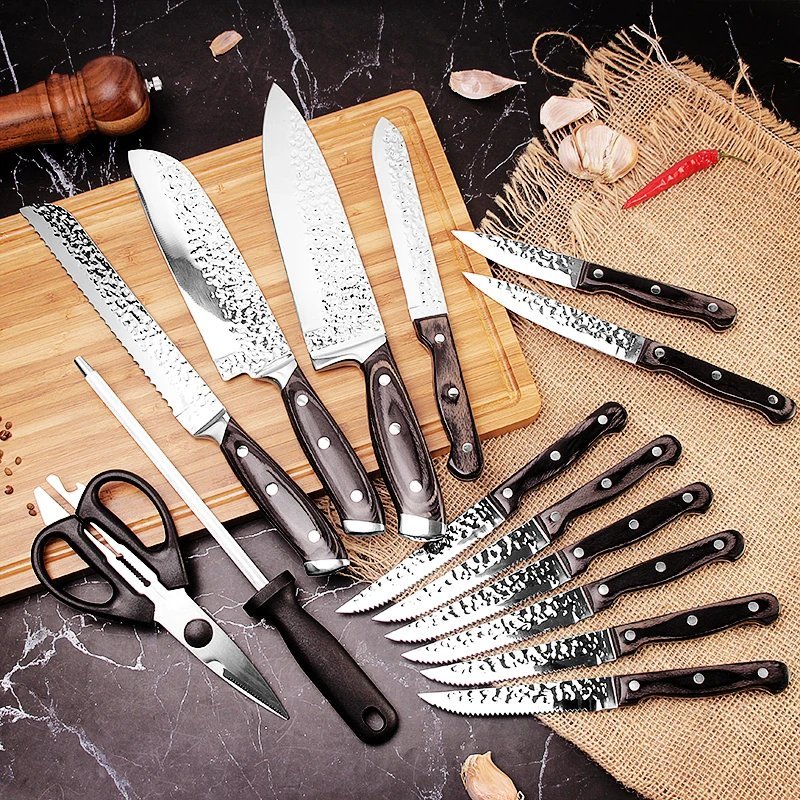
An 8-inch chef’s knife does 90% of kitchen work — chopping, slicing, dicing. A paring knife (3-4 inch) handles detail work: peeling, trimming, small cuts. A serrated bread knife saws through crusty loaves and tomatoes without crushing. That’s the complete kit for 95% of home cooking. Everything else in a typical block set (the six steak knives, the “utility” knife, the kitchen shears you’ll never touch) is filler that inflates the price.
Budget for quality on these three: $40 to $80 for a good chef’s knife (Victorinox Fibrox at ~$45 is the legendary value pick — outperforms knives triple its price), $10 to $20 for a paring knife, $20 to $40 for a bread knife. Total: $70 to $140 for a kit that beats most $250 sets. Spend the savings on a whetstone or professional sharpening — a sharp $45 knife outperforms a dull $200 knife every single time.
Sets vs. Individual Knives
Block sets look impressive but the economics are bad: you’re paying for a wooden block ($30 of the price), steak knives you may not need, and mid-tier versions of each knife. The per-knife quality in a $150 15-piece set is roughly $8 per knife — that’s not quality, that’s quantity. The exception: when a set of the three essentials from a good brand costs less than buying separately (it happens on sale).
If you want a set anyway, the sweet spot is $100 to $200 for a 3-to-5 piece set from a reputable brand (Wüsthof, Victorinox, Mercer Culinary, Mac). Below $100, the steel won’t hold an edge; above $300, you’re paying for prestige and handles, not cutting performance a home cook can detect. Japanese-style knives (Shun, Tojiro) are wonderful but thinner and more brittle — great for enthusiasts, chippable for the careless. German-style (Wüsthof, Zwilling) is tougher and more forgiving. Match the knife to your maintenance habits, not your aspirations.
Care: Where Knife Money Is Really Made
The best knife investment after the knives themselves: keeping them sharp. A sharp knife is safer (it cuts food instead of slipping), faster, and more enjoyable. Options: a whetstone ($30, 20 minutes of learning via video, best results), a pull-through sharpener ($15, easy but removes more metal), or professional sharpening ($5 to $10 per knife, once or twice a year). Honing with a steel before each use realigns the edge — it doesn’t sharpen, but it maintains.
Storage matters: toss good knives in a drawer and they dull against everything. A magnetic wall strip ($20), in-drawer organizer ($15), or blade guards ($2 each) protect edges. Never put good knives in the dishwasher — the heat, detergent, and rattling destroy edges and handles. Hand wash, dry immediately. A $100 set cared for properly outperforms a $400 set abused in the dishwasher. The care is the investment; the purchase is just the start.
Knife Buying Guide
The smart money:
- Buy 3 knives, not 15: 8-inch chef’s, paring, serrated bread.
- Budget $70-$140 total for excellent individual knives.
- Sweet spot for sets: $100-$200 from reputable brands.
- Victorinox Fibrox (~$45) is the unbeatable value chef’s knife.
- Spend on sharpness: whetstone ($30) or pro sharpening ($5-$10/knife).
- Store on a magnetic strip or with blade guards — never loose in a drawer.
- Hand wash and dry immediately; never dishwasher.
The Bottom Line
Spend $70 to $150 on three good individual knives rather than $200+ on a block set full of filler. The chef’s knife is where the money goes; sharpness matters more than price.
Buy the Victorinox, learn to keep it sharp, store it properly. You’ll cook better with $100 in smart knife purchases than most people do with $500 in a block.
Knife Skills That Matter More Than the Knives
A $45 sharp knife with good technique outperforms a $300 knife with bad technique — and the techniques are simple. The claw grip: curl your guiding fingers inward, knuckles forward, so the knife blade rides against your knuckles — it’s physically impossible to cut your fingertips this way, and it’s the foundation of all knife work. The rocking motion: keep the tip on the board and rock the blade through food rather than chopping straight down — faster, more controlled, less tiring.
The cuts worth learning: dice (uniform cubes — they cook evenly, which is why restaurant food looks and tastes consistent), julienne (thin matchsticks for stir-fries and garnishes), and the simple rough chop for everything else. Uniformity matters more than speed — even pieces cook evenly, which is the actual secret behind ‘why does restaurant food taste better.’ Fifteen minutes of practice with an onion teaches more than any knife upgrade.
And the maintenance habit that preserves everything: hone before each use (5-6 strokes per side on the steel at 20 degrees — it realigns the edge, taking 20 seconds), wash and dry immediately after use (never leave knives soaking — it ruins handles and dulls edges), and store properly every single time. The cooks with the sharpest knives aren’t the ones who bought the most expensive ones — they’re the ones with the 20-second honing habit.
Quick Answers
How often should kitchen knives be sharpened?
Hone before each use (realigns the edge); sharpen on a stone or professionally 1-2 times a year depending on use.
Are expensive knives sharper than cheap ones?
Out of the box, sometimes. But a sharp $45 knife beats a dull $200 knife — maintenance matters more than purchase price.
What’s the best way to store knives?
Magnetic wall strip, in-drawer organizer, or blade guards. Never loose in a drawer — it dulls edges and is dangerous.
The sharpening-service option is the maintenance path for people who won’t learn the whetstone. Professional sharpening ($5-$10 per knife) once or twice a year keeps edges excellent with zero skill investment — many farmers’ markets, kitchen stores, and mobile services offer it, and some do while-you-wait. Between sharpenings, the honing steel maintains the edge in 20 seconds before each use. This is the realistic system for most home cooks: pro sharpening annually, honing habit daily, and your $45 Victorinox stays sharper than most people’s $200 knives. The best maintenance system is the one you’ll actually follow — be honest about which person you are.
Further reading: America’s Test Kitchen knife reviews, the USDA on knife safety.