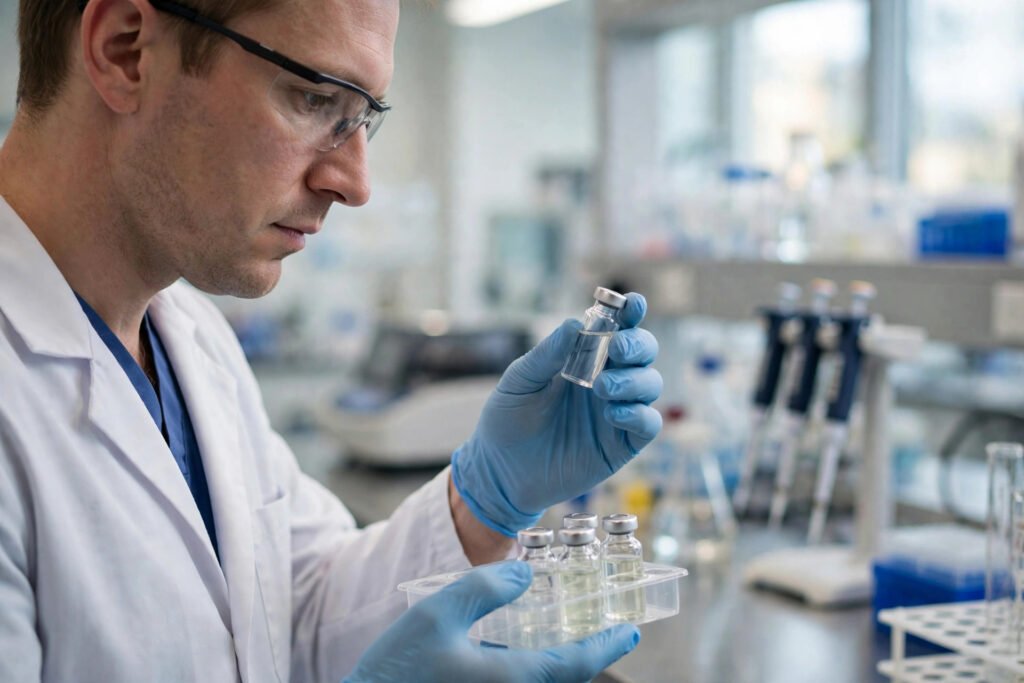
How Vaccines Get Approved for Public Use: The Full Process daily.
When the first COVID vaccines reached Americans in December 2020, less than a year after the virus was sequenced, headlines called it a miracle of speed. Others called it rushed. Both reactions missed the real story: vaccines go through one of the most rigorous approval gauntlets in all of medicine — a multi-phase system designed to catch problems before millions of people roll up their sleeves. Understanding how vaccines get approved for public use explains both why the process is slow and why, when it moves fast, it isn’t cutting the corners people fear.
It Starts Long Before Human Trials
Vaccine development begins with years of exploratory research: identifying the pathogen’s vulnerable target (for COVID, the spike protein), choosing a platform (mRNA, viral vector, protein subunit, inactivated virus), and testing in cell cultures and animals. This preclinical phase answers the basic questions — does it provoke an immune response? Is it toxic? — and typically takes 2–5 years. The COVID vaccines moved fast partly because mRNA platforms and spike-protein research had been in development for a decade after SARS and MERS; the “overnight” success was built on years nobody saw.
Before human testing, the developer files an Investigational New Drug (IND) application with the FDA, including all animal data and manufacturing details. Only with FDA authorization do human trials begin — and the FDA can halt trials at any point if safety signals appear, a power it has used.
Phase 1: Is It Safe? (Dozens of People)
Phase 1 trials enroll 20–100 healthy volunteers and ask the simplest question: does this harm people? Researchers test escalating doses, watching for side effects and measuring whether the immune system responds at all. These trials take months and are deliberately cautious — the first human dose is a fraction of the expected effective dose. Most vaccine candidates die here or in preclinical testing; historically, the majority never advance.
Phase 2: Does It Work Safely? (Hundreds of People)
Phase 2 expands to several hundred volunteers, including people matching the target population’s age and health profile. Now researchers test dosing schedules (one shot or two? how far apart?), confirm the immune response is strong and consistent, and continue safety monitoring with enough people to catch uncommon side effects. This phase takes 1–3 years normally. Failures here are common — a vaccine can be safe but too weak, or effective but with side effects that outweigh benefits for a preventive product given to healthy people.
Phase 3: Does It Work at Scale? (Tens of Thousands)
Phase 3 is the proving ground: 30,000–60,000+ volunteers, randomized against placebo, followed for months to years. This is where efficacy is actually measured — not just “does it trigger antibodies” but “do vaccinated people get sick less often, and by how much?” It’s also where rare side effects (1-in-50,000 or rarer) finally become detectable. Phase 3 is why vaccine development normally takes a decade: you need enough infections in the placebo group to prove protection, which takes time unless a pandemic is raging.
COVID’s Phase 3 trials enrolled 30,000–44,000 people each and proved ~95% efficacy — among the largest and most successful vaccine trials ever run. The FDA’s vaccine approval standards require this scale of evidence; there is no shortcut around demonstrating efficacy in tens of thousands of people.
FDA Review: The Approval Itself
After Phase 3, the developer submits a Biologics License Application — hundreds of thousands of pages of data. FDA scientists independently re-analyze the trial data (not just trusting the company’s summary), inspect manufacturing facilities, and convene an advisory committee of outside experts who vote publicly on whether benefits outweigh risks. Full approval (licensure) typically takes 6–12 months of review.
Emergency Use Authorization — the path COVID vaccines first took — is a separate, lower bar used only in declared emergencies: the FDA must find it “reasonable to believe” the product “may be effective” with benefits outweighing risks. It’s faster but explicitly provisional; full approval still requires the complete data package. Understanding this distinction defuses most “rushed” concerns: EUA was fast, but it was fast on top of full Phase 3 trials, not instead of them.
After Approval: The Surveillance Never Stops
Approval isn’t the end — it’s the start of Phase 4. The CDC’s vaccine safety monitoring runs multiple overlapping systems: VAERS collects public reports of adverse events, the Vaccine Safety Datalink mines electronic health records of millions, and v-safe tracked COVID vaccine recipients directly. This surveillance is how rare issues get caught — like the J&J vaccine’s rare clotting signal, detected at roughly 7 cases per million and acted on within weeks.
Manufacturing is monitored just as tightly: every batch of every licensed vaccine is tested before release, and facilities face regular inspection. The system’s philosophy is that trust requires verification forever, not once. For perspective on evaluating health interventions generally, see how accurate AI symptom checkers are — and how AI is changing diagnosis for the technology reshaping the other end of medicine.
Why Some Vaccines Take Longer: The Cautionary Tales
The system’s caution has reasons written in history. In 1976, a rushed swine flu vaccine campaign was halted after rare Guillain-Barré cases emerged — the kind of signal only large-scale monitoring catches. Dengue vaccine Dengvaxia taught a harder lesson: vaccinating people never exposed to dengue could worsen later infections, a risk invisible until massive trials. Each episode tightened the standards. When people ask why approval “takes so long,” the honest answer is that the timeline is the scar tissue of every past mistake — and the system remembers what individuals forget.
Conclusion
Vaccines get approved through a deliberate gauntlet: years of preclinical research, three phases of human trials scaling from dozens to tens of thousands of volunteers, independent FDA re-analysis of all data, public expert review, and then permanent post-market surveillance. The system is designed so that no single party’s optimism can carry a vaccine to market — the data has to convince skeptics at every stage. That’s why approval takes years, and why, when the science is solid, the public can trust the result.
Frequently Asked Questions
How long does vaccine approval normally take?
Typically 10–15 years from research to licensure. COVID vaccines were the fastest ever at under a year to EUA — possible only because of prior mRNA research, massive funding, overlapping trial phases, and a raging pandemic that made efficacy measurable quickly.
What is the difference between EUA and full FDA approval?
Emergency Use Authorization is a provisional, lower evidentiary bar for declared emergencies; full approval (licensure) requires the complete safety and efficacy data package plus manufacturing inspections. COVID vaccines later earned full approval.
How are vaccine side effects monitored after approval?
Through overlapping systems: VAERS (public reporting), the Vaccine Safety Datalink (health records of millions), and manufacturer Phase 4 studies. Rare signals — even a few per million — trigger investigation.
Who sits on the FDA vaccine advisory committee?
Outside experts — virologists, immunologists, pediatricians, biostatisticians — with no financial stake in the outcome. Their votes are public, and the FDA usually (though not always) follows their recommendation.
Why do some vaccines need multiple doses?
Because immunity builds in stages: the first dose primes the immune system, later doses strengthen and extend the response. Phase 2 trials determine the optimal schedule by measuring antibody levels after each dose.