How to Style a Blazer for a Casual Weekend Look
How to Style a Blazer for a Casual Weekend Look
The blazer is the hardest-working layer in fashion — one piece that instantly makes anything look intentional. But plenty of people only wear theirs to the office, which wastes its best trick: the blazer is what makes weekend casual look like style instead of just clothes.
I wear blazers more on weekends than weekdays now. The formulas are simple once you see them, and they all hinge on one principle: contrast. Here’s how to do it right.
The Core Principle: High-Low Contrast
Casual blazer styling runs on deliberate contrast — structured piece against relaxed pieces. The blazer brings the polish; everything else brings the ease. When the contrast is intentional, you look stylishly effortless. When it’s accidental (full suit with sneakers, or a blazer over gym clothes), you look confused. The line is intentionality, visible in the details.
The blazer itself matters: for weekends, choose unstructured or partially-lined blazers in casual fabrics — cotton, linen, jersey knit, or soft wool. The stiff, padded-shoulder corporate blazer fights casual styling; the soft-shouldered casual blazer invites it. One step further: oversized blazers read modern and relaxed; fitted blazers read polished even dressed down.
Fit for casual: slightly relaxed is the goal — room to move, sleeves you can push up (the pushed-up sleeve is the universal ‘I’m off duty’ signal), and enough ease to layer over a hoodie or chunky sweater. If your only blazer is a rigid office one, it’s worth owning one casual version; it will earn its keep weekly.
How Do I Style a Blazer for a Casual Weekend Look? 7 Formulas
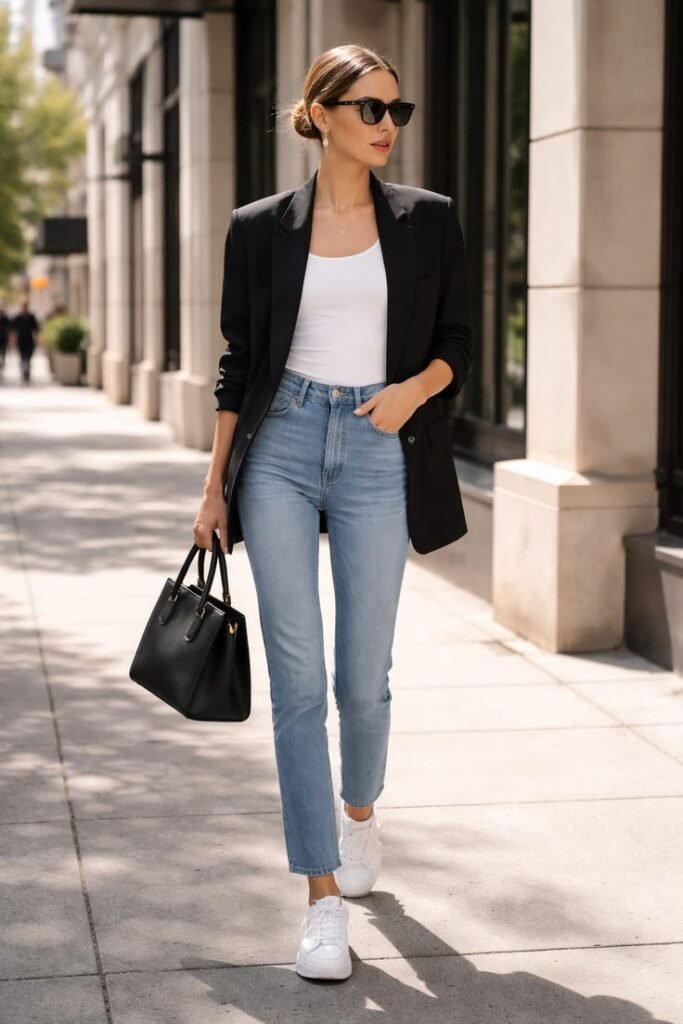
One: blazer + white tee + jeans + sneakers. The foundational formula — the tee keeps it grounded, the blazer pulls it together, clean sneakers keep it weekend. Works with every blazer color; navy, gray, and camel are the most versatile.
Two: blazer + striped Breton top + jeans + loafers. French-girl uniform, endlessly repeatable. The stripe adds pattern interest the solid blazer needs.
Three: blazer + hoodie + jeans + sneakers. The high-low extreme — a soft blazer over a quality hoodie (not the gym one) reads street-style deliberate. Keep the hoodie fitted and the blazer slightly oversized.
Four: blazer + turtleneck + trousers + ankle boots. Polished casual for dinners and events — the turtleneck does the formal work so the look stays relaxed. Monochrome versions are striking.
Five: oversized blazer + bike shorts or leggings + chunky sneakers. The proportions play (long blazer, short bottom) is very current — keep the blazer long enough for coverage confidence.
Six: blazer + slip dress or midi skirt + sandals. The blazer toughens feminine pieces beautifully; push the sleeves up and add simple jewelry.
Seven: blazer + graphic tee + black jeans + boots. Evening-weekend energy — the graphic tee’s personality plus the blazer’s polish.
The Details That Make or Break It
Sleeve pushing is the master technique: push or roll blazer sleeves to just below the elbow. It instantly casualizes any blazer and shows off bracelets or a watch. With dress shirts underneath, roll the shirt cuff over the blazer sleeve for the classic sprezzatura effect.
Bottoms set the register: jeans (any wash, but mid-blue and black are most versatile), chinos, or casual trousers keep it weekend; suit trousers with a casual blazer risk the ‘separates suit’ confusion — avoid unless the textures clearly differ. Footwear completes the message: sneakers, loafers, ankle boots, and flat sandals all work; formal oxfords and stilettos pull it back toward dressy.
Accessories stay relaxed: a canvas tote or crossbody over a structured handbag, simple jewelry, sunglasses. And the ‘one formal thing’ rule — if the blazer is the polished piece, everything else should step down. Blazer plus silk blouse plus tailored trousers plus heels isn’t casual-weekend; it’s office. Swap two of those for tee/jeans/sneakers and you’re there. The Who What Wear's blazer styling guide street-style coverage is full of these formulas in the wild.
Common Mistakes to Avoid
Mistake one: the full suit broken up badly. A suit jacket worn as a blazer usually fails — the fabric’s too fine, the buttons too formal, and it looks like you lost your trousers. True odd jackets (patch pockets, textured fabrics, contrasting buttons) are designed for this; suit jackets aren’t.
Mistake two: too many polished pieces. The blazer is your one structure; adding a button-down, dress trousers, and leather shoes rebuilds the office. Casualize at least two other elements.
Mistake three: wrong blazer size. Too tight and it looks like you’re trying too hard; too oversized without intention looks sloppy. The casual sweet spot is ‘relaxed but shaped’ — skimming, not swimming. And mistake four: neglecting the tee — a stretched, stained, or pilled tee under a nice blazer ruins the contrast. The casual pieces must be in good condition; ‘casual’ never means ‘worn out.’ For building around versatile pieces, see our guide to GQ on wearing blazers casually.
Blazer Care: Keeping It Sharp
A blazer worn weekly needs maintenance to stay sharp — but less than you’d think. The rules: never machine wash a structured blazer (the canvassing and fusing inside can’t survive it — dry clean only, and sparingly, 2–3 times yearly max); brush after wearing with a clothes brush ($10 — removes dust and revives the nap, especially on wool); air for 24 hours between wears on a proper wide-shouldered hanger (never wire — wire hangers deform shoulders over time).
Steam, don’t iron: a handheld steamer ($25) removes wrinkles without the shine and pressure damage ironing inflicts on lapels and pockets. Spot-clean small marks immediately with a damp cloth — most ‘needs dry cleaning’ moments are actually spot-clean moments. Rotate if you can: two blazers in rotation each last more than twice as long as one worn daily, because the fibers rest and recover.
Storage: button the top button (it holds the shape), use wide wooden or padded hangers, and give it breathing room in the closet (crammed blazers wrinkle each other). Cedar blocks nearby deter moths. A well-kept blazer looks better at year five than year one — the fabric settles, the fit molds to you, and the patina of quality emerges. Care is what separates the decade blazer from the two-season one.
The Takeaway
One structured blazer + relaxed everything else = instant weekend polish. Unstructured fabrics, pushed sleeves, and intentional contrast are the whole technique.
Start with blazer + white tee + jeans + sneakers. It’s the formula everything else is a variation on — and it never fails.