How to Find Open Mic Nights in Your Area
How to Find Open Mic Nights in Your Area (8 Sources)
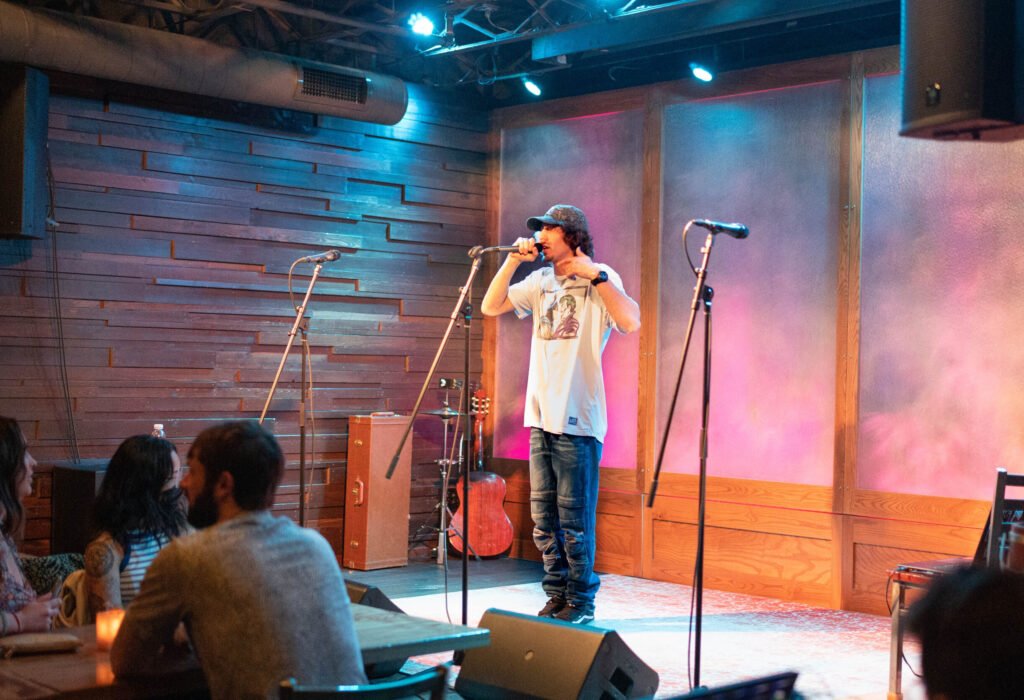
Learning how to find open mic nights in your area opens up the cheapest, most democratic live entertainment in existence — and possibly a stage for yourself. Open mics are where comedians test their first jokes, songwriters try new material, and poets find their voice. As an audience member, you see raw talent (and glorious trainwrecks) for the price of a drink. As a performer, it’s the lowest-stakes stage you’ll ever find. I’ve been to dozens as both audience and performer. Here’s where to look and what to expect.
8 Places to Find Open Mics
- Facebook Events: Search “open mic” + your city. Still the most comprehensive source — venues post here religiously.
- Meetup.com: Open mic and performer groups organize here, especially in bigger cities.
- Local music shops: Guitar stores and record shops know every open mic in town — ask the staff. Many host their own.
- Bars and coffee shops (direct): Call or check the websites/socials of venues in artsy neighborhoods. Weekly open mics are often listed on a chalkboard, not online.
- Eventbrite: Filter by “open mic” + your location. Better for comedy open mics especially.
- Comedy club websites: Most clubs run weekly open mics or “new talent” nights — listed on their calendars.
- Reddit: r/[yourcity] often has threads or wiki pages listing recurring open mics.
- Word of mouth: Go to one open mic and you’ll hear about five more. The scene is a network — one night plugs you in.
What to Expect as Audience
- Format: Sign-up list, 5-10 minutes per performer, host MCs between acts. Music and comedy open mics are usually separate nights.
- Quality variance: You’ll see brilliance and disaster in the same hour. That’s the deal — and honestly the charm.
- Cost: Usually free or one-drink minimum. The cheapest night out in live entertainment.
- Etiquette: Stay for the whole list (don’t just watch your friend and leave — it’s the cardinal sin), applaud everyone, don’t heckle (ever), buy a drink.
- Duration: 2-3 hours typical. Arrive early for good seats; the room fills.
What to Expect as a Performer (First-Timer Tips)
- Sign up early: Lists fill fast; early slots have the most attentive audiences.
- Prepare, but not too much: Know your 5 minutes cold, but don’t over-rehearse the life out of it.
- Bring supporters: Friendly faces in the crowd transform the experience. (But stay for everyone’s set — see above.)
- Record yourself: Phone on a tripod or propped up. Reviewing footage is the fastest way to improve.
- Bomb gracefully: Everyone bombs. The pros bomb. Thank the audience, learn, come back next week. Persistence is the whole game.
- Music: Bring your own instrument (backline varies); have 2-3 songs ready. Comedy: 5 tight minutes beats 10 loose ones. Poetry: Read clearly, own the mic.
If performing sparks the music bug, finding new music and free concerts are your next steps. For bigger stages, that’s a different hunt.
The Takeaway
Open mics are everywhere — Facebook Events, local music shops, bar chalkboards, and comedy clubs list them; one visit plugs you into the whole scene. As audience: free entertainment, wild variance, great stories. As performer: the lowest-stakes stage in existence and the fastest way to improve. Sign up, show up, and stay for the whole list. The open mic tradition is where countless careers started — including, possibly, yours.
Frequently Asked Questions
Do I need to be good to perform at an open mic?
No — that’s the entire point. Open mics exist for beginners, experimenters, and works-in-progress. The audience expects variance; a shaky first-timer gets encouragement, not judgment (as long as you’re genuinely trying). The unwritten rules: respect the time limit, don’t be deliberately offensive, and thank the host. “Good” is not the entry requirement — courage is. Everyone in that room remembers their first time.
How do comedy open mics differ from music open mics?
Comedy open mics: usually weeknights at bars/clubs, 5-minute sets, sign-up lists, brutally honest audiences (silence is feedback). Music open mics: coffee shops and bars, 2-3 songs or 15 minutes, often with a house PA and sometimes a backline, warmer audiences. Poetry/spoken word: its own scene, often at bookstores and cafes, deeply supportive. Pick your discipline’s night — a comedian at a music open mic (or vice versa) usually misfires. When in doubt, ask the host what’s expected.
What’s the etiquette for leaving early?
Don’t — or if you must, do it between performers, quietly, from the back. Leaving right after your own set (or your friend’s) is the most disrespectful move in open mic culture; the implicit deal is “we all stay for each other.” If you truly must leave, tell the host in advance and sit near the exit. Regulars notice who stays and who doesn’t — and hosts remember when booking featured slots. Staying is also how you learn: watching 15 performers teaches more than performing once.
Can open mics actually lead to real gigs?
Yes — it’s the standard pipeline. Comedians get club spots from open mic sets; musicians get booked for venue nights; hosts scout open mics for paid features. The path: become a regular, get good, be professional (on time, reliable, easy to work with), and opportunities follow. It takes months of consistency, not one great night. Network genuinely — the other performers are your future collaborators and bookers. Countless professional careers started exactly this way: one open mic, every week, for a year.
Are there open mics for kids and teens?
Yes — and they’re wonderful. Many coffee shops, libraries, and music schools run all-ages or youth open mics, usually in early-evening time slots with supportive crowds and no bar setting. They’re among the most encouraging performance environments in existence: audiences of parents and peers who applaud effort genuinely. For teens, youth open mics are the ideal first stage — lower stakes than adult nights, real performance experience. Search “youth open mic” or “teen open mic” plus your city, or ask at local music schools — they always know the scene. If your kid shows interest in performing, start here before the adult rooms. The confidence built on a supportive stage transfers to everything else.