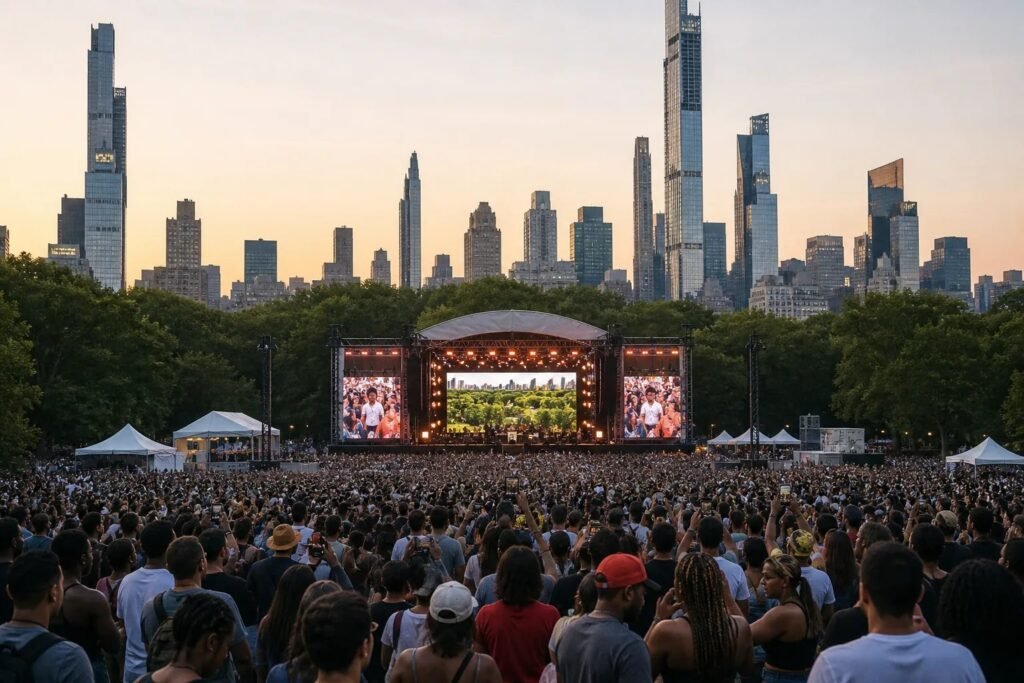
How to Find Free Concerts Happening in Your City
How to Find Free Concerts Happening in Your City (8 Sources)
Learning how to find free concerts happening in your city can save you hundreds of dollars a year — and honestly, some of the best live music experiences I’ve had cost nothing. Free shows have a different energy: relaxed crowds, local pride, families on blankets, zero financial pressure. The music industry puts on an enormous amount of free programming; most people just don’t know where to look. Here are the eight sources that actually surface free shows.
1. Your City’s Parks and Recreation Department
The #1 source. Most cities run summer concert series in parks — weekly evening shows, all summer, completely free. Check your city’s parks & rec website or social media in April/May for the summer schedule. These range from cover bands to genuinely good local acts to touring artists on civic series. Bring a blanket, bring a picnic, bring friends. This single source can fill your whole summer.
2. Public Libraries
Libraries host more live music than you’d expect — lunchtime concerts, evening series, children’s music, jazz nights. It’s part of their community programming mission. Check the events calendar on your library system’s website; most list months ahead. Library concerts skew toward folk, classical, jazz, and children’s music — perfect for families and mellow evenings.
3. Breweries, Wineries, and Taprooms
The craft beverage industry runs on free live music. Breweries and wineries host free shows weekly — usually local singer-songwriters, duos, and small bands — because music sells drinks. Follow your local spots on Instagram; they announce lineups weekly. The vibe is casual, the beer is good, and you’re supporting local musicians directly (tip the band).
4. Downtown Associations and Business Districts
“First Friday” art walks, downtown summer series, holiday events — business improvement districts fund free concerts to draw foot traffic. These are often surprisingly good, featuring regional touring acts. Search “[your city] downtown events” or check the downtown association’s calendar.
5. University and College Campuses
Universities host an enormous amount of free music: student recitals, faculty concerts, guest artists, outdoor series. Most are open to the public and listed on the university’s events calendar. Music schools especially — conservatory students are terrifyingly talented and their recitals are free. Don’t overlook community colleges either.
6. Event Aggregator Apps
Set your location and filter by “free” on:
- Eventbrite — filter by free events; tons of concerts listed
- Bandsintown — track artists and get alerts for free shows nearby
- Songkick — similar artist-tracking with local listings
- Facebook Events — still the most comprehensive local event source; search “free concert” + your city
7. Record Stores and Bookstores
In-store performances and album release shows — intimate, free, and often featuring artists you’ll brag about seeing “before they were big.” Follow local shops on social media. Record Store Day (April) brings a wave of free in-store performances nationwide.
8. Street Fairs, Festivals, and Farmers Markets
Farmers markets increasingly book live music; street fairs and cultural festivals are music-heavy by nature. Many are free or charge nominal entry ($5-10) for hours of music. Your city’s tourism or cultural affairs site lists the festival calendar — mark the free ones.
Tips for Free-Show Success
- Arrive early for good spots — free means no reserved seating.
- Bring cash for tips/merch — free-show musicians earn through tips and merch sales. Be generous.
- Check the weather and the bag policy — outdoor series have rules about coolers, chairs, and dogs.
- Sign up for newsletters from 2-3 favorite venues — the regulars hear about shows first.
Going to an outdoor free show? Here’s what to bring for comfort. And if you’re more into performing than watching, check open mic nights in your area.
The Takeaway
Free concerts are everywhere — parks departments, libraries, breweries, universities, and festivals put on an enormous amount of free live music. Check 2-3 of these sources monthly and you’ll never lack for live music. Before paying resale prices for a big show, see what’s free this weekend — you might find your new favorite band. For background on the live music economy, the concert industry overview is a solid read.
Frequently Asked Questions
Are free concerts actually good, or just amateur hour?
Both exist, but the good ones are genuinely good. Civic summer series and downtown programs often book regional touring acts and established local bands — professional musicians playing real sets. Brewery and taproom shows skew toward solid local singer-songwriters. University concerts feature conservatory-level talent. The “amateur hour” stuff is mostly open mics (which are fun in their own right). Rule of thumb: city/county-funded series and established venues’ free shows are reliably good; random bar gigs are a coin flip.
How do free concerts make money?
Different models: civic series are funded by tax dollars, tourism budgets, and sponsors (it’s economic development — concerts draw people downtown who spend money). Breweries and wineries profit from drink sales. Festivals make money on vendors, sponsors, and VIP upgrades. Artists play free shows for exposure, merch sales, tips, and flat fees paid by the organizers. Nobody’s doing it from pure charity — but the audience doesn’t pay, which is what matters to you.
What’s the etiquette for free outdoor concerts?
Arrive early for good blanket placement, keep your setup compact (don’t spread across half the lawn), keep talking low during performances, pick up all your trash, and tip the musicians if there’s a tip jar. Low-back chairs or blankets only in front rows (don’t block views with tall chairs). Leashed dogs are welcome at many outdoor shows — check the rules first. And buy something from the vendors; that’s what keeps the series funded for next year.
Do I need tickets for free concerts?
Sometimes — “free” doesn’t always mean “walk in.” Many free shows require (free) RSVP tickets through Eventbrite for crowd management, especially popular series. Some are first-come, first-served with capacity limits — arriving early matters. Always check the event listing: “free, no ticket required” vs. “free with RSVP” are different situations, and showing up to an RSVP-only show without registering can mean watching from outside the fence.
Pingback: What to Bring to an Outdoor Concert: Checklist