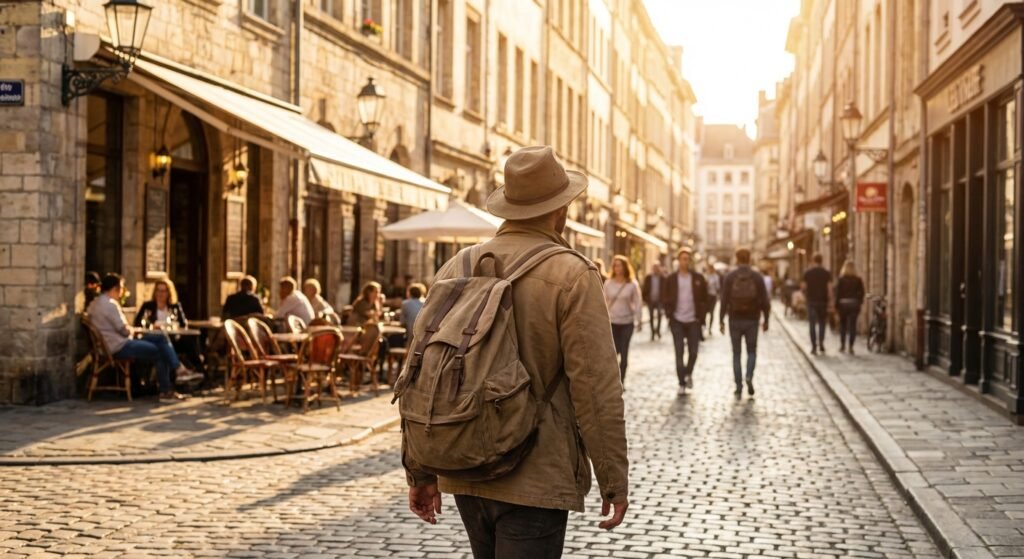
How to Avoid Tourist Traps in Any New City (Local’s Playbook)
How to Avoid Tourist Traps in Any New City (Local's Playbook)
How do I avoid tourist traps when visiting a new city? Here’s the real deal, based on what actually works rather than what sounds good.
I once paid $28 for a mediocre meal at a restaurant with a guy outside waving a menu — 10 minutes' walk from where locals were eating better for $12. That meal funded my education in tourist-trap avoidance.
Here's the playbook for finding the real city, wherever you land.
What really matters
Follow the 'two blocks' rule
The streets immediately around major attractions are trap territory — inflated prices, reheated food, souvenir shops. Walk two blocks in any direction and prices drop 30-50% while quality rises. This single rule has saved me more money and disappointment than any other travel habit. The good stuff is never on the main square.
Eat where the menus aren't in five languages
Multilingual picture menus, hawkers outside, 'tourist menu' signs — all red flags. Look for: menus in the local language (use your phone to translate), a crowd of locals, lunch specials, and no one beckoning you inside. Some of my best meals came from places I found by following office workers at noon.
Related reading: Travel Insurance for Domestic Trips: Worth It or Not?
Ask locals the right question
Don't ask 'where should I eat?' (you'll get the famous place). Ask 'where do YOU eat lunch?' or 'where would you take a friend visiting?' Specific questions get honest answers. Hotel staff, shopkeepers, and rideshare drivers are goldmines — ask three people and follow the consensus. The cleaning staff at my hotel once directed me to the best meal of my trip.
Be skeptical of 'must-see' lists
Top-10 lists are often SEO, not wisdom. Some famous attractions are genuinely worth it; others are 3-hour lines for a 30-second photo. Check recent reviews for 'overrated' mentions, consider going at opening time to beat crowds, and give yourself permission to skip. My favorite travel memories are rarely the famous sights — they're the neighborhoods I wandered.
Use local apps and transit like a resident
Download the city's transit and food apps before arriving. Riding local transit instead of hop-on-hop-off buses saves money and shows you real neighborhoods. Google Maps reviews filtered to local language, plus apps like Too Good To Go for food, reveal the city residents actually use. Tourists cluster; transit disperses.
My honest take
In Rome, I skipped the restaurant-lined piazza and followed a nonna into a side street. The carbonara cost €9 and I still think about it. The 'two blocks' rule has never failed me — the real city is always just past the postcard zone.
FAQs: How do I avoid tourist traps when visiting a new city?
Here are the questions I hear most often about this topic:
Are tourist traps always bad?
Not always — some famous spots earn their fame. The trap isn't popularity; it's the low-quality, high-price businesses that cluster around popularity. Judge each on merit.
How do I find local restaurants abroad?
Look for local-language menus, lunch crowds of workers, and spots 2+ blocks from attractions. Ask locals where they personally eat — not where tourists should go.
Should I avoid all guided tours?
No — small-group local tours (food tours especially) are often excellent. Avoid the giant bus tours and anyone selling on the street near attractions.
The bottom line
Walk two blocks from attractions, eat where locals eat, ask specific questions, question the must-see lists, and ride local transit. The real city is always there — it's just past the guy waving the laminated menu.
For deeper background, check out Lonely Planet's city travel guides — both are solid, reputable resources worth bookmarking.
More from Daily Magazine 24
- Travel Insurance for Domestic Trips: Worth It or Not?
- Best Way to Exchange Currency Before an International Trip
One more thing worth knowing
And remember why you're going in the first place. It's easy to turn a trip into a checklist to optimize — sights seen, photos taken, boxes ticked. But the trips I treasure most are the ones where I slowed down enough to actually be somewhere: the unhurried coffee, the long walk with no destination, the conversation with a stranger. See the sights, yes — but also just be there.
One more thing worth knowing
One thing seasoned travelers learn fast: the best trip is rarely the most expensive one — it's the best planned one. An hour of research before you go routinely saves hundreds of dollars and multiple headaches. Read recent reviews (not just the glowing ones), check seasonal quirks, and learn three local customs. Preparation doesn't kill spontaneity; it funds it, by removing the preventable disasters that eat your time and budget.
One more thing worth knowing
Here's my golden rule for any trip: plan the skeleton, leave the flesh loose. Book the non-negotiables (flights, first-night stay, must-do tickets) and leave deliberate gaps for discoveries — the restaurant you stumble into, the viewpoint a local mentions, the detour that becomes the highlight. Over-planned trips feel like work; under-planned ones waste precious days. The sweet spot is structure with breathing room.
One more thing worth knowing
A quick word on travel insurance, since it comes up constantly: for cheap, flexible domestic trips you can usually skip it, but for expensive or complicated itineraries it's the cheapest peace of mind in travel — typically 4-8% of trip cost. Check your credit card benefits first; many premium cards already include solid trip protection. Don't double-pay for coverage you already have.
One more thing worth knowing
Packing philosophy that changed my travel life: lay out everything you plan to bring, then remove a third. Almost everyone overpacks by 30-40%, and every extra item is weight you carry through airports, up stairs, and into taxis. The things you truly need on a trip fit in less space than you think — and anything you forget can usually be bought at your destination, often cheaper and as a fun souvenir.