How to Improve Curb Appeal Without Spending a Fortune
How to Improve Curb Appeal Without Spending a Fortune
Curb appeal is your home’s first impression — and it matters whether you’re selling or just tired of wincing every time you pull into the driveway. The good news: the highest-impact exterior improvements are also the cheapest. You can transform how your house looks for $200 to $500 and a couple of weekends.
Here are the upgrades ranked by impact per dollar.
Paint and the Front Door: Maximum Impact, Minimum Cost
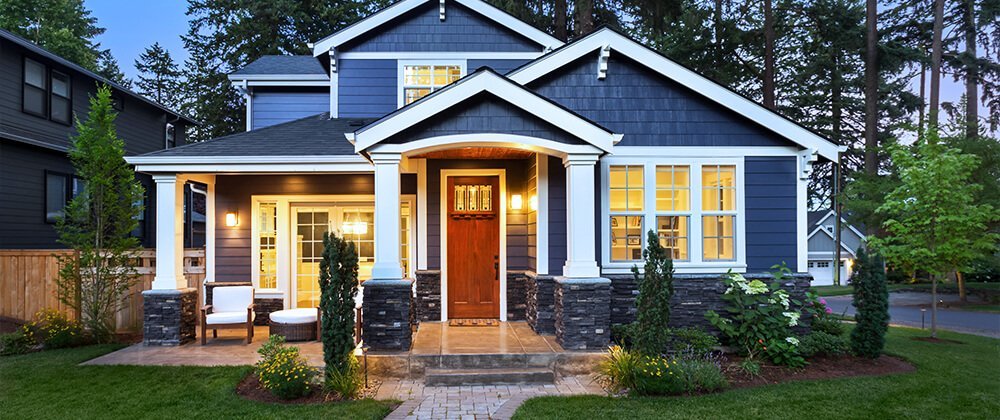
Nothing changes a house’s face like paint on the front door. A quart of quality exterior paint ($20 to $30) and an afternoon turns a tired entry into a focal point — deep navy, classic red, or matte black are the crowd-pleasers. While you’re at it, paint or replace the shutters if you have them; faded shutters drag down the whole facade.
The mailbox, house numbers, and light fixtures are the jewelry of the exterior. Modern house numbers ($20 to $40 for a set), a new mailbox ($30 to $60), and updated sconces by the door ($40 to $80 each) read as a renovation for under $200 total. Power-wash the siding, driveway, and walkways ($50 to rent a washer for a day, or $200 to $300 hired) — you’d be amazed how much “dirt” you thought was “aging.” These three moves alone transform most houses.
Landscaping That Looks Expensive (But Isn’t)
Landscaping is where $150 in plants looks like $1,500 in professionalism. The formula: fresh mulch in all beds (a $4 bag covers 12 square feet — most front beds need 10 to 15 bags), defined bed edges (a $30 half-moon edger and an afternoon), and simple, repeated plantings rather than a chaotic mix. Three of the same shrub beats nine different plants every time.
Add color at the entry: two matching planters flanking the door ($30 to $60 each with plants) is the oldest curb-appeal trick because it works. Trim overgrown bushes ruthlessly — most houses are half-hidden by landscaping that’s grown wild, and revealing the house is free. Mow in stripes, edge the lawn along the sidewalk, and pull weeds from the driveway cracks. A tidy lawn with crisp edges looks intentional and expensive regardless of grass quality.
Lighting and the Details Nobody Notices Until They’re Fixed
Exterior lighting transforms a house after dark — when half of all first impressions happen (evening drive-bys, coming home from work). Solar path lights ($30 for a 6-pack, no wiring) lining the walkway, a warm-white bulb in the porch fixture, and one uplight on a nice tree ($25 solar) make the house look welcoming and high-end. Skip the cool-blue solar lights; warm white (2700K-3000K) looks expensive, blue looks like a gas station.
Then the details: tighten or replace the doorbell, clean the windows (inside and out — $15 in supplies), hide the trash cans behind a $50 screen or in the garage, coil the garden hose instead of leaving it sprawled, and replace a worn doormat ($25). None of these cost real money. Together, they signal a cared-for home — which is what curb appeal actually is.
Budget Curb Appeal Checklist
Do these in order for maximum transformation:
- Power-wash siding, driveway, and walkways.
- Paint the front door — a quart of paint, an afternoon.
- Update house numbers, mailbox, and door light fixtures.
- Fresh mulch, defined bed edges, trimmed bushes.
- Two matching planters flanking the front door.
- Mow, edge, and weed — tidy beats fancy every time.
- Solar path lights and warm-white porch lighting.
- Details: clean windows, hide trash cans, new doormat.
The Bottom Line
Improving curb appeal without spending a fortune comes down to cleanliness, paint, and simple landscaping. Power washing, a painted front door, fresh mulch, and updated fixtures transform most homes for $200 to $500.
Curb appeal isn’t about expensive materials — it’s about looking cared for. Two weekends of focused work buys a first impression that lasts.
Curb Appeal for Sellers: The 48-Hour Blitz
Selling soon? The 48-hour curb appeal blitz focuses every dollar on first impressions. Day one: power wash everything (siding, driveway, walkways, porch — $50 rental or $250 hired), mow and edge the lawn to perfection, trim every bush away from the house, and mulch all beds. These four tasks alone transform most homes and cost under $300. Real estate photographers consistently say the power wash is the highest-ROI pre-listing task.
Day two: paint the front door, update house numbers and mailbox, place matching planters, clean all windows inside and out, hide every trash can/hose/toy, and add evening lighting (solar path lights plus a welcoming porch light). Stage the porch minimally — a clean doormat, maybe two chairs if space allows. The goal is a home that photographs beautifully and feels cared-for in person. Total blitz budget: $300-$600, often returning 10x in perceived value.
The psychology: buyers decide within 7-10 seconds of seeing a home whether they’re excited, and curb appeal sets the emotional anchor for the entire showing. A home with great curb appeal gets the benefit of the doubt indoors (‘charming, needs updating’); the same home with poor curb appeal gets judged harshly (‘neglected, what else is wrong’). It’s not fair, but it’s human nature — and it’s the cheapest perception to fix in real estate.
Quick Answers
What’s the ROI of curb appeal improvements?
Landscaping and exterior updates return 100%+ of cost in perceived value — some studies show $1 in curb appeal returns $2+ in sale price perception.
Should I paint my whole house before selling?
Only if the paint is failing. A full exterior paint job ($3,000-$6,000) rarely returns its cost; focus on the door, trim touch-ups, and cleanliness instead.
Do buyers really notice landscaping?
Absolutely — it’s the first thing seen in photos and in person. Tidy, simple landscaping signals a well-maintained home throughout.
Let’s talk about the psychology of the ‘cared-for’ signal, because it’s the real engine of curb appeal. Buyers and visitors don’t consciously evaluate your mulch depth — they absorb an overall impression of care within seconds, and that impression colors everything after. A home that looks maintained suggests maintained systems (roof, plumbing, HVAC); a neglected exterior plants suspicion about everything hidden. This is why the cheap fixes (cleanliness, trim paint, tidy landscaping) outperform expensive ones (new siding, fancy hardscaping) in perceived value — they all signal the same thing: someone attentive lives here.
The rental-property corollary: landlords who maintain curb appeal attract better tenants and fewer vacancies — the same psychology applies. And for homeowners not selling, there’s a personal dividend nobody mentions: you experience your home’s exterior twice daily, arriving and leaving. A welcoming entry measurably improves mood — environmental psychology research consistently shows that attractive, well-kept surroundings reduce stress. The $300 you spend on curb appeal pays you back every single day in the feeling of coming home to a place that looks loved. That’s value no appraisal captures.
Further reading: the National Association of Realtors on curb appeal, the EPA WaterSense outdoor tips.