Refinishing vs. Replacing Hardwood Floors: What’s Worth It?
Refinishing vs. Replacing Hardwood Floors: What’s Worth It?
If your hardwood floors look tired — scratches, dull finish, worn paths — you’re facing the classic question: refinish or replace? The cost difference is enormous (thousands of dollars), but so is the difference in outcome. Pick wrong and you either waste money polishing floors that are done, or tear out beautiful wood that had decades left.
Here’s how to assess your floors honestly and make the right call.
When Refinishing Is the Clear Winner
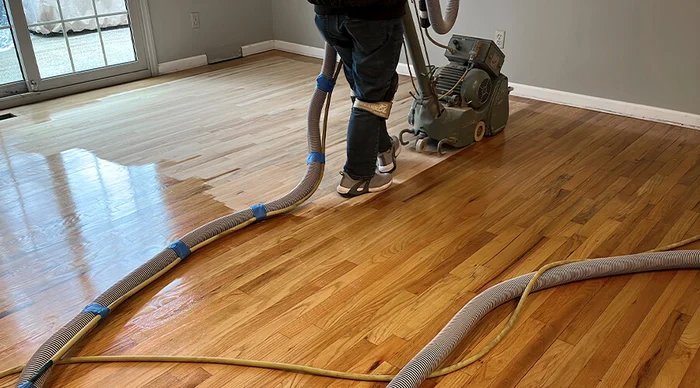
Refinishing costs $3 to $8 per square foot ($1,500 to $4,000 for a typical living area) versus $8 to $15+ per square foot to replace. If your floors are solid hardwood with surface-level damage — scratches, worn finish, minor discoloration, small gaps — refinishing makes them look brand new. Solid hardwood can be refinished 4 to 6 times over its life, and each refinish buys 10 to 15 years.
The test: look at the wear. If the damage is in the finish (dull, scratched, stained surface) but the wood underneath is solid and flat, refinish. Check the thickness too — if you can see the tongue-and-groove from the side at a floor vent, there’s enough wood left for another sanding. Floors from the early-to-mid 1900s are often old-growth wood that’s denser and more beautiful than anything you can buy today. Refinishing preserves that — replacement destroys it.
When Replacement Is the Honest Answer
Replace when the damage is structural, not cosmetic. Severe water damage with cupping, buckling, or black staining deep in the wood won’t sand out. Widespread pet urine stains that have penetrated through the finish, termite damage, or floors that squeak and move because the subfloor is failing — these need replacement, not refinishing.
Also consider replacement if you have engineered hardwood that’s already been refinished once (most engineered floors can only handle 1 to 2 light sandings), if the floors are thin strip wood with no sanding margin left, or if you genuinely hate the wood species or width and want a different look. In those cases, refinishing is throwing good money at floors you’ll still dislike. A full replacement with quality solid hardwood runs $8,000 to $15,000 for a main living area — painful, but it lasts 50+ years.
The Middle Path Most People Miss
There’s a third option between full sand-and-refinish and replacement: screen and recoat. For $1 to $3 per square foot, a pro lightly abrades the existing finish and applies a fresh topcoat — no deep sanding. It works when the finish is worn but the stain color is fine and there’s no deep damage. It takes a day instead of a week, you don’t have to move out, and it buys 5 to 7 years.
Whatever you choose, get the dust situation clear upfront. Modern sanders with dust containment are dramatically cleaner than the old clouds-of-dust days — ask specifically about dustless sanding systems. And plan to be out of the space: oil-based polyurethane needs days to cure (and stinks), while water-based finishes dry faster with less odor but show scratches sooner. For most homes, water-based is the practical choice despite the trade-off.
Refinish or Replace: Decision Checklist
Answer these honestly:
- Is the damage in the finish (refinish) or in the wood itself (replace)?
- Is there enough wood thickness left for another sanding? Check at a vent.
- Is it solid hardwood (refinish-friendly) or thin engineered (limited sandings)?
- Do you like the wood species and plank width? If not, replacement may satisfy more.
- Get quotes for both — refinishing at $3-$8/sq ft vs replacement at $8-$15+/sq ft.
- Ask about screen-and-recoat ($1-$3/sq ft) as a middle option.
- Confirm dust containment and cure times before scheduling.
The Bottom Line
If your floors are solid hardwood with surface wear, refinishing is almost always worth it — half the cost of replacement for a like-new result that lasts another decade. Replace only when the damage is structural, the wood is too thin to sand, or you truly want a different floor.
And don’t overlook screen-and-recoat for lightly worn floors. It’s the best value in flooring that nobody talks about.
Maintaining Refinished Floors So They Last
A fresh refinish is an investment — protect it. The first 30 days are critical: the finish is still curing, so use only felt pads under furniture (the $10 variety pack covers a house), avoid dragging anything, and keep pet nails trimmed. Put breathable rugs (not rubber-backed, which traps moisture) in high-traffic paths after the first week. These simple habits in month one add years to the finish.
Long-term, the enemies are grit, water, and sun. Grit (sand, dirt) is sandpaper underfoot — doormats at every entrance and a no-shoes policy do more for floor longevity than any product. Clean with a barely-damp microfiber mop, never a soaking wet one; standing water is hardwood’s mortal enemy. Use only hardwood-specific cleaners — vinegar, steam mops, and ‘rejuvenating’ oil soaps damage polyurethane finishes despite their marketing. And manage sunlight: UV fades stain unevenly, so rotate rugs periodically and consider UV-filtering window film in sunny rooms.
Recoat before you need to refinish. When the finish starts looking dull in traffic paths but the stain is intact (typically 5-8 years), a screen-and-recoat ($1-$3/sq ft) refreshes the protection without sanding to bare wood. Think of it like changing oil versus rebuilding an engine — regular light maintenance prevents the major job. Floors maintained this way can go 20+ years between full sandings.
Quick Answers
How long before I can walk on refinished floors?
Socks-only after 24 hours; furniture after 72 hours; rugs after 7 days. Full cure takes 2-4 weeks depending on finish type.
Can I refinish just one room?
Yes, but matching the sheen and color to adjacent rooms is tricky. Pros can usually blend well; DIY single-room jobs often show a visible line.
Does refinishing work on engineered hardwood?
Only if the veneer is thick enough — most engineered floors handle 1-2 light sandings. Check veneer thickness before committing.
The sheen decision affects both looks and longevity more than most homeowners realize. Satin (the most popular) offers a warm glow that hides dust and minor imperfections while providing good protection. Semi-gloss is tougher and shows off wood grain dramatically, but it highlights every imperfection and can look plasticky in large areas. Matte/natural oil finishes are the designer favorite — gorgeous, modern, touchable — but they need more maintenance and show wear faster. For most homes, satin water-based polyurethane is the sweet spot: durable, attractive, low-odor, and easy to recoat later. Choose the sheen for your lifestyle, not the showroom sample.
Further reading: the National Wood Flooring Association, This Old House hardwood floor guides.