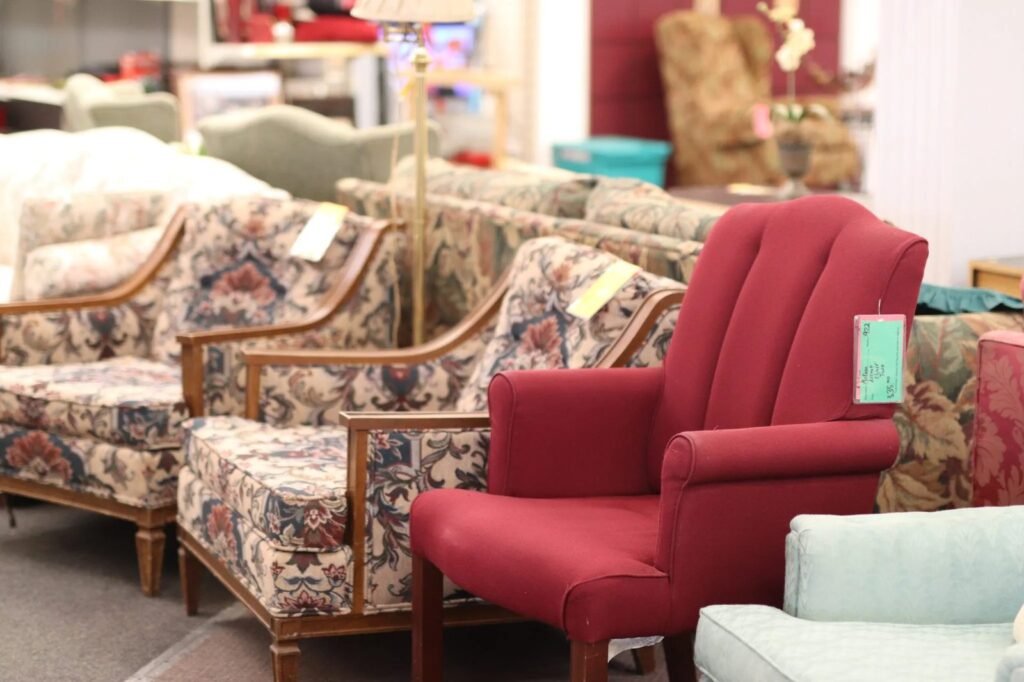
Is Thrift Store Furniture Worth It? Honest Pros and Cons
Is Thrift Store Furniture Worth It? Honest Pros and Cons
Is it worth buying furniture from thrift stores? It’s one of the most common questions I hear — and the honest answer is simpler than you’d think.
My living room is about 70% thrifted: a solid-wood dresser, two armchairs, a coffee table that looks far more expensive than it was. Total spent: under $400. Retail equivalent: probably $3,000.
But I've also dragged home duds. Thrift furniture is absolutely worth it — if you know what to buy and what to walk past. Here's the honest guide.
What actually works
Buy for bones: solid wood and good construction
The golden rule: buy quality construction, not pretty surfaces. Solid wood dressers, dovetail drawers, sturdy frames — these were expensive new and last forever. Press a drawer: solid wood feels heavy and smooth; particleboard feels light and hollow. My $60 solid-oak dresser will outlive me; a $60 particleboard one from a big-box store won't outlive the move.
Best buys: dressers, bookshelves, side tables, solid chairs
These categories are thrift gold: simple construction, easy to evaluate, and wildly overpriced new. Wooden bookshelves ($15-40 vs $150+ new), nightstands, dining chairs, and coffee tables are consistently great finds. Upholstered pieces are riskier (see below) but wooden furniture is almost always a win.
Related reading: A Welcoming Entryway on a Budget: 10 Ideas Under $100
Avoid: mattresses, heavily damaged upholstery, particleboard
Never buy used mattresses (hygiene, bedbugs — just don't). Skip upholstered pieces with stains, odors, or broken springs unless you're prepared to reupholster ($200-500, which kills the deal). Wobbly particleboard furniture isn't worth any price — it can't be fixed. And anything with a musty smell that doesn't air out in a day: walk away.
The inspection checklist: 60 seconds that save regret
Checklist before buying: open every drawer, sit on every chair, sniff for odors, check for woodworm holes (tiny holes = pass), look underneath for damage, and measure your space (tape measure in your bag, always). I once bought a 'perfect' bookshelf that didn't fit through my doorway. Measure twice, haul once.
Negotiate, visit often, and know the discount days
Many thrift stores discount furniture that's sat a while — ask. Visit regularly; inventory turns over fast and the good stuff goes same-day. Learn each store's sale schedule (many do 25-50% off certain tags weekly). My best finds came from Tuesday-morning visits when weekend donations hit the floor. Timing is a genuine strategy.
My honest take
My $40 armchair needed $12 of wood glue and an afternoon. It's now my favorite seat in the house and looks like a $400 vintage find. The secret of thrift furniture: minor flaws are discounts, not defects — if you can see the fix, you can price it.
FAQs: Is it worth buying furniture from thrift stores?
Here are the questions I hear most often about this topic:
How do I clean thrift store furniture?
Wood: wipe with diluted vinegar, then furniture oil or wax. Upholstery: vacuum thoroughly, steam clean, and consider a professional clean ($50-100) for keepers. Always inspect for pests first.
Is thrifted furniture safe from bedbugs?
Inspect carefully — seams, joints, undersides. Hard wooden furniture is very low risk; upholstered pieces warrant caution. When in doubt, a heat treatment or professional inspection is cheap insurance.
What days are best for thrift shopping?
Weekday mornings, right after weekend donations are processed. Also ask about sale days — most stores discount specific tag colors weekly.
The bottom line
Buy solid wood with good bones, stick to the winning categories, inspect ruthlessly, and shop often. Thrift furniture isn't just cheaper — it's often better made than what's sold new today. Your wallet and your home both win.
For deeper background, check out NerdWallet's secondhand shopping guides — both are solid, reputable resources worth bookmarking.
More from Daily Magazine 24
- A Welcoming Entryway on a Budget: 10 Ideas Under $100
- Plan Your Whole Week in 30 Minutes on Sunday Night
One more thing worth knowing
Budget-wise, remember that most of these improvements cost little or nothing — the expensive part is usually indecision, not implementation. I've spent more money 'thinking about' solutions than on the solutions themselves. Set a small budget, pick the highest-impact move, and do it this weekend. Future-you, enjoying the results, will wonder why you waited.
One more thing worth knowing
Finally, give any change a fair trial before judging it. Three weeks is my minimum — the first week you're fighting old habits, the second you're adjusting, and only in the third do you see the real payoff. I've almost abandoned routines on day five that became favorites by day twenty. Commit to the trial period upfront, evaluate honestly at the end, and keep what earns its place.
One more thing worth knowing
One more practical note: take a 'before' snapshot — a photo, a quick note about how things feel now. We adapt to improvements fast and forget how far we've come, which makes it tempting to abandon systems that are quietly working. Six months from now, that before-photo will remind you why you started. Progress you can see is progress you'll protect.
One more thing worth knowing
And if you take one mindset shift from all of this, let it be this: small, consistent beats big and occasional in every domain I've ever tested it. Ten minutes daily outperforms a monthly marathon. One habit at a time outperforms twelve resolutions. The tortoise doesn't just win the race — the tortoise is the only one still running in year two.
One more thing worth knowing
One thing I've noticed after years of tweaking my own routines: the best system is the one you'll actually maintain on your worst week, not your best one. Grand plans collapse under real life — kids get sick, work explodes, motivation evaporates. So whatever you take from this guide, shrink it down to the smallest version you could do exhausted on a Tuesday night. If that tiny version still helps, you've found your keeper. You can always scale up later; you can't scale up from quitting.