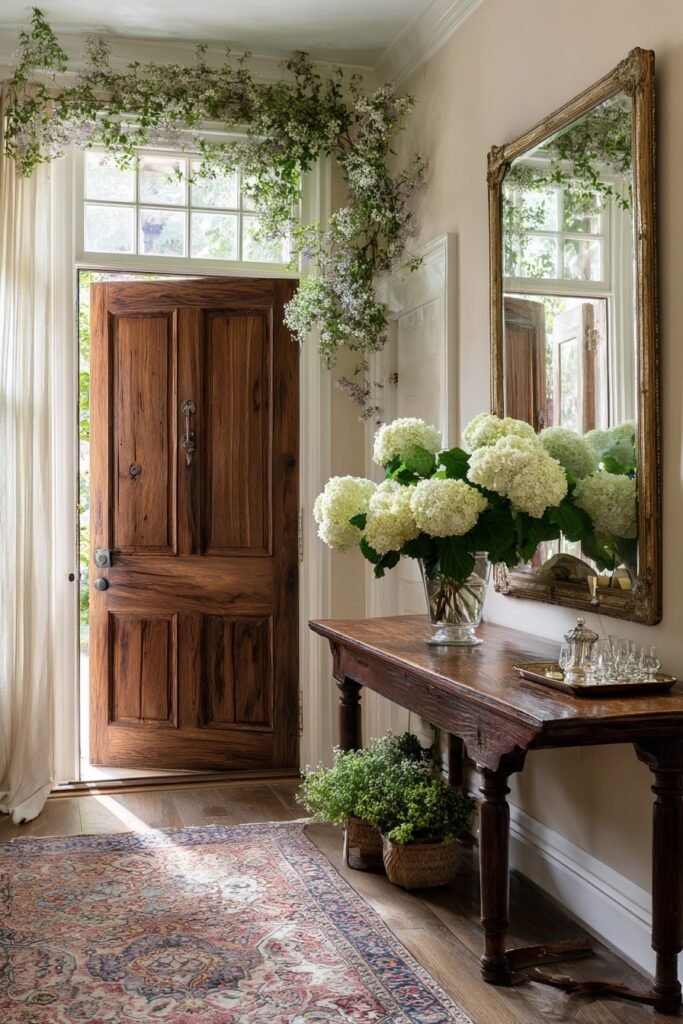
A Welcoming Entryway on a Budget: 10 Ideas Under $100
A Welcoming Entryway on a Budget: 10 Ideas Under $100
How can I make my entryway more welcoming on a budget? I dug into this properly, and what I found surprised me — here’s the no-fluff version.
For two years, my entryway was a pile of shoes, a dead plant, and harsh overhead light. Guests walked in and the apartment had to overcome that first impression. Then I spent $73 and one Saturday fixing it.
The entryway is your home's handshake. Here's how to make it a good one, cheaply.
The complete breakdown
Light it warmly — overhead fluorescents kill welcome
Swap the harsh bulb for a warm one (2700K) or add a $20 table lamp on a console. Warm light is the fastest way to make any space feel inviting. If you have no outlet, battery-powered LED candles in a lantern give the same glow. My $18 lamp changed the entire feel of my hallway — light temperature is emotional temperature.
A rug defines the space instantly
A $25-40 washable runner or doormat-inside combo marks the entryway as a 'place' rather than a pass-through. It catches dirt, adds color, and signals intention. Washable is key — entryways take abuse. My runner is the hardest-working $30 in my home.
Related reading: What to Do With Old Photo Albums Taking Up Space
Contain the shoe chaos
Shoes are the #1 entryway vibe-killer. A $20-35 shoe rack, bench with storage, or even a large attractive basket corrals them. The rule: only daily shoes live here; the rest go to closets. My two-tier bamboo rack holds 8 pairs neatly where 8 pairs used to form a mountain range.
Add one living thing and one personal thing
A plant (even a hardy pothos) plus one personal touch — a framed photo, a piece of art, a souvenir — makes an entryway feel like a home rather than a hallway. These are the soul of the space. Thrift the frame, propagate the plant from a friend; this step can cost literally $0.
The functional touches guests actually use
A hook or bowl for keys (ending the 'where are my keys' panic), a mirror for last-minute checks, and a small tray for mail. These cost almost nothing and get used daily. My key bowl by the door has saved me from being late more times than I can count — function is part of welcome.
My honest take
The mirror was my surprise MVP. Guests use it, I use it, and it bounces light down my dark hallway making everything brighter. A $25 thrifted mirror did triple duty: function, light, and making the narrow hall feel wider.
FAQs: How can I make my entryway more welcoming on a budget?
Here are the questions I hear most often about this topic:
What if my entryway is just a door with no space?
Go vertical and minimal: wall hooks, a slim floating shelf for keys, a narrow runner. Even 2 feet of intentional design beats zero.
How do I keep the entryway tidy?
The 'one-minute rule': shoes on the rack and keys in the bowl the moment you walk in. Systems beat willpower — make the right action the easy action.
What's the best entryway scent?
Subtle and clean: a reed diffuser in linen or light citrus. Strong scents overwhelm small spaces; the entryway should smell fresh, not perfumed.
The bottom line
Warm light, a defining rug, contained shoes, one plant plus one personal touch, and functional key/mail spots. Under $100 total, one Saturday of work, and your home's handshake goes from apologetic to genuinely welcoming.
For deeper background, check out Good Housekeeping's entryway ideas — both are solid, reputable resources worth bookmarking.
More from Daily Magazine 24
- What to Do With Old Photo Albums Taking Up Space
- Professional Poster Framing Costs in 2026 (By Size)
One more thing worth knowing
Finally, give any change a fair trial before judging it. Three weeks is my minimum — the first week you're fighting old habits, the second you're adjusting, and only in the third do you see the real payoff. I've almost abandoned routines on day five that became favorites by day twenty. Commit to the trial period upfront, evaluate honestly at the end, and keep what earns its place.
One more thing worth knowing
One more practical note: take a 'before' snapshot — a photo, a quick note about how things feel now. We adapt to improvements fast and forget how far we've come, which makes it tempting to abandon systems that are quietly working. Six months from now, that before-photo will remind you why you started. Progress you can see is progress you'll protect.
One more thing worth knowing
And if you take one mindset shift from all of this, let it be this: small, consistent beats big and occasional in every domain I've ever tested it. Ten minutes daily outperforms a monthly marathon. One habit at a time outperforms twelve resolutions. The tortoise doesn't just win the race — the tortoise is the only one still running in year two.
One more thing worth knowing
One thing I've noticed after years of tweaking my own routines: the best system is the one you'll actually maintain on your worst week, not your best one. Grand plans collapse under real life — kids get sick, work explodes, motivation evaporates. So whatever you take from this guide, shrink it down to the smallest version you could do exhausted on a Tuesday night. If that tiny version still helps, you've found your keeper. You can always scale up later; you can't scale up from quitting.
One more thing worth knowing
It's also worth saying: don't try to implement everything at once. Pick the one tip that resonated most and do just that for two weeks. I call it the 'one-thing rule,' and it's how I've built every lasting habit I have. Our brains rebel against overhauls but accept single tweaks gracefully. Two weeks from now, add tip number two. In three months you'll have transformed the whole area without ever feeling overwhelmed — slow change is the only change that sticks.