Car Emergency Kit Checklist: What to Pack in 2026
Car Emergency Kit Checklist: What to Pack in 2026
What should I pack in an emergency kit for my car? Short answer: yes, with the right approach. Here’s the full breakdown.
I learned about car emergency kits the exciting way: stranded on a rural highway at 11pm with a dead phone and no water. A passing trucker saved me, and I swore never again.
A proper kit costs under $75, fits in a small duffel, and turns a crisis into an inconvenience. Here's exactly what goes in it.
Here’s what you need to know
The non-negotiable core: water, warmth, light, power
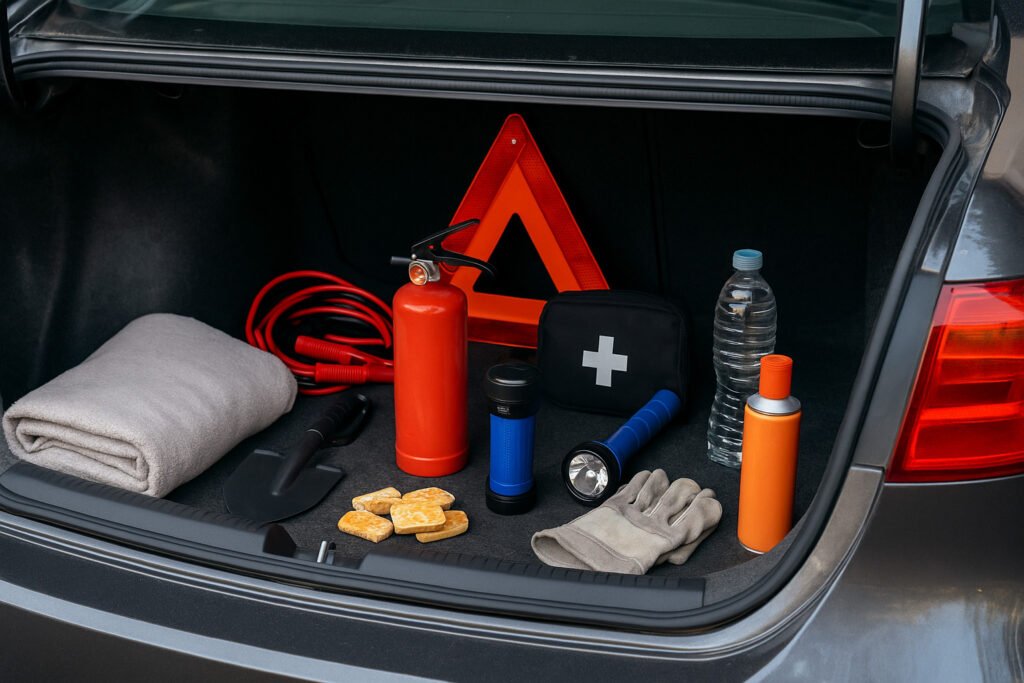
One gallon of water per person, a mylar emergency blanket ($3, packs tiny), a flashlight with extra batteries, and a portable jump starter ($50-70 — better than jumper cables because it needs no second car). These four items handle the vast majority of roadside situations. The jump starter alone has rescued me twice; it's the kit's MVP.
First aid and meds: beyond the band-aids
A real first-aid kit (not the decorative kind), any personal medications plus a 3-day supply, pain relievers, allergy meds, and sunscreen. Add a list of emergency contacts and medical info — if you're incapacitated, responders need it. I keep mine in a bright red pouch so it's findable in a panic.
Related reading: How to Host a Dinner Party on a Small Budget (That Feels Fancy)
Tools for the common failures
Tire pressure gauge, fix-a-flat or a spare tire you know how to use (check it yearly — spares go flat too), basic multi-tool, duct tape, zip ties, and work gloves. You don't need to be a mechanic; you need to handle a flat, a loose hose clamp, or a dead battery until help arrives.
Visibility and signaling gear
Reflective warning triangles or LED flares, a high-vis vest, and a whistle. Being seen on a dark roadside is a safety issue, not a convenience one. LED flares are reusable, magnetic, and visible for a mile — a massive upgrade over traditional flares for $15.
Seasonal swaps: winter and summer add-ons
Winter: add a sleeping bag or heavy blanket, hand warmers, a small shovel, and cat litter for traction. Summer: extra water (double it), a sunshade, and electrolyte packets. I do the swap when I change my clocks — 10 minutes, twice a year, and the kit's always season-ready.
My honest take
That night on the highway, all I had was a phone at 4%. Now my kit lives in a duffel in the trunk year-round, and I've used pieces of it — the jump starter, the blanket, the water — half a dozen times for myself and strangers. It's the cheapest peace of mind I own.
FAQs: What should I pack in an emergency kit for my car?
Here are the questions I hear most often about this topic:
How much does a car emergency kit cost?
About $50-75 assembled yourself, or $40-100 for a pre-made kit. Assembling your own gets better quality for the money.
How often should I check my kit?
Twice a year — check water freshness, battery charge on the jump starter, and medication expiration dates. Tie it to daylight saving time changes.
Do I need different kits for city vs. rural driving?
The core kit is the same. Rural drivers should add more water, extra warm layers, and a paper map — cell service isn't guaranteed where help is farthest.
The bottom line
Water, warmth, light, power, first aid, basic tools, and signaling gear — under $75 in a trunk duffel. Check it twice a year. You'll probably never need the whole kit, but the one night you need part of it, you'll be so glad it's there.
For deeper background, check out Ready.gov's emergency kit checklist and AAA's roadside preparedness tips — both are solid, reputable resources worth bookmarking.
More from Daily Magazine 24
- How to Host a Dinner Party on a Small Budget (That Feels Fancy)
- How to Wake Up Earlier Without Feeling Like a Zombie
One more thing worth knowing
One more practical note: take a 'before' snapshot — a photo, a quick note about how things feel now. We adapt to improvements fast and forget how far we've come, which makes it tempting to abandon systems that are quietly working. Six months from now, that before-photo will remind you why you started. Progress you can see is progress you'll protect.
One more thing worth knowing
And if you take one mindset shift from all of this, let it be this: small, consistent beats big and occasional in every domain I've ever tested it. Ten minutes daily outperforms a monthly marathon. One habit at a time outperforms twelve resolutions. The tortoise doesn't just win the race — the tortoise is the only one still running in year two.
One more thing worth knowing
One thing I've noticed after years of tweaking my own routines: the best system is the one you'll actually maintain on your worst week, not your best one. Grand plans collapse under real life — kids get sick, work explodes, motivation evaporates. So whatever you take from this guide, shrink it down to the smallest version you could do exhausted on a Tuesday night. If that tiny version still helps, you've found your keeper. You can always scale up later; you can't scale up from quitting.
One more thing worth knowing
It's also worth saying: don't try to implement everything at once. Pick the one tip that resonated most and do just that for two weeks. I call it the 'one-thing rule,' and it's how I've built every lasting habit I have. Our brains rebel against overhauls but accept single tweaks gracefully. Two weeks from now, add tip number two. In three months you'll have transformed the whole area without ever feeling overwhelmed — slow change is the only change that sticks.
One more thing worth knowing
A quick word on perfectionism, because it derails more good intentions than laziness ever does. You don't need the perfect version of this — you need the done version. The slightly messy attempt beats the flawless plan that never leaves your head. I've seen people research the ideal approach for months while doing nothing; meanwhile the person who just started imperfectly is already reaping benefits. Start ugly, refine later.