How to Host a Dinner Party on a Small Budget (That Feels Fancy)
How to Host a Dinner Party on a Small Budget (That Feels Fancy)
How do I host a dinner party on a small budget? Good news: it’s more doable than it looks. Here’s what actually works.
I hosted my first dinner party with $47, six mismatched plates, and a deep fear that everyone would notice. Nobody noticed. They noticed the food, the candles, and that someone had bothered to invite them.
Here's the truth about dinner parties: guests remember atmosphere and effort, not price tags. This is how to nail both on a budget.
Breaking it down
Cook one impressive cheap dish instead of many expensive ones
A slow-cooked pork shoulder ($15 feeds 8), a big-batch pasta, or a sheet-pan chicken dinner beats fussy multi-course cooking on every axis: cheaper, easier, less stressful. Pick one dish you can make well, make plenty of it, and let it be the star. Guests rave about delicious; they don't audit variety.
Make it BYOB with a signature batch cocktail
Alcohol is the fastest way to blow a dinner-party budget. Solution: make one big-batch cocktail or sangria ($12-15 serves 8-10) and invite guests to bring wine or beer to share. Nobody minds — BYOB is completely normal now — and your signature drink becomes a talking point. My $14 apple-cider sangria gets more compliments than any bottle I've served.
Related reading: How Much to Spend on a Coworker Birthday Gift (2026 Etiquette)
Candles and music are 80% of 'fancy'
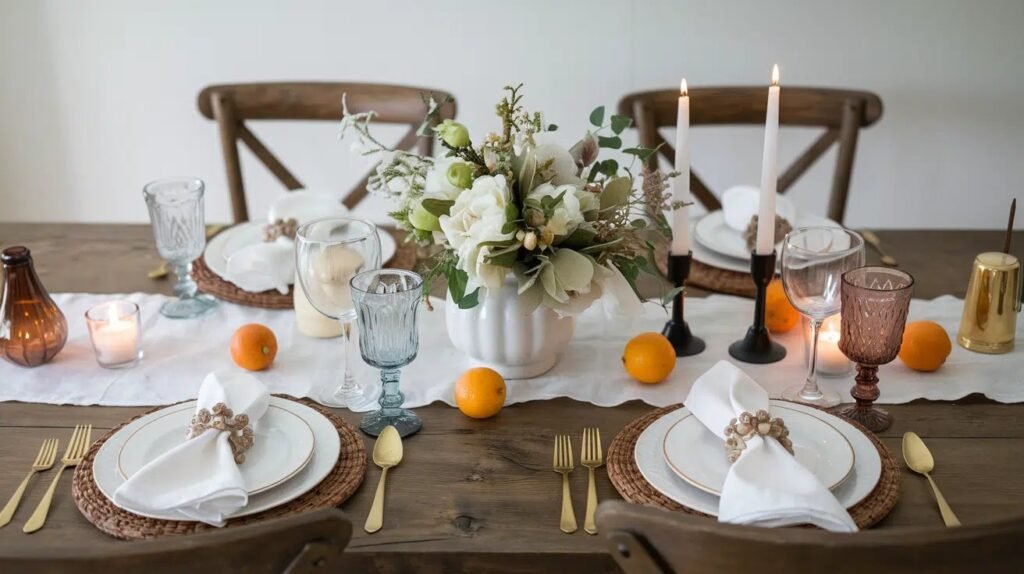
Dim the overheads, light every candle you own (tea lights cost pennies), make a playlist in advance. These three things transform a regular dining room into 'an evening.' I once hosted in a tiny apartment with folding chairs, and a guest said it felt like a restaurant. It was the lighting. It's always the lighting.
Borrow, don't buy, the serving pieces
Need a big platter? A pitcher? Extra chairs? Ask around before buying. Most people love lending for a party — it makes them part of it. Thrift stores are the backup plan: I built my entire 'party set' of plates and glasses for under $25 over two visits. Mismatched with confidence looks intentional.
Prep the house, not a renovation
Guests notice: a clean bathroom, somewhere to put their coat, and clear table space. Guests don't notice: the baseboards, the closet organization, the thing you've been meaning to fix. Spend your energy on the 20% of cleaning that creates 80% of the impression. Fresh hand towel in the bathroom is the highest-ROI move in hosting.
My honest take
My $47 party is still talked about by that friend group, while a $200 party I attended is forgotten. The difference wasn't money — it was that I was relaxed (cheap menu, no stress) instead of anxiously hovering over an expensive roast. Relaxed hosts make happy guests. Budget cooking forces relaxation.
FAQs: How do I host a dinner party on a small budget?
Here are the questions I hear most often about this topic:
How much should a budget dinner party cost per person?
$8-12 per person is very doable: one hearty main, a simple side, bread, and a batch drink. For 6 guests, that's $50-75 total.
What if I'm a bad cook?
Go potluck-style with you providing the main, or do a taco/fajita bar — assembly, not cooking. Nobody judges a host who provides great tacos.
How far ahead should I invite people?
One to two weeks for a casual dinner party. Enough notice to plan, not so much they forget. A group text is perfectly fine.
The bottom line
One great cheap dish, a batch cocktail plus BYOB, candles and a playlist, borrowed serving pieces, and a clean bathroom. That's a dinner party people will talk about — for about $50. The secret ingredient was never money; it was effort in the right places.
For deeper background, check out Epicurious's entertaining recipes — both are solid, reputable resources worth bookmarking.
More from Daily Magazine 24
- How Much to Spend on a Coworker Birthday Gift (2026 Etiquette)
- How to Store Seasonal Decorations So They Last for Years
One more thing worth knowing
And if you take one mindset shift from all of this, let it be this: small, consistent beats big and occasional in every domain I've ever tested it. Ten minutes daily outperforms a monthly marathon. One habit at a time outperforms twelve resolutions. The tortoise doesn't just win the race — the tortoise is the only one still running in year two.
One more thing worth knowing
One thing I've noticed after years of tweaking my own routines: the best system is the one you'll actually maintain on your worst week, not your best one. Grand plans collapse under real life — kids get sick, work explodes, motivation evaporates. So whatever you take from this guide, shrink it down to the smallest version you could do exhausted on a Tuesday night. If that tiny version still helps, you've found your keeper. You can always scale up later; you can't scale up from quitting.
One more thing worth knowing
It's also worth saying: don't try to implement everything at once. Pick the one tip that resonated most and do just that for two weeks. I call it the 'one-thing rule,' and it's how I've built every lasting habit I have. Our brains rebel against overhauls but accept single tweaks gracefully. Two weeks from now, add tip number two. In three months you'll have transformed the whole area without ever feeling overwhelmed — slow change is the only change that sticks.
One more thing worth knowing
A quick word on perfectionism, because it derails more good intentions than laziness ever does. You don't need the perfect version of this — you need the done version. The slightly messy attempt beats the flawless plan that never leaves your head. I've seen people research the ideal approach for months while doing nothing; meanwhile the person who just started imperfectly is already reaping benefits. Start ugly, refine later.